By the NAVI Research Institute 12 March 2026
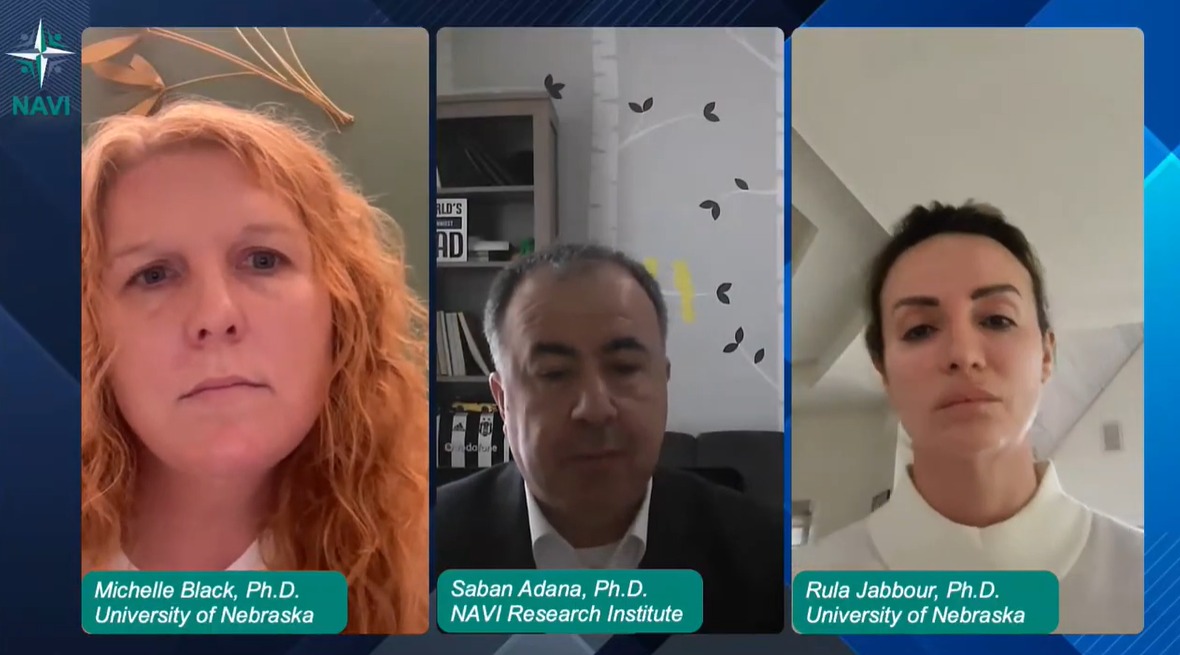
An Integrated Analysis based on the NAVI Webinar featuring Dr. Michelle Black and Dr. Rula Jabbour.
Executive Summary
The North Atlantic Treaty Organization is undergoing a fundamental recalibration to address a security environment defined by volatility and multi-domain threats. Grounded in the 2022 Strategic Concept, this transition requires NATO to shift from a “peacetime” posture to a crisis-ready operational tempo.
The NATO Veterans Initiative (NAVI) recently hosted a high-level webinar on March 06, 2026 featuring Dr. Michelle Black and Dr. Rula Jabbour to analyze the Alliance’s adaptation to the 2022 Strategic Concept. The discussion emphasized that NATO must shift from a “peacetime” posture to a crisis-ready operational tempo, prioritizing threats that directly challenge collective deterrence.
Key strategic pillars identified include leveraging the diverse technological and intelligence capabilities of member states as a unified strength, rather than a series of gaps. Furthermore, the experts highlighted the urgent need for institutional agility to counter hybrid threats and the integration of Artificial Intelligence to enhance decision-making. Ultimately, NATO’s future efficacy depends on a holistic approach that synchronizes traditional military power with societal resilience, ensuring that critical infrastructure and information environments remain secure against modern non-kinetic aggression.
Expert Analysis: The Speed of Threat vs. The Rhythm of Response
The Paradox of Prioritization

A central theme of the discussion was the “Paradox of Prioritization.” Dr. Rula Jabbour argues that the Alliance’s primary hurdle is not a lack of threat identification, but the urgent need for strategic focus as the threat matrix expands faster than resources.
Dr. Jabbour identifies a systemic “latency gap” that threatens NATO’s credibility, stating:
“The alliance still operates with a peacetime rhythm in a security environment that increasingly moves at a crisis speed. We risk becoming politically unified but operationally late”.
To avoid “spreading itself too thin,” Jabbour recommends organizing threats based on how directly they challenge territorial defense. She warns:
“The danger is not that NATO ignores the threats; the danger is that NATO tries to address all of them at the same time. NATO needs a clear list of priorities… to ensure it does not overextend itself”.
Allied Diversity as a Force Multiplier

While Jabbour focuses on prioritization, Dr. Michelle Black offers a perspective on maximizing Allied capabilities through diversity. She challenges the traditional focus on “capability gaps,” suggesting that the integration of new members like Finland and Sweden provides a unique opportunity for synergy.
Dr. Black introduces the concept of the “Force Multiplier,” noting:
“Multi-domain is about harnessing capabilities beyond conventional… NATO needs to ask: which member states have advanced technology in these areas they can utilize as a force multiplier?”.
She cites Norway as a prime example, noting their increased defense budget (reaching 4.2 billion Norwegian kroner) and their role in showcasing how niche expertise in Northern Europe can be elevated to the NATO level through war-gaming and technology sharing.
Indicator-Based Deterrence: AI and the Future of Decision-Making
Both experts highlight the critical role of Artificial Intelligence (AI) in closing the decision-making gap. Dr. Black notes that AI is essential for sifting through the exponential volume of data to identify “open-source indicators” that reveal adversary intent beyond mere propaganda.
Complementing this, Dr. Jabbour advocates for a proactive approach:
“NATO should not try to think faster at the time of the crisis; it should decide more in advance. We need pre-agreed response menus for predictable crises like cyber-attacks or sabotage”.
This “pre-decision” strategy for sub-threshold crises would allow for delegated, pre-structured mechanisms that bypass the slower consensus-based process required for major war decisions.
Societal Resilience and Cognitive Defense
The transition to the 2022 Strategic Concept requires NATO to define the boundary between military deterrence and societal resilience. Dr. Jabbour raises the critical question of when pressure on civilian systems—such as energy, ports, or digital trust—becomes a collective security issue.
Dr. Black suggests that NATO can learn from states like Finland, which uses its entire society to build resilience. The goal is to establish “common resilience thresholds” and “civil-military escalation regimens” to protect critical infrastructure against hybrid aggression.
Policy Recommendations for the Alliance
Based on the perspectives shared by Dr. Black and Dr. Jabbour, the NAVI Research Institute prepared the following roadmap:
Strategic Action Matrix
| Pillar | Recommendation (Expert-Led) | Objective |
| Operational Tempo | Pre-Authorized Frameworks (Dr. Jabbour) | Transitioning from peacetime bureaucracy to a proactive crisis response model. |
| Capability Synergy | Modular Defense Integration (Dr. Black) | Utilizing niche Allied strengths (e.g., Cyber, UAVs) as force multipliers. |
| Societal Resilience | Defined Resilience Thresholds | Formalizing triggers for collective action when critical civilian infrastructure is targeted. |
| AI Integration | Data Fusion for I&W (Dr. Black) | Synthesizing exponential data to provide high-fidelity options for human commanders. |
| Cognitive Defense | Strategic Communications | Hardening societies against “Cognitive Warfare” and disinformation campaigns. |
Discussion Points for Stakeholders
• The Consensus Dilemma: How can NATO maintain the legitimacy of unanimous consensus while matching the “crisis speed” identified by Dr. Jabbour?
• Defining the Boundary: As Dr. Jabbour suggests, at what point does pressure on civilian systems (energy, digital) affect NATO’s ability to deter?
• Technology vs. Intent: How does NATO utilize the narrative analysis tools discussed by Dr. Black to distinguish between adversary propaganda and genuine escalatory intent?
Conclusion: Staying Ahead
As the webinar concluded, NATO’s effectiveness in the coming decade will depend on its capacity for institutional agility and technological adaptation. Dr. Michelle Black and Dr. Rula Jabbour both agree: adaptation is not merely about “catching up”—it is about ensuring that NATO’s collective deterrence remains an unshakeable reality through institutional agility and the strategic use of its inherent diversity.

The NAVI Research Institute is the research division of NATO Veterans Initiative - NAVI that provides a unique perspective to transatlantic leaders and societies on peace and security through the lens of NATO's founding principles of rule of law, democracy, human rights, and individual liberties. The NAVI Research Institute was officially established by the NAVI Board on July 16th, 2023.
- NAVI Research Institute

- NAVI Research Institute
- NAVI Research Institute

- NAVI Research Institute
- NAVI Research Institute

- NAVI Research Institute

- NAVI Research Institute
- NAVI Research Institute

- NAVI Research Institute

- NAVI Research Institute

- NAVI Research Institute
- NAVI Research Institute
- NAVI Research Institute
- NAVI Research Institute
- NAVI Research Institute
- NAVI Research Institute
- NAVI Research Institute
- NAVI Research Institute
- NAVI Research Institute
- NAVI Research Institute
- NAVI Research Institute
- NAVI Research Institute

- NAVI Research Institute
- NAVI Research Institute
- NAVI Research Institute
- NAVI Research Institute
- NAVI Research Institute
- NAVI Research Institute
- NAVI Research Institute

- NAVI Research Institute
- NAVI Research Institute
- NAVI Research Institute
- NAVI Research Institute
- NAVI Research Institute
- NAVI Research Institute
- NAVI Research Institute
- NAVI Research Institute
- NAVI Research Institute
- NAVI Research Institute
- NAVI Research Institute

- NAVI Research Institute
- NAVI Research Institute
- NAVI Research Institute

- NAVI Research Institute
- NAVI Research Institute
- NAVI Research Institute
- NAVI Research Institute
- NAVI Research Institute
- NAVI Research Institute
- NAVI Research Institute

- NAVI Research Institute

- NAVI Research Institute
- NAVI Research Institute
- NAVI Research Institute
- NAVI Research Institute

- NAVI Research Institute
- NAVI Research Institute
- NAVI Research Institute
- NAVI Research Institute
- NAVI Research Institute

- NAVI Research Institute
- NAVI Research Institute
- NAVI Research Institute

- NAVI Research Institute
- NAVI Research Institute
- NAVI Research Institute
- NAVI Research Institute
- NAVI Research Institute
- NAVI Research Institute

- NAVI Research Institute

- NAVI Research Institute

- NAVI Research Institute