A Region in the Rearview Mirror: the Southern flank should not be ignored
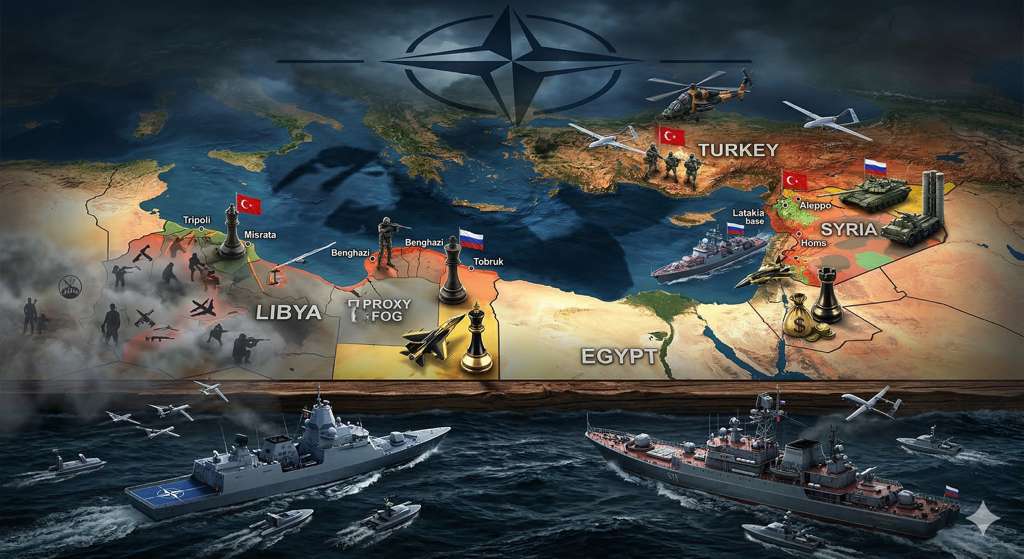
It’s easy to see why NATO has been so fixated on its eastern flank, with the pressing need to keep Russia in check. But that intense focus has had a strategic cost. While the Alliance was pouring its resources and attention into Europe’s front line, a quieter, but just as important, shift was happening in the south. The fall of Syria’s Assad regime in late 2024 and the ongoing mess of a fragmented Libya didn’t end the conflict there; they just started a new, more complicated chapter. We’re not just talking about civil wars anymore. Now, it’s a free-for-all, with regional and global powers using proxies to fight for influence. Countries like Türkiye, Russia, the UAE, Egypt, and Qatar have all jumped into this power vacuum, making both Syria and Libya into a messy playground for their geopolitical games (Harchaoui, 2020; Megerisi, 2020).
This brewing competition to the south is anything but a peripheral issue for the Alliance. It strikes at the heart of core NATO interests: maritime security, critical energy routes, migration patterns, and the credibility of its overall deterrence posture. You can see this clearly in Russia’s dogged determination to maintain a strategic foothold in both Syria and Libya. It’s a perfect illustration of how Moscow now uses the Mediterranean as a pressure point to challenge NATO, even while it finds itself constrained elsewhere (Natalizia & Pavia, 2025). At the same time, Türkiye’s expanding role in the region is reshaping the strategic balance in ways that create friction within NATO itself, just as various Gulf states back different horses on the ground in Libya to advance their own competing visions for regional order.
What these trends reveal is a dangerous strategic void opening up on NATO’s southern flank. The Alliance’s current playbook just isn’t built for this new landscape—one where states, not terrorist groups, are setting the pace of competition. It is ill-equipped for a Mediterranean now crowded with foreign military bases, sophisticated tools of hybrid influence, and a patchwork of weak, fragmented local governments. If NATO doesn’t recalibrate its strategy, and soon, it will find itself consistently outplayed in a region that is absolutely vital to the security of its southern members.
It is time for a fundamental adjustment. The conflicts in Syria and Libya can no longer be treated as secondary to Euro-Atlantic security; they are now central to it. For NATO’s Southern Strategy, getting a handle on these evolving proxy dynamics—and figuring out how to respond—is not some optional task. It has become an urgent, unavoidable requirement if the Alliance hopes to head off further destabilization and hold its own in an increasingly contested Mediterranean space.
Syria After December 2024:
In a prior analysis for NAVI (Jabbour, 2024), I contended that the political void left by the implosion of Syria’s ruling hierarchy in December 2024 failed to deliver the anticipated national reconciliation. What emerged instead was a fresh arena for proxy battles, this time orchestrated not by radical factions but by nations jockeying for position through local surrogates, security pacts, and evolving territorial dominance. While the provisional leadership in Damascus grapples with instituting basic governance, regional players have swiftly intervened, molding the new reality to fit their agendas, not Syria’s.
On the ground, Türkiye has been the most proactive, steadily broadening and cementing its military and political footprint across northern Syria, stretching from Aleppo to the northeastern border. Recent events indicate that Ankara now wields considerable sway over Aleppo, Idlib, Afrin, and a significant portion of the northern corridor. The security agreements it recently forged with the transitional government—encompassing border control, anti-militant operations, and the revival of trade—signal a pivot from indirect proxy engagements to more formal, state-to-state cooperation. This strategy is fundamentally rooted in Ankara’s long-held objective: to stop hostile militant groups, especially the Syrian Democratic Forces, from establishing a foothold on its southern flank, and to guarantee that any future Syrian political framework gives due weight to Turkish security interests (Stein, 2022; International Crisis Group, 2025). However, this amplified influence has unavoidably intensified rivalries with other foreign powers, particularly Russia.
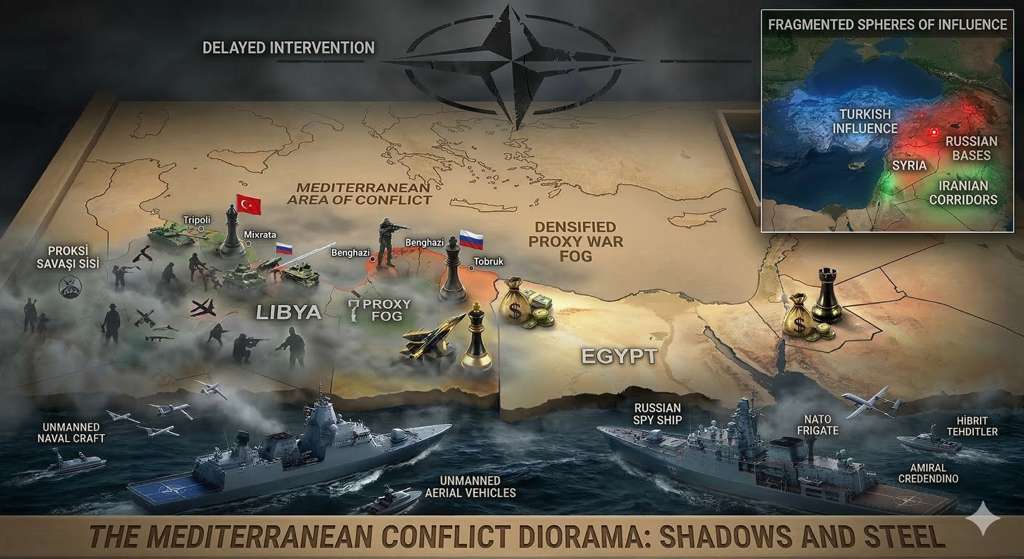
Despite the stunning speed of the regime’s downfall, Moscow has been diligent in preserving its military and political foothold in central and western Syria. The scale of Russia’s presence may ebb and flow, but its primary objectives are constant: safeguarding its strategic bases, retaining influence in political negotiations, and securing its long-term role in the Eastern Mediterranean (Hamilton, Miller & Stein, 2020). Even with diminished resources, Russia continues to foster relationships with local military leaders, tribal elders, and remnants of the former security establishment, thereby creating alternative networks of power that undermine any genuine attempts at stabilization.
Iran, for its part, has pursued a more discreet yet equally resolute strategy. In the immediate wake of December 2024, Tehran leaned on its well-established web of militias, religious organizations, and social programs to hold sway in Syria’s southern and central regions. Instead of overt expansion, Iran has pivoted to embedding its local allies within the new political frameworks, safeguarding its supply lines, and making sure that no future political arrangement can completely disregard its interests (Lister, 2022). This marks a shift from a strategy of ideological propagation to one of calculated entrenchment and strategic depth.
Israel, too, has ramped up its military operations within Syria following the collapse of the Assad regime. Beyond its ongoing precision strikes on arms shipments and hostile infrastructure, Israeli forces have reportedly stepped up their activities near the Golan Heights and have indicated a willingness to create more lasting security arrangements along the border. This course of action is consistent with Israel’s long-standing goal of thwarting Iranian entrenchment and curbing the flow of sophisticated weaponry to allied militant groups in Syria (International Crisis Group, 2025; Shaar & Heydemann, 2024). The cumulative impact, however, is the introduction of another assertive military force into an already volatile and congested theater. As the transitional government struggles to assert control and foreign powers vie for influence, Israel’s more aggressive stance introduces new variables of deterrence, risk, and potential for error—especially in areas where Turkish, Iranian, and lingering Russian interests converge.
These clashing ambitions have fostered a volatile and intensely competitive landscape. In place of a unified international effort at stabilization, Syria has devolved into a theater where state-sponsored alliances coalesce and fracture with dizzying speed, driven by struggles over border control, influence within the security apparatus, and control over profitable economic channels. The outcome is a fragmented map of influence, dictated less by ideology and more by raw geopolitical calculus.
For NATO, the ramifications are clear. Syria is no longer a country defined by insurgent control or a monolithic authoritarian regime; it has become a battleground for state-level competitions that have a direct bearing on the Alliance’s security interests to the south. The more that regional powers carve out their own exclusive zones of influence, the harder it will be for NATO to foresee escalations, contain their effects, or formulate a unified strategy for the increasingly intricate security environment of the Mediterranean.
Libya: The Main Arena of Gulf, Turkish, and Russian Rivalry
Nowhere along the southern Mediterranean is the theater of state-driven proxy competition more active—or arguably more consequential—than in Libya. While global focus may shift from one crisis to the next, Libya has steadily become a geopolitical marketplace where regional powers can test their strength, secure access, and embed military assets. This rivalry only grew more intense after 2024, as the deepening impasse between the competing authorities in Tripoli and Benghazi gave outside actors a chance to bolster their chosen factions and widen their strategic reach.
Türkiye now stands as the main security provider for the government in Tripoli. By keeping military advisors, training personnel, and drone assets in place, Ankara has fundamentally altered the balance of power throughout western Libya. This presence is no longer a temporary or crisis-response measure; it has been formalized through long-term security pacts and maritime border agreements that integrate Libya into Türkiye’s larger strategic vision for the Eastern Mediterranean (Van Veen, 2020). This alliance has effectively made Tripoli a center of Turkish influence, where political access, maritime strategy, security aid, and economic investment all merge.
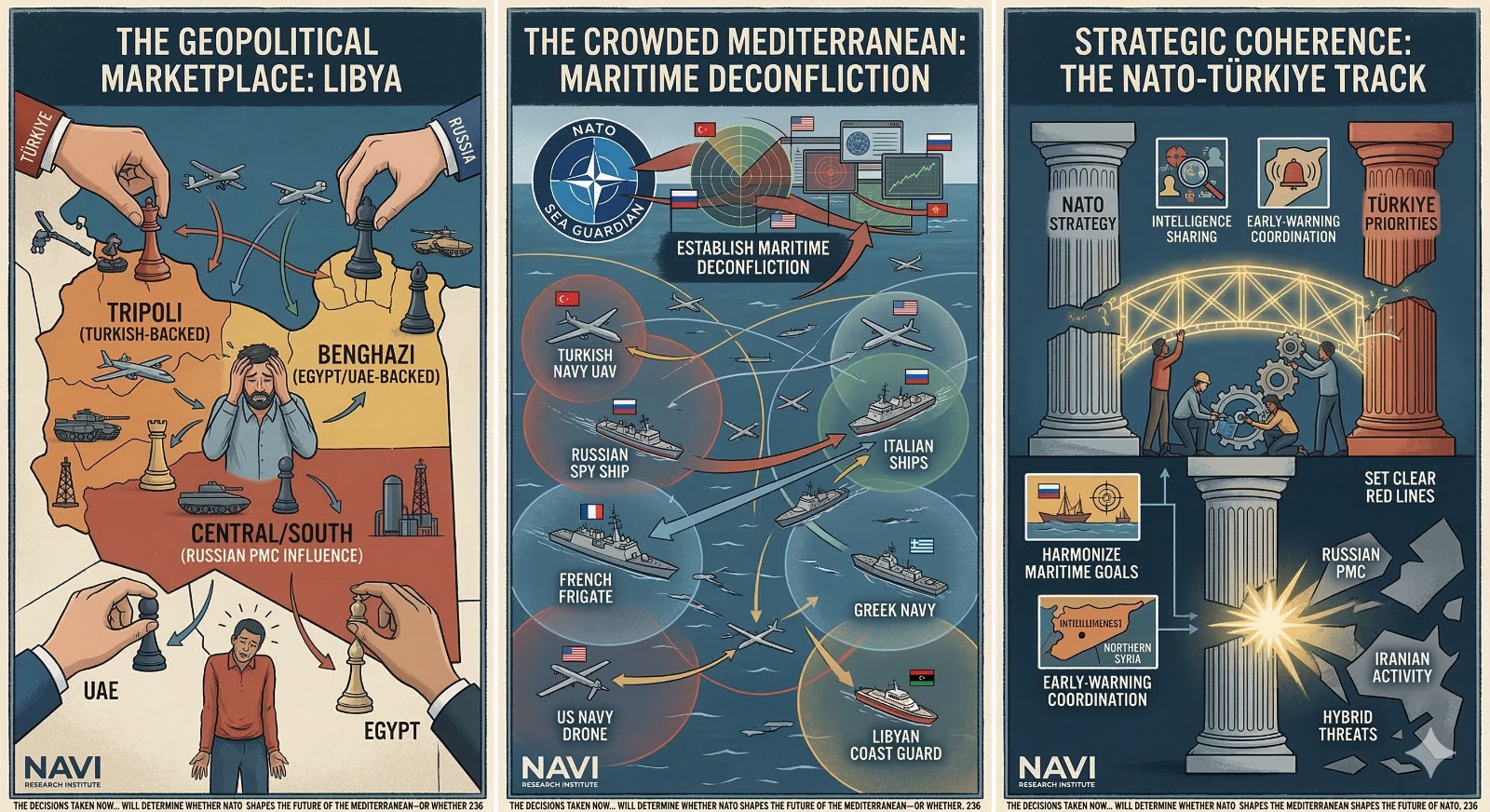
At the same time, the United Arab Emirates and Egypt are still backing the eastern bloc associated with Khalifa Haftar, each motivated by its own mix of ideological, security, and geopolitical interests. The UAE supplies high-tech equipment and funding, while Egypt, with its shared border and security concerns, has a powerful motive to influence events in the east. The engagement of both nations underscores a broader Gulf contest over the political direction of North Africa—a contest deciding whether the region will lean towards centralized, security-focused states or towards alliances more in line with Türkiye and, by extension, Qatar (Megerisi, 2020).
Russia introduces another layer of complication. Despite ongoing international pressure, Russian military contractors and advisors are still integrated into central and southern Libya. They control airbases, supply lines, and logistical points that project Moscow’s power across the Mediterranean and far into the Sahel (Harchaoui, 2020). These are not just tactical positions; they provide Russia with strategic depth, political clout, and the capacity to challenge NATO on its southern border using hybrid tactics that stop just short of open conflict. Moscow’s persistent presence signals a long-term strategy to use Libya as a geopolitical fulcrum.
What results from these clashing agendas—with Türkiye securing the west, the UAE and Egypt influencing the east, and Russia embedding itself in the center—is a de facto partition of the country, one that reflects the rivalries of regional powers far more than the political desires of the Libyan people. The country’s institutions are still split, efforts at reconciliation have gone nowhere, and its security forces are fractured, not just from internal weakness but because foreign powers have a vested interest in maintaining the very divisions that sustain their influence.
Simultaneously, the growing security alliance between Greece, Cyprus, and Israel brings a new dimension to the southeastern Mediterranean. This trilateral partnership has evolved from simple political statements to concrete defense collaboration, featuring joint planning and larger-scale air and naval drills. While better coordination among friendly nations can bolster regional security and deterrence, it also creates new tensions within NATO. Since both Greece and Türkiye are members of the Alliance, a deeper defense relationship with Israel, however logical from a strategic standpoint, could foster security arrangements that run parallel to, rather than within, NATO’s established structures (Natalizia & Pavia, 2025; Stoicescu, 2021). In a region already defined by Turkish actions in Libya and maritime conflicts in the Eastern Mediterranean, Ankara might see these moves as an effort to counterbalance its regional influence, which could increase friction inside the Alliance, even if the overarching goal of collective defense is shared.
For NATO, the fallout goes far beyond Libya. Russia’s control of key air and sea hubs complicates NATO’s ability to monitor and maintain a presence in the central Mediterranean. Türkiye’s deep engagement, though it involves a NATO ally, frequently causes operational friction when Ankara’s goals differ from those of other members. And the intervention of Gulf states influences the political orientation of Libya’s government and obstructs the development of energy and port infrastructure crucial for Mediterranean stability.
In effect, Libya has become the primary geopolitical fault line of the southern Mediterranean—a place where regional powers demonstrate their might, secure their interests, and shape the very strategic landscape in which NATO has to function. As long as these outside powers continue to push their competing visions for Libya, the country will remain both a gauge of regional power dynamics and a source of instability across the Mediterranean, with direct consequences for the unity and success of NATO’s Southern Strategy.
How Proxy Competition Weakens NATO’s Southern Strategy:
The proxy contests in Syria and Libya are far from a side issue for NATO; they are actively redrawing the strategic map along the Alliance’s whole southern edge. These conflicts are chipping away at deterrence, putting a strain on Allied unity, and fueling hybrid threats that strike at the heart of southern Europe’s political and economic stability. For an Alliance already shouldering its heaviest load on the eastern front since the Cold War’s end, the southern theater is fast becoming the overlooked weak point that adversaries and regional players are now exploiting with increasing boldness.
1. The Erosion of Deterrence Through Hostile Power Projection
The southern Mediterranean is increasingly a space where adversaries can test NATO’s resolve without provoking a united front. Russia’s behavior since 2024 illustrates this change perfectly. Having lost its footing and influence in Syria, Moscow shifted its strategic attention to Libya. Russian military contractors and advisors have dug in at key airbases in Jufra, Sirte, and al-Khadim, giving Russia a flexible, long-range military posture in the core of North Africa (Harchaoui, 2020).
What’s more alarming, however, is Russia’s effort to secure a naval base in eastern Libya, with a particular focus on the area near Derna. A Russian-supported port with the capacity for dry-docks repairs would provide Moscow with something it has always wanted but never had in Tartus: the capability to service its main naval ships right on the doorstep of NATO’s southern members (Natalizia & Pavia, 2025).
This isn’t just speculation. In 2025, Italian Navy Admiral Enrico Credendino went on the record to warn that Italian ships operating near Libya were being “almost always followed by a Russian spy ship.” He identified this as part of a larger pattern of “quiet militarization” unfolding in the central Mediterranean (Natalizia & Pavia, 2025). Russia isn’t waiting for Libya to stabilize; it’s using the country’s instability to build a new southern base for projecting its power.
A further strategic blow to NATO’s southern flank came from the recent elimination of Iran’s top leadership, including the death of Supreme Leader Ayatollah Ali Khamenei in joint U.S.–Israeli strikes on February 28, 2026. This unprecedented takedown of Iran’s highest authority—who held centralized power over Tehran’s foreign policy, nuclear ambitions, and regional proxy forces—has thrown Iran’s command structure and its ability to project power across the Middle East into sharp uncertainty (Yacoubian, 2026). This will undoubtedly affect maritime and security alliances throughout the Gulf and Mediterranean, making it harder for NATO to predict how conflicts might escalate and to manage its strategic position in the south. After all, the supreme leader was not just a political figure but a symbol for Shia Muslims worldwide. In times of leadership turmoil, nations often become more assertive externally to project an image of stability and strength. On the other hand, internal divisions could weaken control over allied militias and armed groups in Syria and elsewhere. Either scenario makes the situation along NATO’s southern edge more volatile. For an Alliance already dealing with Russian entrenchment, Turkish activism, and Gulf rivalries, instability in Iran’s leadership adds yet another layer of complexity to crisis prediction and escalation control.
For NATO, the takeaway is direct and clear: deterrence is no longer just a concern for the Eastern Front. It is now a Mediterranean concern as well.
2. The Strain on Alliance Cohesion
Proxy competition has also revealed a deeper structural problem—NATO members have no shared understanding of what the southern flank means strategically or how it should be managed. Türkiye’s assertive posture in Syria and Libya has triggered sharp tensions with Greece and France, turning these arenas into battlegrounds of intra-alliance rivalry rather than cooperation (Stoicescu, 2021).
The friction is not merely rhetorical. In August 2025, Türkiye’s intelligence chief traveled to Benghazi to negotiate directly with General Khalifa Haftar—the same leader who has long been supported by France, the UAE, and Egypt. The visit infuriated Athens, which already views Türkiye’s Libya maritime agreements as a direct threat to its Exclusive Economic Zone. France, meanwhile, sees Türkiye’s drone exports to Tripoli as undermining its influence in North Africa and shifting the military balance at Europe’s doorstep (Megerisi, 2020).
These are not minor disputes. They reflect competing strategic visions for the Mediterranean pursued by Allies operating independently—and often at cross-purposes. When NATO members act like rival regional powers instead of partners, adversaries gain room to maneuver, and local actors quickly learn how to exploit allied divisions.
3. The Non-Military Threats: Migration, Extremism, and Energy Insecurity
Hybrid pressures originating from Syria and Libya are just as destabilizing—and arguably more politically consequential—than the military competition. In 2025 alone, roughly 65,000 migrants arrived via the central Mediterranean route, overwhelming Italy’s capacity and placing disproportionate pressure on Lampedusa, an island of just 6,000 residents forced to absorb an international burden (Wehrey, 2021).
This is not simply a humanitarian issue. The same networks that profit from human smuggling also move weapons, narcotics, and illicit fuel. These shadow economies channel billions of dollars into armed groups with direct ties to regional patrons. The proxy conflicts therefore produce ripple effects that reach Europe through migration, criminality, and extremist mobility.
Energy insecurity adds another layer. Libya’s divided institutions have repeatedly used energy infrastructure as leverage in their political battles. In May 2025, armed groups stormed the National Oil Corporation headquarters in Tripoli, prompting the eastern authorities in Benghazi to threaten a nationwide shutdown of oil production—a disruption that would have removed up to 700,000 barrels per day from global markets (Bloomberg, 2025). A few months later, clashes near the Zawiya refinery shut down a key gas pipeline that powers Libyan electricity generation, pushing the country toward a nationwide blackout (Libya Review, 2025).
These are not anomalies. They are structural realities produced by proxy dynamics in which rival factions control different parts of the energy system. As Türkiye, Egypt, Russia, and France back opposing authorities along Libya’s coastline, offshore gas exploration and maritime trade routes increasingly become entangled in geopolitical rivalry. This directly affects Europe’s energy diversification efforts (Megerisi, 2020).
For NATO, the message is unmistakable: hybrid pressures and non-military threats are not separate from Syria and Libya’s proxy wars—they are the consequences of them
Bottom Line: NATO Is Already Being Outmaneuvered
The difficult truth is that NATO is not confronting a distant threat—it is already falling behind. Russia has compensated for its losses in Syria by embedding even more deeply in Libya. Türkiye is shaping outcomes in both theaters according to national priorities that often diverge from those of other Allies. Gulf states are shifting political and military balances while NATO remains stuck in deliberation mode. The southern flank is not a “secondary theater.” It is an active arena of competition where adversaries and even some Allies are shaping the events to which NATO merely reacts.
The Alliance’s current posture amounts to monitoring rather than strategy. Without serious recalibration, NATO will continue responding to developments crafted by others rather than shaping the environment itself.
Recognizing these risks is essential, but it is only the starting point. The urgent question now is what NATO can realistically do in a region where traditional stabilization models have failed and where proxy competition shows no sign of slowing. The next section outlines concrete, targeted steps the Alliance can take to regain strategic initiative along its southern flank.
NATO, Look South, what Should the alliance Do now?
If the southern flank has now become an active arena of proxy competition—rather than a distant, slowly evolving problem—then NATO can no longer rely on incremental adjustments or bureaucratic fine-tuning. The Alliance already possesses the tools it needs. What it lacks is not capability but political will. Five priorities stand out as essential, and all of them can be implemented within NATO’s existing institutional framework.
NATO already maintains a standing maritime presence in the Mediterranean through Operation Sea Guardian, a mission launched to enhance maritime situational awareness, deter terrorism, and support freedom of navigation. While Sea Guardian has provided a useful baseline for monitoring activity across the central Mediterranean, it was not designed for today’s environment—one defined by dense naval traffic, widespread use of maritime drones, and overlapping deployments by rival state actors. As proxy competition intensifies along NATO’s southern flank, Sea Guardian now represents the most immediate and institutionally viable platform through which the Alliance can reduce escalation risks and prevent unintended incidents at sea (NATO, 2024).
1. Prevent the Next Mediterranean Incident: Establish Maritime Deconfliction
The Mediterranean today is arguably the most congested and contested maritime space NATO has ever faced. Turkish, Egyptian, Emirati, French, Italian, and Russian vessels increasingly operate in overlapping zones, and the region now hosts more naval drones than any other maritime theater the Alliance monitors. In this environment, the question is not if a dangerous incident will happen—it is when.
NATO needs to reinforce and expand Operation Sea Guardian by:
- establishing deconfliction channels for UAVs and maritime drones;
- coordinating exclusion zones around Libya’s critical ports;
- integrating maritime air-warning data with the Strategic Direction South Hub;
- and creating a shared rapid-response protocol for incidents at sea.
This effort is not about projecting force; it is about preventing the kind of crisis that adversaries could exploit. Russia’s pursuit of naval facilities in Derna and its expanded tracking of NATO vessels underscore why deconfliction is now a baseline requirement rather than an aspirational objective (Natalizia & Pavia, 2025).
2. See the Region Clearly: Build a Mediterranean Intelligence Integration Cell
No strategy can function without coherent situational awareness. At present, NATO simply does not have it. Intelligence about Russian PMC logistics, Gulf-state airlifts into Libya, Turkish deployments, smuggling patterns, and escalation cycles in Syria remains scattered across national capitals.
NATO should establish a Mediterranean Intelligence Integration Cell (MIIC) housed within the Strategic Direction South Hub. Its responsibilities should include:
- pooling maritime and aerial surveillance from Italy, Greece, Türkiye, and France;
- monitoring Russian contractor movements and cargo flights;
- tracking Gulf financial and weapons pipelines into Libya;
- and issuing shared early-warning indicators for Syria and Libya.
A fragmented intelligence picture guarantees that adversaries retain the initiative. MIIC would give NATO the unified operational visibility it currently lacks (Megerisi, 2020; Natalizia & Pavia, 2025).
3. Shut Down Moscow’s Hybrid Toolkit: Develop a Counter-PMC Strategy
Russian private military companies have given Moscow a cost-effective way to maintain influence in Libya. Through these PMCs, Russia can avoid accountability, preserve military positions, and exert pressure on Europe through deniable means. NATO’s failure to counter this model has effectively ceded a key part of the southern flank to Russia’s hybrid toolkit.
While Russian private military companies remain the most strategically consequential actors in Libya, they are not the only ones operating in the country’s fragmented security environment. Other state-linked private military and security companies—most notably Turkish-affiliated contractors—have also played roles in training, advisory support, and force protection. The proliferation of these actors underscores that the challenge NATO faces is not limited to Russia alone, but to a wider normalization of deniable, privatized force as a tool of regional competition ((Rights Defenders Initiative, 2025)
To counter this, NATO must adopt a formal Counter-PMC Strategy built around:
- identifying and mapping PMC logistics routes;
- sharing intelligence on PMC-related flights and maritime transfers;
- coordinating sanctions and legal measures with the EU;
- training coastal states in hybrid threat detection;
- and integrating PMC behavior into NATO’s crisis-response planning.
As long as Russia retains the ability to operate via PMCs, it will maintain strategic depth in the central Mediterranean—even with limited conventional forces (Harchaoui, 2020).
4. Build Influence Where It Matters: Deepen Selective Partnerships with Coastal States
NATO does not need every regional partner to participate in every initiative, but certain coastal states—such as Tunisia, Jordan, and Morocco—hold the geographic leverage required to stabilize Mediterranean corridors.
Selective, issue-focused partnerships should target:
- enhanced maritime domain awareness;
- improved counter-smuggling capacities;
- protection of cyber-vulnerable port and energy infrastructure;
- and joint exercises on migration management and coastal security.
These partnerships must remain pragmatic rather than political. They do not require full alignment on Libya or Syria. They simply demand cooperation where interests naturally overlap—maritime safety, smuggling disruption, and infrastructure resilience (Megerisi, 2020; Wehrey, 2021).
Targeted partnerships allow NATO to influence the environment even when broader regional consensus is impossible.
5. Stop Operating Blind: Create a Unified NATO–Türkiye Strategy for Syria and Libya
Türkiye is the only NATO member with deep military and intelligence reach in both proxy arenas. Yet the Alliance currently has no dedicated framework for coordinating with Ankara on either Syria or Libya. The result is confusion, duplication, and strategic drift.
NATO must develop a NATO–Türkiye Strategic Coordination Track to:
- harmonize maritime goals across the Aegean, the Levant, and the central Mediterranean;
- exchange intelligence on Russian, Iranian, and PMC activity;
- coordinate early-warning mechanisms for escalation in northern Syria;
- and set clear, mutually accepted red lines for Libyan air and naval movements.
This will require difficult discussions in Brussels, Athens, and Paris. But allowing Türkiye to operate entirely outside NATO channels in two of the region’s most volatile theaters is strategically untenable. Such a vacuum benefits only adversaries who thrive on allied division (Stoicescu, 2021).
Implementation Timeline: These Are Not Five-Year Initiatives
None of these steps require new treaties, major force deployments, or sweeping institutional reform. They can be implemented now.
- Maritime deconfliction and MIIC intelligence integration could be operational within 12 months using existing Sea Guardian assets.
- The Counter-PMC strategy and selective partnerships would require sustained effort but could show measurable progress within 24 months.
- The NATO–Türkiye track, though politically complicated, grows more difficult—and more costly—the longer it is delayed.
The question is not whether NATO has the capacity to act. The question is whether it will act before the next Mediterranean crisis forces its hand.
Why These Recommendations Matter
Taken together, these measures would provide NATO with something it has lacked on its southern flank for years: genuine strategic coherence. Just as importantly, they would send a clear signal to adversaries—and to hesitant partners—that the Alliance can adapt to the dynamics of 21st-century competition rather than relying on Cold War-era assumptions that no longer match Mediterranean realities.
These steps would reinforce deterrence, strengthen internal cohesion, and give NATO the initiative in a region where it has been reacting instead of shaping outcomes for far too long.
Final words: The Southern Flank as NATO’s Test of Strategic Adaptation
The proxy wars unfolding in Syria and Libya have laid bare an uncomfortable reality: NATO’s greatest vulnerability may not come from a sudden clash on its borders, but from the slow erosion of its strategic position in a region it has long treated as peripheral. While the Alliance has been right to dedicate its attention and resources to deterring Russia on the eastern flank, Moscow has quietly compensated by deepening its foothold in Libya. As NATO continues debating frameworks and convening working groups, Türkiye has stepped into the vacuum with a strategy anchored in its own national priorities rather than those of the Alliance. At the same time, Gulf states are shaping outcomes on the ground in ways that directly affect Mediterranean stability.
This is not a hypothetical scenario. It is the strategic reality the Alliance faces right now.
The Mediterranean is no longer a buffer separating Europe from instability—today it functions as a live theater of great-power rivalry, one in which NATO is consistently being outmaneuvered. Russia is actively negotiating a naval presence in Derna. Türkiye is simultaneously arming factions in both Syria and Libya. The central question is no longer whether the southern flank matters, but whether NATO will act with the urgency that the situation demands.
The five priorities outlined in this analysis—maritime deconfliction, intelligence integration, a counter-PMC strategy, targeted partnerships with key coastal states, and structured NATO–Türkiye coordination—are realistic, achievable, and implementable within 18 months using existing Alliance mechanisms. They do not require sweeping treaties, massive new spending, or military interventions. What they require is political will: a readiness to engage difficult allies, a commitment to building functional partnerships, and the courage to elevate the Mediterranean even when it is politically inconvenient to do so.
There will be resistance. Some allies will argue that the southern flank remains less urgent than the east. Others will resist deeper coordination with Türkiye or hesitate to engage North African partners. But these objections stem from the very mindset that has allowed adversaries to gain an advantage—the assumption that the Mediterranean is a secondary theater. That assumption is precisely what Russia and other actors are relying on.
NATO has already paid a strategic price for its necessary focus on the eastern flank. The critical question now is whether that cost becomes permanent, or whether the Alliance adapts before the Mediterranean becomes a space where adversaries set the terms and NATO simply reacts. The southern flank is more than a geographic boundary. It is the test of whether NATO can manage long-term, slow-burn competition—not just sudden crises.
The decisions taken now, while the region remains in flux, will determine whether NATO shapes the future of the Mediterranean—or whether the Mediterranean shapes the future of NATO.
References:
Bloomberg. (2025, May 29). Libya faces new oil shutdown threat after gunmen storm HQ. Bloomberg News.
https://www.bloomberg.com/news/articles/2025-05-29/libya-faces-new-oil-shutdown-threat-after-gunmen-storm-hq
Center for Strategic and International Studies. (2024). The future of NATO’s southern flank. CSIS.
Hamilton, R. E., Miller, C., & Stein, A. (Eds.). (2020). Russia’s war in Syria: Assessing Russian military capabilities and lessons learned. Foreign Policy Research Institute.
Harchaoui, J. (2020). Into the Libya vortex. Carnegie Endowment for International Peace.
International Crisis Group. (2025). The new Syria: Halting a dangerous drift. Middle East & North Africa Briefing No. 95.
Libya Review. (2025, August 31). Libya risks nationwide blackout amid fuel crisis. Libya Review.
https://libyareview.com/58676/libya-risks-nationwide-blackout-amid-fuel-crisis/
Lister, C. (2022). Freeze and build: A strategy for Syria policy. Middle East Institute.
Megerisi, T. (2020). Geostrategic dimensions of the Libya conflict. European Council on Foreign Relations.
Natalizia, G., & Pavia, A. (2025, June 30). NATO has a Mediterranean blind spot—and it puts the Alliance’s security at risk. Atlantic Council.
https://www.atlanticcouncil.org/blogs/new-atlanticist/nato-has-a-mediterranean-blind-spot-and-it-puts-the-alliances-security-at-risk/
NATO. (2024). Operation Sea Guardian. North Atlantic Treaty Organization.
https://www.nato.int/en/what-we-do/operations-and-missions/operation-sea-guardian
Rights Defenders Initiative. (2025). Mercenaries and war crimes: The role of private military contractors in Libya, with a focus on SADAT.
https://rightsdefenders.org/wp-content/uploads/2025/02/Mercenaries-Report_SADAT-by-RDI_2025-.pdf
Shaar, K., & Heydemann, S. (2024, August 26). Networked authoritarianism and economic resilience in Syria. Brookings Institution / Center for Middle East Policy.
Stein, A. (2022). Border nation: The reshaping of the Syrian-Turkish borderlands. Carnegie Endowment for International Peace.
Stoicescu, K. (2021, February 12). NATO’s southern neighbourhood: The Alliance needs a strategy for the regions to its south. International Centre for Defence and Security.
Van Veen, E. (2020). Turkey’s interventions in its near abroad: The case of Libya. Clingendael Institute.
Wehrey, F. (2021, June 24). America’s window in Libya. Carnegie Endowment for International Peace.
Yacoubian, M. (2026, March). The regional reverberations of the U.S. and Israeli strikes on Iran: Strategic implications for Middle East security. Center for Strategic and International Studies. Retrieved from https://www.csis.org/analysis/regional-reverberations-us-and-israeli-strikes-iran

Dr. Rula Jabbour is a Postdoctoral Fellow at the Nebraska Deterrence Lab, Department of Political Science, University of Nebraska. She holds a Ph.D. in Political Science from the University of Nebraska-Lincoln, specializing in International Relations, Strategic Studies, and Middle Eastern Politics. Her research focuses on authoritarian governance, civil-military relations, counterterrorism, and post-conflict reconstruction in the Middle East.
Dr. Jabbour’s work has been published in Dynamics of Asymmetric Conflict, the Syrian Studies Journal,The MENA Journal on Violence and Extremism and is featured in forthcoming volumes with Springer Nature on regional security and innovation in the Eastern Mediterranean. She has presented her research at leading international conferences including ISA, APSA, and IPSA.
Dr. Jabbour has taught in many American universities during her career. She has taught a broad array of courses in international relations, Middle Eastern studies, and U.S. foreign policy, with a reputation for inclusive pedagogy and student engagement. Originally from Syria and a recipient of a prestigious U.S. State Department Scholarship, Dr. Jabbour brings a unique intersection of field-based insight and scholarly rigor to the study of regional security and conflict transformation.
- Dr. Rula Jabbour - Research Fellow
- Dr. Rula Jabbour - Research Fellow