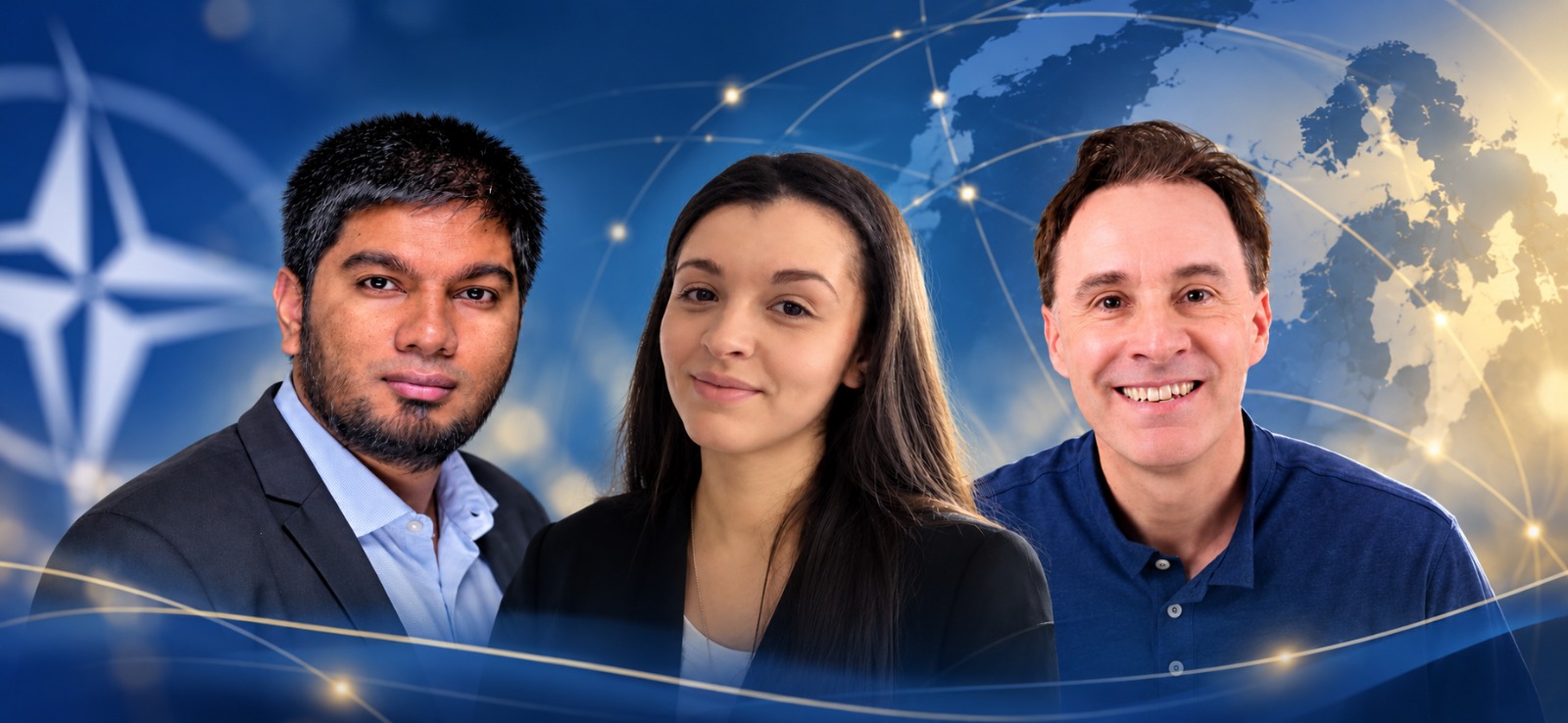
We are pleased to welcome our new Research Fellows to the NAVI Research Institute. Each brings unique expertise, valuable experience, and fresh perspectives that will enrich our research community. We look forward to working together and to the contributions they will make to NAVI’s ongoing research and initiatives.

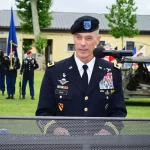
Dr. Brent Eastwood, Senior Research Fellow
Brent M. Eastwood, PhD, is a Geostrategist and Global Thinker. He previously served as a Senior Defense Editor and Columnist for the foreign policy web magazines National Security Journal and 19FortyFive. Before that, Brent was a Fellow in Technology and Innovation at R Street Institute, a think tank in Washington, DC. He has served as a Legislative Fellow for U.S. Senator Tim Scott and advised the senator on defense and foreign policy issues. Brent has taught at George Washington University, American University, and George Mason University. He has founded and led technology startups in artificial intelligence event prediction, intelligence analysis, and biometrics. Brent has written five books on global alliances, foreign policy, future warfare, streaming video, and economic policy. He has also written for the RAND Corporation, the American Enterprise Institute, the Atlantic Council, the Jamestown Foundation, and the Foreign Policy Research Institute. He is a former U.S. Army Infantry officer and represented the United States as a Young Leader at the 2006 NATO Summit in Riga, Latvia.

Dr. Amel Attatfa, Research Fellow
Dr. Amel Attatfa is a cyber diplomacy expert with an interdisciplinary background spanning international political science, law, and geopolitics. Her research sits at the intersection of cybersecurity, international relations, and public policy, with a focus on cyber diplomacy, global cyber governance, emerging technologies, and the sociotechnical dimensions of cyber threats. She holds a PhD in Cybersecurity from Abertay University, where her doctoral research examined cyber diplomacy, multistakeholder cooperation, and international norms for cyberspace. She is a Research Fellow with the NATO Veterans Initiative Research Institute, contributing to the Emerging Technologies & Data Studies Program.
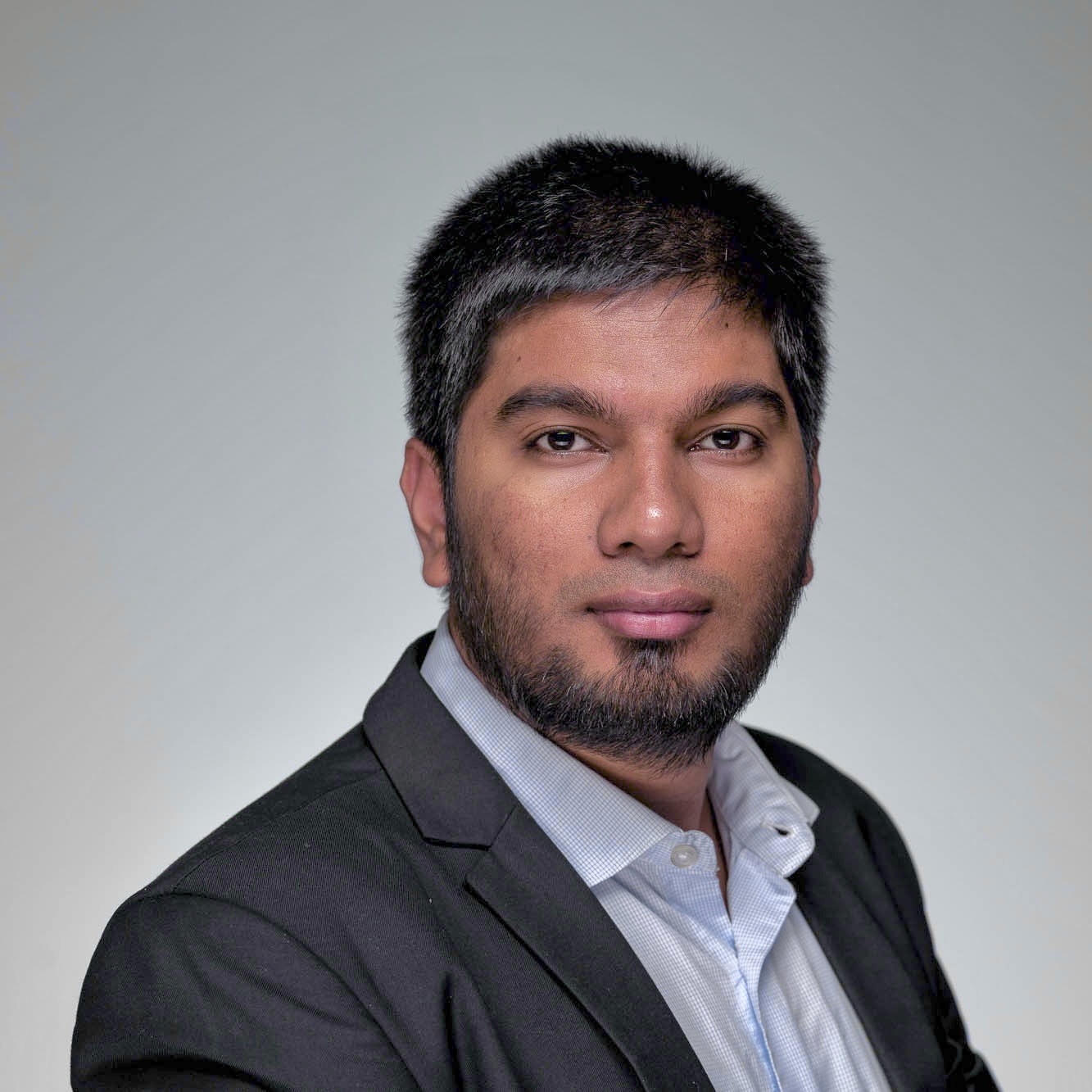
Dr. Jobair Hossain Faruk, Research Fellow
Dr. Md Jobair Hossain Faruk is an Assistant Professor in the Department of Computer Science and Engineering at the University of Central Arkansas (UCA). He earned his Ph.D. in Computer Science, with distinction, from the New York Institute of Technology, an M.S. in Software Engineering from Kennesaw State University, and a B.S. in Software Engineering from Sultan Idris Education University, Malaysia. His doctoral research focused on adaptive multimodal fusion and hybrid classical–quantum machine learning for histopathological tumor analysis.
His research lies at the intersection of artificial intelligence (AI), quantum machine learning (QML), health informatics, and cybersecurity. He develops trustworthy, secure, explainable, and privacy-preserving AI systems with applications in computational oncology and digital pathology, multimodal medical data analysis, clinical decision support, software supply chain security, secure code analysis, and malware and ransomware analysis. His long-term research goal is to advance intelligent systems that are reliable, transparent, secure, and deployable in real-world environments.
Dr. Faruk has contributed to NSF- and NIH-supported research and has published across IEEE, ACM, Elsevier, Springer, and Nature Portfolio venues. His research has received several distinctions, including the Best Paper Award at IEEE ICHI 2022, a Special Paper Award at IEEE ICDH 2021, a Best Poster Award at IEEE BHI 2025, and recognition as an NSF–IEEE EMBS–Google Young Professional NextGen Scholar.
Dr. Faruk is a 2026–2027 Trusted CI Fellow with the NSF Cybersecurity Center of Excellence, where he participates in advanced training and outreach focused on research cybersecurity, secure scientific cyberinfrastructure, and cybersecurity practices for the research community. Previously, he was a SciAuth Fellow at the National Center for Supercomputing Applications (NCSA), University of Illinois Urbana–Champaign, where he developed privacy-preserving authentication and blockchain-based verifiable credentials for secure scientific data access. He also served as an RCE SDGs Future Fellow and worked with the Office of Information and Communications Technology (OICT) at United Nations Headquarters, contributing to digital transformation and generative AI initiatives.

The NAVI Research Institute is the research division of NATO Veterans Initiative - NAVI that provides a unique perspective to transatlantic leaders and societies on peace and security through the lens of NATO's founding principles of rule of law, democracy, human rights, and individual liberties. The NAVI Research Institute was officially established by the NAVI Board on July 16th, 2023.
- NAVI Research Institute

- NAVI Research Institute
- NAVI Research Institute

- NAVI Research Institute
- NAVI Research Institute
- NAVI Research Institute

- NAVI Research Institute
- NAVI Research Institute

- NAVI Research Institute
- NAVI Research Institute
- NAVI Research Institute
- NAVI Research Institute
- NAVI Research Institute
- NAVI Research Institute
- NAVI Research Institute
- NAVI Research Institute
- NAVI Research Institute
- NAVI Research Institute
- NAVI Research Institute
- NAVI Research Institute
- NAVI Research Institute
- NAVI Research Institute
- NAVI Research Institute
- NAVI Research Institute
- NAVI Research Institute

- NAVI Research Institute
- NAVI Research Institute
- NAVI Research Institute
- NAVI Research Institute
- NAVI Research Institute
- NAVI Research Institute
- NAVI Research Institute
- NAVI Research Institute
- NAVI Research Institute
- NAVI Research Institute
- NAVI Research Institute
- NAVI Research Institute
- NAVI Research Institute
- NAVI Research Institute
- NAVI Research Institute
- NAVI Research Institute
- NAVI Research Institute
- NAVI Research Institute
- NAVI Research Institute
- NAVI Research Institute
- NAVI Research Institute

- NAVI Research Institute
- NAVI Research Institute
- NAVI Research Institute
- NAVI Research Institute
- NAVI Research Institute
- NAVI Research Institute
- NAVI Research Institute
- NAVI Research Institute
- NAVI Research Institute
- NAVI Research Institute
- NAVI Research Institute
- NAVI Research Institute
- NAVI Research Institute
- NAVI Research Institute
- NAVI Research Institute
- NAVI Research Institute
- NAVI Research Institute

- NAVI Research Institute
- NAVI Research Institute
- NAVI Research Institute

- NAVI Research Institute
- NAVI Research Institute
- NAVI Research Institute
- NAVI Research Institute
- NAVI Research Institute
- NAVI Research Institute
- NAVI Research Institute

- NAVI Research Institute

- NAVI Research Institute