
By NAVI Research Institute
Subscribe to NAVI Radar Weekly | Visit NAVI Research Institute
Focus Point: Emerging Technologies & Data – Military Technology and Innovation
NATO’s DIANA and Ukraine strengthen cooperation on defence innovation | NATO
By NATO | 29 October 2026
The agreement, signed at NATO Headquarters, is the first of its kind between DIANA and a NATO partner and marks a practical step towards strengthening mutual security through innovation. It also builds on the broader NATO-Ukraine cooperation across their innovation ecosystems, which has developed significantly since Russiaʼs full-scale invasion of Ukraine. The partnership is built on reciprocity. Ukraine has developed an extraordinary innovation ecosystem while confronting the realities of modern conflict, rapidly testing, adapting and improving technology under the most demanding conditions, as a result of Russiaʼs war of aggression. DIANA offers an established pathway connecting innovators with NATOʼs defence and security expertise and infrastructure.
NATO’s Defence Innovation Accelerator for the North Atlantic (DIANA) and Ukraine signed a memorandum of understanding to expand cooperation between their defence innovation ecosystems. The agreement is intended to help innovators navigate NATO requirements, explore technology testing, and overcome barriers to scaling promising capabilities. For NAVI’s audience, the development links Ukraine’s experience of rapid battlefield innovation to NATO’s longer-term capability and industrial challenges. It establishes a cooperation framework, rather than announcing that a particular new system has entered operational service. Read more
Focus Point: Regional Security – Transatlantic Security/European Security
Secretary General highlights strong NATO-EU cooperation during visit of Commissioner Kubilius | NATO
By NATO | 28 October 2026
Commissioner Kubilius spoke with NATO Ambassadors in the North Atlantic Council, highlighting a range of priorities including enhancing readiness, boosting defence production, and ensuring consistent support to Ukraine. One area in which cooperation is particularly crucial is military mobility. The ability to move military equipment and personnel into and across Europe is critical for NATOʼs deterrence and defence. This requires not only that regulatory issues are addressed, but also that appropriate infrastructure is in place to support potential movements. Commissioner Kubilius noted ongoing work in this area, and the Secretary General welcomed the good progress made between NATO and the EU to advance this, while noting that further work is required to ensure military readiness.
NATO Secretary General Mark Rutte met European Commissioner for Defence and Space Andrius Kubilius to discuss defence production, military readiness, support for Ukraine, and cooperation between NATO and the European Union. Military mobility received particular attention, including the infrastructure and regulatory arrangements needed to move forces through Europe. The discussion highlights how European defence investment depends on practical transport and deployment arrangements. It is relevant to transatlantic readiness, although the article describes continuing coordination rather than the adoption of a new binding mobility agreement. Read more
Focus Point: Security and Defense Policy – Russia-Ukraine War
EU support for Ukraine: Council mobilises €4.9 billion under the European Peace Facility | Council of the European Union
By Council of the European Union | 26 October 2026
The Council today adopted a set of eight decisions enabling the use of funds for Ukraine under the European Peace Facility (EPF). These decisions allow for the partial reimbursement, through the EPF, of military aid already delivered by member states, amounting to a total amount of €4.7 billion. They also provide additional financing for the EU Military Assistance Mission in Support of Ukraine (EUMAM Ukraine), amounting to a total of €230 million. These decisions mark a major step towards implementing the political agreement reached by EU member states on 25 September 2026 to mobilise €6.6 billion for Ukraine under the EPF.
The Council adopted eight decisions mobilising approximately €4.9 billion through the European Peace Facility for Ukraine-related assistance. About €4.7 billion provides partial reimbursement for military support member states have already delivered; €230 million supports the EU Military Assistance Mission. These decisions implement part of a larger September political agreement and demonstrate the continuing importance of EU financing mechanisms to military support. The full headline amount must not be described as new weapons delivered or cash immediately transferred to Ukraine. Read more
Focus Point: Security and Defense Policy – Deterrence and Collective Defense
Operation Rummy: Franco-British Nuclear Cooperation Strengthens European Deterrence | Royal United Services Institute
By Darya Dolzikova | 30 October 2026
The joint exercise reinforces a sense of shared British and French threat perception and signals – to adversaries as well as allies – a progressively advanced level of strategic and operational coordination on nuclear matters between the two countries. In a real-world scenario, escorting a French nuclear strike would implicate the UK as a key enabler for the attack, thereby making it a target for retaliation. By playing out such a contribution in training, London has therefore demonstrated an ability – as well as a potential willingness – to serve in such an enabler role and to bear the associated risks.
Darya Dolzikova analyzes Operation Rummy, a Franco-British nuclear air exercise conducted on 20–21 October, as an operational sign of closer cooperation between Europe’s two nuclear-armed NATO Allies. British Typhoon fighters escorted French Rafales in a simulated long-range nuclear strike mission, reflecting implementation of the 2025 Northwood Declaration. The RUSI commentary explores potential deterrence benefits and practical limitations, including the differing nuclear roles of both air forces. The exercise should not be mischaracterized as an actual nuclear strike or a formal change in NATO nuclear doctrine. Read more
Focus Point: Security and Defense Policy – Future of Warfare
Fast Following: Military Emulation and Twenty-First-Century Transformation | Center for Strategic and International Studies
By Mick Ryan | 29 October 2026
Modern war is a contest of learning and adaptation. One of its most important, yet least appreciated, elements is “fast following”: the deliberate practice of observing an innovation proven by someone else, then copying, improving, and fielding it at speed. The concept emerged from business innovation literature, but it fits well with the conditions of war. On the battlefield, there is limited protection for intellectual property, imitation cycles are short, and adversaries study each other relentlessly. Historical examples—from British emulation of German infiltration tactics in 1918 to North Vietnam’s competition against U.S. electronic warfare innovations—show that fast following has long been a source of military advantage.
Mick Ryan examines how militaries observe, copy, improve, and field innovations demonstrated by other forces. Drawing on recent conflicts, including Ukraine and the Middle East, he argues that the speed of institutional learning increasingly determines military effectiveness. The report offers recommendations on acquisition processes, experimentation, organizational incentives, and cooperation with combat-experienced partners. Its relevance to NAVI lies in the growing gap between rapid battlefield adaptation and traditional procurement timelines. These recommendations are the author’s analytical conclusions rather than evidence that the proposed reforms have been adopted. Read more
Focus Point: Regional Security – Transatlantic Security/European Security
Germany brigade in Lithuania to monitor Kaliningrad, Belarus with electronic warfare | Reuters
By Andrius Sytas | 28 October 2026
Germany’s permanent brigade in Lithuania will use electronic warfare capabilities to provide early warning of military activity in Kaliningrad and Belarus, the military’s cyber chief said. The brigade, due to be fully deployed next year, will also collect data on Russian and Belarusian military emitters and radar systems to update electronic-warfare databases used by German and allied forces, Vice Admiral Thomas Daum told Reuters. “If anything happens, these units will identify that”, he said. “We’ll put (the data) into electronic warfare databases which will then inform all our systems if there is a new radar on the Belarusian side.”
Germany’s permanent military brigade in Lithuania plans to use electronic-warfare capabilities to monitor activity in Kaliningrad and Belarus and improve early warning. Reuters describes the collection of electronic emissions and radar information, alongside trials involving sensors, jammers, and drone-detection equipment. The initiative is relevant to NATO’s eastern-flank readiness and intelligence-sharing arrangements. It also illustrates how electromagnetic-spectrum awareness increasingly supports conventional defence. Some capabilities were still undergoing testing, while full brigade deployment remained a future milestone at the time of reporting. Read more
Focus Point: Regional Security – South Caucasus and Black Sea Security
Turkey warns against further attacks by Russia, Ukraine on Black Sea vessels | Reuters
By Reuters | 28 October 2026
Turkish Defence Minister Yasar Guler on Wednesday warned Russia and Ukraine against further attacks on commercial vessels in the Black Sea, saying Ankara reserved the right to take legal action against the strikes, in Turkey’s most direct intervention to date. NATO member Turkey, which has maintained good ties with both Moscow and Kyiv since Russia’s full-scale invasion of Ukraine in 2022, has repeatedly called on both sides to halt attacks in the Black Sea that have also struck Turkish-flagged and Turkish-owned commercial vessels. Ankara says it is waiting for responses to a proposal it conveyed to Russia and Ukraine aimed at stopping the intensifying attacks and ensuring the safe shipment of grain from the region.
Turkish Defence Minister Yasar Guler warned against attacks on commercial shipping in the Black Sea following a meeting with Bulgarian and Romanian counterparts. He cited threats from drones, missiles, and mines and emphasized navigational safety, including protection of Turkish-owned or flagged vessels. The three countries also discussed maritime security and critical undersea infrastructure. This reporting matters because the effects of Russia’s war against Ukraine extend directly to commercial navigation and neighboring NATO members. Responsibility for individual attacks must not be inferred where Reuters identifies it as unclear. Read more
Focus Point: Regional Security – Transatlantic Security/European Security
Norway and Finland hold rare phone call with Putin: What that means | Al Jazeera
By Barbara Angopa | 28 October 2026
“We emphasised that our support for Ukraine remains unwavering,” Stubb said. Stubb said all Western allies were consulted on the initiative, and that Ukraine had sought the opening of a new channel of communication, arguing that Europe could not contribute to peace efforts by giving Russia “the silent treatment”. Norway’s Prime Minister Stoere added: “Talking to the other side does in no way mean that we take off the pressure. So I believe that that is something Europe also should do with voices that can be understood on that side.” The conversation with Putin was followed up with a call to Zelenskyy.
Finnish President Alexander Stubb and Norwegian Prime Minister Jonas Gahr Støre held a rare joint telephone call with Russian President Vladimir Putin ahead of planned Ukraine peace discussions. Al Jazeera describes their stated reasons for reopening direct contact, the Kremlin’s response, and reactions from European governments concerned about diplomatic fragmentation. The article matters because European participation and coordination could shape the credibility of any future security settlement. It reports diplomatic positions and contested interpretations, not an agreed ceasefire or a substantive breakthrough in negotiations. Read more
Focus Point: Regional Security – Transatlantic Security/European Security
Initial results show Bulgaria’s acting president Yotova wins runoff election | Euronews
By Emma De Ruiter | 1 November 2026 (updated 2 November 2026)
The war in Ukraine, close to Bulgaria’s borders, played a significant role in the election in this country on NATO’s eastern flank. Throughout the campaign, Yotova repeatedly advocated a peaceful solution for Ukraine through negotiations with Russia. She said she wanted to be a “President of Peace” for Bulgaria. Gyurov, in contrast, signalled closer alignment with Western partners and stronger support for Ukraine in the face of Russia’s war of aggression. The vote was the first major test for the Moscow-friendly Progressive Bulgaria party of Prime Minister Rumen Radev, which endorsed Yotova. The 62-year-old took over the presidency in January, when Radev stepped down to run for parliament.
Euronews reported on 1 November that initial returns indicated Iliana Yotova had won Bulgaria’s presidential runoff against pro-Western challenger Andrey Gyurov. The article describes the candidates’ differing positions on relations with Russia, support for Ukraine and Bulgaria’s place in European security. It also links the campaign to concerns about Black Sea shipping attacks. The vote is significant for politics on NATO’s eastern flank, although the presidency is largely ceremonial and the results were preliminary when reported. The page was subsequently updated on 2 November. Read more
Focus Point: Regional Security – Africa Security
European Peace Facility: Council adopts 4th bilateral assistance measure in support of Mauritania | Council of the European Union
By Council of the European Union | 29 October 2026
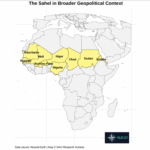
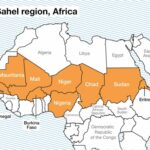
Today, the Council adopted the fourth assistance measure, worth €20 million, under the European Peace Facility (EPF) to provide the Mauritanian armed forces with military equipment. The Council Decision complements three previously adopted assistance measures. They all support the efforts of the Mauritanian armed forces to promote stability in the Sahel, counter the risk of destabilisation and protect the territorial integrity and sovereignty of Mauritania and its civilian population. The EU’s overall bilateral support for Mauritania under the EPF now stands at €75 million. As part of this package, the EU is already providing the Mauritanian armed forces with capabilities needed to carry out military activities on land and at sea, including in terms of surveillance, deterrence or operations.
The Council of the European Union approved a fourth bilateral European Peace Facility assistance measure for Mauritania worth €20 million, raising total bilateral EPF support to €75 million. The new package will provide additional non-lethal land-surveillance equipment to improve the Mauritanian armed forces’ situational awareness. It complements earlier EU-backed capabilities for land and maritime operations. The decision shows how European security assistance reaches the Sahel, but approval of an assistance measure does not establish that the newly authorized equipment has already arrived. Read more
Focus Point: Regional Security – Indo-Pacific Security
The Latest on Southeast Asia: Thailand-Cambodia Disputes Ongoing, One Year After Peace Accords | Center for Strategic and International Studies
By Japhet Quitzon | 29 October 2026
Cambodia and Thailand continue to seek a resolution to border disputes on land and sea a year after the October 26, 2025 signing of what is unofficially called the Kuala Lumpur Peace Accord. That joint statement was signed by prime ministers Anutin Charnvirakul of Thailand and Hun Manet of Cambodia and witnessed by President Donald Trump and Prime Minister Anwar Ibrahim of Malaysia on the sidelines of last year’s ASEAN Summit. The agreement strengthened a late-July 2025 ceasefire that had halted days of fighting along the Thailand-Cambodia border. The Kuala Lumpur agreement broke down in early December 2025, but a second ceasefire was reached after three weeks of fighting and remains in place.
Japhet Quitzon reviews unresolved territorial and maritime disputes between Thailand and Cambodia one year after their 2025 peace accord. Although a subsequent ceasefire remains in place, disagreements over border areas, historical sites, and offshore maritime claims continue to complicate relations. The analysis describes diplomatic and military communication efforts designed to reduce misunderstandings. For NAVI’s audience, the case illustrates how fragile ceasefires and competing sovereignty claims can sustain regional-security risks even after formal agreements have been announced. Read more
Focus Point: Regional Security – Indo-Pacific Security
Taiwan says China harassing shipping with east coast patrol | Reuters
By Reuters | 31 October 2026
China’s Coast Guard is harassing shipping with its latest patrol off Taiwan’s east coast and trying to exert a fictional jurisdiction, the Taiwanese Coast Guard said, adding it had sent its own ships to keep watch. China, which views Taiwan as its own territory, has stepped up activity off the island’s east coast since June with regular coast guard patrols. Officials in Taiwan, which rejects Beijing’s sovereignty claims, say they believe China is practising for a potential maritime blockade using overlapping military, paramilitary and civilian assets. Taipei regards the area off its east coast as critical to wartime supply routes from allies in the event of a blockade or conflict. China recognises no claims of sovereignty by Taiwan.
Taiwan’s Coast Guard accused Chinese vessels of harassing shipping and asserting jurisdiction during patrols off the island’s east coast. Taiwanese authorities reported monitoring two Chinese Coast Guard ships and linked the activity to concerns about possible maritime-blockade preparations. China’s account framed the operations as maritime law enforcement. The episode adds a civilian and coast guard dimension to the week’s wider military-activity reporting. Its importance lies in the pressure that persistent maritime presence can place on commercial access, sovereignty disputes, and regional escalation management. Read more
Focus Point: Social, Economic & Security – Economic Security and Economic Statecraft
Global aid gap widens as major donors prioritize higher military spending, new SIPRI research shows | SIPRI
By SIPRI | 27 October 2026
‘Our findings reveal that we are in the middle of a sustained withdrawal of vital humanitarian and development assistance at a time when needs for it are growing,ʼ said Nan Tian, Director of the SIPRI Military Expenditure and Arms Production Programme. ‘However, it is important to stress that this funding gap is just a fraction of the extra resources being directed to military spending. Meeting future ODA needs is affordable.ʼ The report includes case studies of recent ODA and military spending policy in two European countries: Germany and the United Kingdom. Among other things, they show that governments have justified ODA cuts as necessary to finance higher military spending despite the fact that they make only a marginal contribution to the planned increases.
SIPRI reports that global military spending reached approximately US$2.9 trillion in 2025 while official development assistance has declined since 2024. The research estimates that development and humanitarian needs could reach US$326 billion by 2028, creating a possible US$179 billion funding gap. Case studies of Germany and the United Kingdom explore government explanations for aid reductions alongside defence spending increases. These are estimates and scenarios, not certainty about future budgets or proof that military expenditure alone caused every reduction in assistance. Read more
Way Ahead | 2–8 November 2026
The Return of the Nuclear Sea-Launched Cruise Missile (SLCM-N) | HTK
4 November 2026 | 1:00–2:00 p.m. EST | CSIS, HTK Series / nuclear security programmes
Discussion of the sea-launched nuclear cruise missile programme and its implications for deterrence. Event information
The Modernization of South American Militaries: Opportunities, Challenges, and Future Directions
4 November 2026 | 2:00–3:00 p.m. EST | CSIS, Americas Program
Examines military modernization and regional procurement across South America. Event information
Antitrust and National Security: Balancing Competition, Innovation, and Technological Leadership
5 November 2026 | 10:00–11:00 a.m. EST | CSIS, Strategic Technologies Program
Explores technology competition and national-security considerations in antitrust policy. Event information
Subscribe to NAVI Radar Weekly | Visit NAVI Research Institute
This edition of NAVI Radar Weekly was produced by Jordan J. A. Rezende De Lucia.
Disclaimer: AI technologies were utilized to support the content creation and drafting process for NAVI Radar Weekly.

The NAVI Research Institute is the research division of NATO Veterans Initiative - NAVI that provides a unique perspective to transatlantic leaders and societies on peace and security through the lens of NATO's founding principles of rule of law, democracy, human rights, and individual liberties. The NAVI Research Institute was officially established by the NAVI Board on July 16th, 2023.
- NAVI Research Institute
- NAVI Research Institute
- NAVI Research Institute
- NAVI Research Institute

- NAVI Research Institute

- NAVI Research Institute
- NAVI Research Institute

- NAVI Research Institute
- NAVI Research Institute

- NAVI Research Institute

- NAVI Research Institute
- NAVI Research Institute

- NAVI Research Institute
- NAVI Research Institute
- NAVI Research Institute
- NAVI Research Institute
- NAVI Research Institute
- NAVI Research Institute
- NAVI Research Institute
- NAVI Research Institute
- NAVI Research Institute
- NAVI Research Institute
- NAVI Research Institute
- NAVI Research Institute
- NAVI Research Institute
- NAVI Research Institute
- NAVI Research Institute
- NAVI Research Institute
- NAVI Research Institute

- NAVI Research Institute
- NAVI Research Institute
- NAVI Research Institute
- NAVI Research Institute
- NAVI Research Institute
- NAVI Research Institute
- NAVI Research Institute

- NAVI Research Institute
- NAVI Research Institute
- NAVI Research Institute
- NAVI Research Institute
- NAVI Research Institute
- NAVI Research Institute
- NAVI Research Institute
- NAVI Research Institute
- NAVI Research Institute
- NAVI Research Institute
- NAVI Research Institute

- NAVI Research Institute
- NAVI Research Institute
- NAVI Research Institute

- NAVI Research Institute
- NAVI Research Institute
- NAVI Research Institute
- NAVI Research Institute
- NAVI Research Institute
- NAVI Research Institute
- NAVI Research Institute

- NAVI Research Institute
- NAVI Research Institute
- NAVI Research Institute
- NAVI Research Institute
- NAVI Research Institute
- NAVI Research Institute
- NAVI Research Institute
- NAVI Research Institute
- NAVI Research Institute
- NAVI Research Institute

- NAVI Research Institute
- NAVI Research Institute
- NAVI Research Institute

- NAVI Research Institute
- NAVI Research Institute
- NAVI Research Institute
- NAVI Research Institute
- NAVI Research Institute
- NAVI Research Institute

- NAVI Research Institute

- NAVI Research Institute

- NAVI Research Institute