
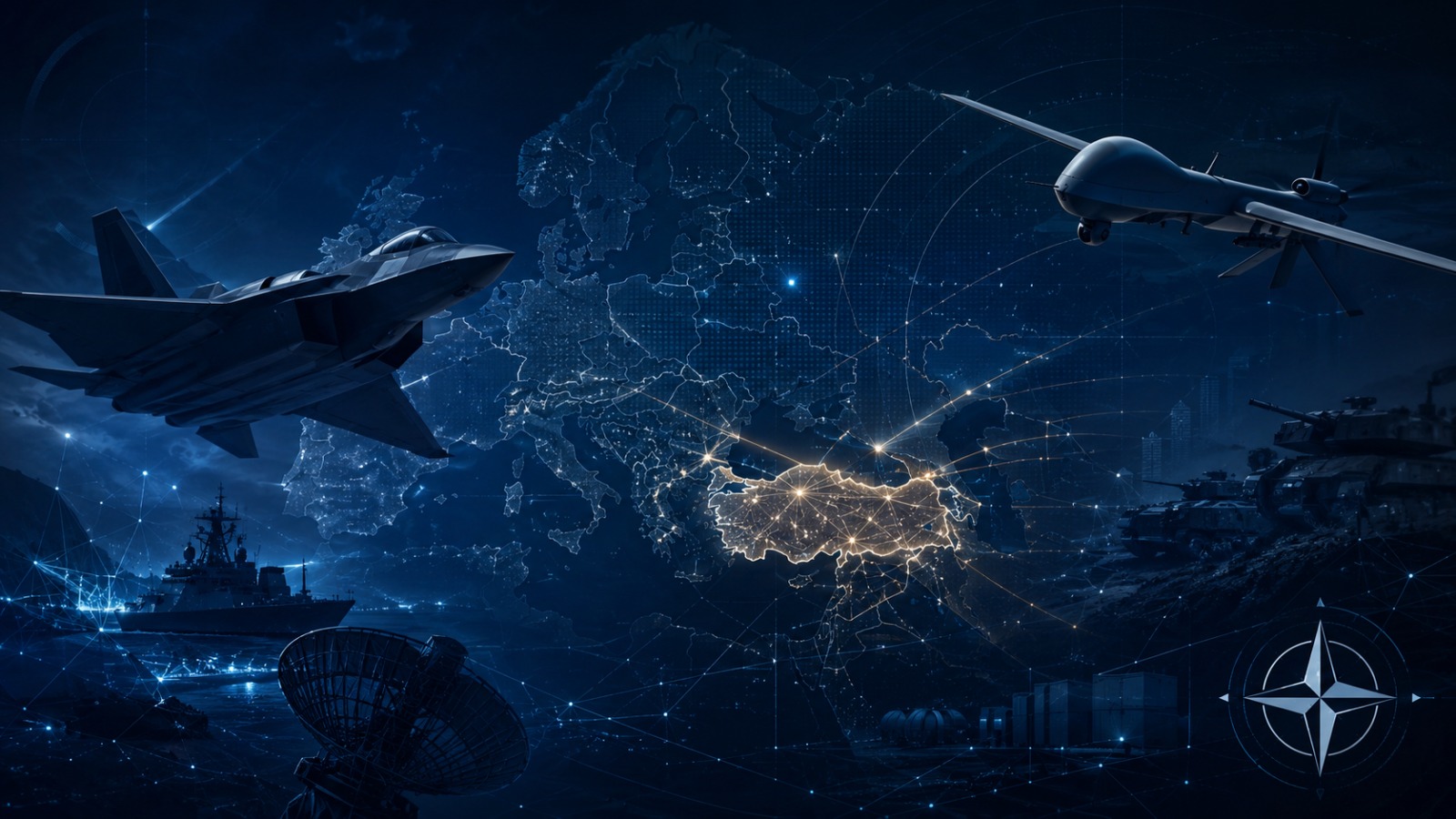
The 2026 NATO Summit in Ankara has concluded. While superficial diplomatic analyses celebrate a renewed United States commitment to transatlantic security, a rigorous structural reading of the final communiqué reveals an intensely transactional shift (North Atlantic Council, 2026). To analyze the summit outcomes accurately, analysts must bypass declaratory diplomacy and evaluate the alliance through the Mandated Clarity Framework, which replaces ambiguous financial inputs with enforceable operational outputs (Aydiner & Kurt, 2026)
The Transactional Reality of the U.S. Security Umbrella
The conventional media narrative frames the summit as a triumph of traditional American multilateralism. However, an examination of the industrial and financial directives reveals a calculated transactional reset. The United States has conditioned its security architecture on explicit returns on investment (Aydiner & Kurt, 2026).
The alliance is restricted by a persistent structural conflict rooted in military doctrine and asymmetric commercial relationships (Aydiner & Kurt, in press). For Washington, the integration of the three dimensions of defense spending, namely cash, capabilities, and contributions, serves to address deep-seated commercial imbalances. The American mandate requires that European financial outlays translate into specific capabilities that remain fully interoperable with U.S. systems. The coordinated push for fifth-generation platforms, specifically the F-35, is designed to impose a unified command architecture upon European states that currently lack independent defense industrial capacity. This dynamic is clearly formalized in the official text of the Ankara Summit Declaration, which highlights that European Allies and Canada increased their core defense investments by more than $139 billion in 2025 (North Atlantic Council, 2026).
Furthermore, rather than relying on abstract rhetoric, the summit delivered concrete outputs, including the formal announcement of more than $50 billion in new defense procurements aimed at expanding collective manufacturing capacity and working with industry to accelerate innovation. To fundamentally rebalance the security burden, Allies also introduced the Drone Edge initiative, which represents a major framework involving a $40 billion investment in counter-uncrewed systems over the next five years, alongside a €27 billion investment to modernize the alliance’s fuel supply chain and pipelines toward the eastern flank. These figures prove that the focus has shifted decisively toward measurable industrial depth and the systematic elimination of trade barriers among Allies (North Atlantic Council, 2026).
As we previously outlined in our NAVI research, this shift is driven not by a cyclical political fluctuation, but by a deeper structural evolution within the transatlantic architecture. European allies are increasingly forced to confront a shifting security landscape marked by a bipartisan U.S. consensus prioritizing the Indo-Pacific and China as Washington’s primary strategic challenge. Coupled with explicit political questioning of Article 5 commitments and actual physical force posture adjustments by American leadership, as previously established by NAVI, the traditional U.S. security umbrella is no longer viewed as an absolute, open-ended guarantee. Consequently, Europe’s strategic shift toward autonomy is framed not as an attempt at de-coupling from the United States, but rather as a calculated strategy of de-risking overdependence. This Europeanization of NATO represents an organizational and institutional transformation where European member states assume greater leadership and ownership within the alliance to ensure collective credibility, even when European and American strategic interests occasionally diverge (Kurt, 2026).
This internal rebalancing act is acutely visible in the industrial maneuvers of NATO’s top leadership. NATO Secretary General Mark Rutte has actively campaigned to dramatically scale up defense production and deals, deliberately preparing lists of all defense procurement plans for the Ankara summit to send a clear demand signal to Washington (Kayali et al., 2026). By packaging the summit declaration with a massive wave of defense contracts, Rutte aims to secure the U.S. commitment to the alliance by offering a direct commercial incentive, consisting of a multi-billion-dollar pledge to buy more American weapons and rely heavily on existing U.S. military stockpiles.
This Made in NATO weapons push, however, creates direct friction with the European Union’s protectionist defense ambitions. As Brussels attempts to foster independent defense industrial production via exclusive funding loops, Rutte’s strategy frames transatlantic security through a deeply transactional lens. This approach pacifies American demands for greater European burden-sharing while reinforcing that European security cannot realistically function if it isolates non-EU allies or completely replaces critical, high-end American military capabilities (Kayali et al., 2026).
The European Splinter: Club Convergence and Strategic Postures
The Ankara proceedings brought the widening fracture between distinct internal alliance clusters into sharp relief. The institutional structure has divided into a hard-power club, led by the United States and Poland, and a soft-power club, represented by Germany and its Western European partners (Aydiner & Kurt, 2026).
- Operational Stagnation: Countries like Germany continue to treat defense spending benchmarks as distant political aspirations rather than binding operational requirements.
- Strategic Culture Divergence: Their strategic cultures prioritize diplomatic engagement and state-subsidized, long-term industrial projects over immediate combat readiness.
- Exploitable Deficits: This systematic delay in converting financial inputs into deployable forces creates clear capability gaps that adversaries can exploit.
- The Urgency of the Eastern Flank: Frontline nations like Poland demonstrate that an acute threat environment can successfully compel capability-driven outcomes.
- Bypassing Local Mandates: These states are actively driving alliance policy by bypassing European Union local content mandates in favor of rapid, off-the-shelf procurement from American and South Korean manufacturers.
- Erosion of Autonomy: This divergence undermines the cohesive strategic autonomy envisioned by Paris and Berlin.
This rift is further complicated by the long-term commitments forged during the summit regarding the defense of Ukraine. The Ankara Declaration mandates a collective pledge of €70 billion in military equipment, assistance, and training for Ukraine in 2026, with an explicit sovereign commitment to sustain at least equivalent levels of support in 2027. While this massive financial package relies heavily on European Allies and Canada, who now finance most of the security assistance to Kyiv, the internal debates highlighted a profound friction. The multi-year funding mechanism, partly supported via the European Union’s Ukraine Support Loan, exposed hesitation among certain Western European states reluctant to assume long-term, legally binding financial obligations (North Atlantic Council, 2026). This emphasizes that the split between immediate capability output and prolonged input negotiation remains a core vulnerability within the alliance.
To operationalize the mechanism of this Europeanization and bridge these capability gaps, institutional frameworks are pivoting toward verifiable outputs rather than rhetorical commitments. While strategic autonomy defines the ultimate capability objective of acting independently, when necessary, the Europeanization of NATO serves as the core institutional mechanism (Kurt, 2026). This has triggered serious proposals for structural updates, such as the introduction of an e-SACEUR, or European Supreme Allied Commander Europe, to deeply integrate European perspectives and command structures into the alliance’s operational planning. To make this autonomy real, Europe is focusing on connecting capability gaps analyzed by the European Defence Agency with specific acquisition initiatives, crystallizing into four critical flagship defense projects: the Eastern Flank Watch, the European Drone Defense Initiative, the European Air Shield, and the European Space Shield. However, the primary bottleneck remains time and sustained political will, as these independent capabilities assume that European governments can consistently maintain defense expenditures at 4 to 5% of GDP across multiple electoral cycles without slipping back into input-based stagnation.
This institutional push highlights the critical intersection between military alliances and diplomatic coordination frameworks in Brussels. The European External Action Service, acting as the European Union’s diplomatic and security arm, increasingly operates as a vital institutional counterweight and collaborative partner in synchronizing these autonomous European defense projects with broader geopolitical strategies (Vinocur, 2026). Under scrutiny regarding its capability to counter rapid geopolitical shifts, the service serves as the primary diplomatic clearinghouse for the soft-power club countries, striving to align European defense industrial deployment with international diplomatic mandates. The ongoing institutional dialogue between NATO’s military planning staff and the diplomatic crisis management structures underlines a broader bureaucratic effort to ensure that the Europeanization of defense capabilities does not create competing centers of authority. It instead promotes a functional division of labor where the civilian apparatus manages the civil-diplomatic and sanctions architecture while NATO guarantees the hard-power deterrence baseline.
This internal European bureaucratic landscape is undergoing even deeper structural consolidation. Reports that the European Commission is actively considering the creation or consolidation of a dedicated department or more centralized authority for foreign relations and defense economics reflect a strategic drive to streamline the EU’s fragmented external apparatus. By considering a more powerful, unified internal department for external relations, the Commission aims to bridge the long-standing gap between its massive economic leverage, including trade policy, industrial subsidies, and technology regulations, and its broader geopolitical ambitions. This internal consolidation is directly linked to the operational enforcement of the de-risking strategy. A unified foreign relations department within the Commission would allow Brussels to weaponize supply chains, screen foreign direct investments, and manage defense-industrial funding with unprecedented speed, effectively ensuring that the soft-power club can back its diplomatic initiatives with coherent, output-oriented economic capabilities (Vinocur, 2026).
This structural clash directly impacts the ground-level defense procurement dispute. At the heart of the internal alliance friction is how to spend the flood of rearmament funds pouring into Europe. While the EU attempts to introduce frameworks like the €1.5 billion European Defence Industry Programme and the €150 billion SAFE loans to enforce a protectionist Buy European preference, individual member states face an immediate operational reality (Kayali et al., 2026). Frontline nations, racing to build credible deterrence against Russia and satisfy U.S. transactional pressures, routinely find that European defense companies require long-term contracts and years to ramp up production lines. Consequently, Rutte’s campaign highlights a deep operational paradox. To satisfy the Mandated Clarity Framework’s demand for immediate, deployable capability outputs rather than delayed industrial promises, European states are consistently forced to choose off-the-shelf American or non-EU platforms over Brussels’ slow-moving continental initiatives, fracturing the EU’s vision of defense cohesion (Kayali et al., 2026).
The harsh physical reality underpinning this de-risking arithmetic is precisely modeled in the International Institute for Strategic Studies landmark report, Defending Europe Without the United States: Costs and Consequences (Barry et al., 2025). The independent open-source assessment demonstrates that if the US were to withdraw its conventional military forces from the Euro-Atlantic theatre, directly replacing key parts of the American contribution would cost European NATO allies approximately USD 1 trillion over a 25-year lifecycle. This immense gap is not merely a matter of financial inputs but of staggering physical shortfalls.
Europe would need to completely replace an estimated 128,000 U.S. military personnel, fill massive vacancies within NATO’s command-and-control arrangements, and independently replicate critical American assets in space and all-domain intelligence, surveillance, and reconnaissance. Furthermore, the report estimates that within the next decade, Europe’s defense industry will face extreme difficulties replacing US capabilities in the air and maritime domains due to long industrial lead times and lack of production capacity expansion, thereby exposing a severe window of vulnerability. This data reinforces the Mandated Clarity Framework’s argument that measuring defense contributions purely through GDP inputs masks a catastrophic operational chasm that cannot be quickly closed without sustained foreign procurement (Barry et al., 2025).
Historical and structural analysis demonstrates that the root bottleneck of European defense cooperation dates back to the very foundation of the modern Union. The present EU defense architecture remains bound by provisions introduced in the 1992 Treaty of Maastricht, which laid the initial groundwork for a Common Foreign and Security Policy but created a fundamentally complex, cumbersome, and intergovernmental procedure (Eyskens, 2025). This legacy architecture mandates strict unanimity among member states or requires politically risky public referendums to modify defense frameworks, as historically demonstrated by the rejection of the European Constitution in 2005. In the face of intense 21st-century technological transformations, this institutional friction restricts Europe’s ability to act with immediate cohesion, forcing individual nations to execute ad-hoc, output-driven procurement rather than unified continental initiatives (Eyskens, 2025).
This strategic friction is further exacerbated by a fundamental, systemic evolution in the overarching threat paradigm. In response to escalating challenges posed by China and Russia’s aggressive military postures, the Euro-Atlantic community is being forced to orchestrate a profound transition from a traditional capacity-based defense planning strategy to a rigorous threat-based approach (Kurt, 2024). While capacity-based planning focuses on building generic military capabilities irrespective of specific adversaries, a threat-based approach demands that industrial outputs be directly prioritized to mitigate and neutralize precise, identified threats, a transformation that signals the official end of traditional globalization.
The acute urgency of this structural reorientation is driven by explicit timelines, notably the targeted 2027 and 2029 benchmarks for potential geopolitical conflicts in the Indo-Pacific, underscored by intelligence regarding China’s rapid military buildup and intent to possess the structural capability for a Taiwan invasion by 2027. Simultaneously, Russia’s aggressive war-fighting material production, as highlighted by allied defense commanders, underscores a direct challenge to Euro-Atlantic stability, proving that long-term industrial resilience, innovation, and interoperability must be enforced immediately to manage the compressed timelines of modern peer competition (Kurt, 2024).
The Escalation Ladder and Substrategic Paralysis
A critical and frequently misconstrued element of the Ankara summit is the renewed emphasis on full-spectrum deterrence. The procurement of nuclear-capable platforms like the F-35 is explicitly intended to close existing gaps in the escalation ladder (North Atlantic Council, 2026).
Currently, NATO suffers from a vulnerability termed substrategic paralysis, a strategic condition where the alliance lacks sufficient conventional forces to counter gray-zone, hybrid, or localized proxy aggression proportionately. This conventional deficit creates a dangerous risk environment, forcing commanders to choose between premature nuclear escalation and destabilizing hesitation. Integrating advanced precision conventional forces with modernized tactical nuclear assets allows NATO to present a seamless deterrent narrative across all domains (Aydiner & Kurt, 2026).
This integration is increasingly vital when evaluating contemporary threat landscapes. While recent intelligence and strategic assessments indicate that Russia is conventionally and militarily too weak to launch a direct, full-scale military conflict against a united NATO alliance, Moscow remains highly capable of exploiting the alliance’s sub-strategic vulnerabilities through asymmetric means (Lucas, 2026). Instead of a direct military confrontation, the threat profile manifests as a complex war of nerves characterized by deniable provocations, hybrid operations, cyber warfare, and highly orchestrated false-flag operations designed to test the alliance’s psychological and operational boundaries without cross-triggering a full Article 5 response. Therefore, a reliance on purely conventional or input-based military assessments leaves the alliance dangerously exposed to these grey-zone escalations, reinforcing the urgent need for operational outputs that specifically address asymmetric aggression (Lucas, 2026).
This risk environment is profoundly magnified by the evolution of modern cyber conflict, which fundamentally exacerbates substrategic paralysis. As cyber warfare transcends physical borders and allows state-sponsored hacking groups to instantaneously infiltrate critical government infrastructure, databases, and corporate assets from anywhere in the world, it provides a highly cost-effective method to level the playing field between unequal conventional powers. This borderless digital threat blurs traditional legal definitions of armed conflict, leaving crucial ambiguity regarding what constitutes an act of war and creating a dangerous gray-zone where the Geneva Conventions do not easily apply. Because an adversary can execute highly disruptive cyber incursions without crossing the threshold of kinetic war, it exploits NATO’s rigid operational baselines. This further underscores that stable foundations of operational clarity must actively incorporate comprehensive digital deterrence outputs.
To address this exact layer of strategic vulnerability, the official Ankara Declaration emphasizes a 360-degree approach to deterrence and defense by actively prioritizing deep precision strike capabilities, integrated air and missile defense, and advanced intelligence assets. Furthermore, the alliance is actively building next-generation technological infrastructure to counter sub-surface and cyber gray-zone operations, specifically committing to the development of an interoperable transatlantic warfighting cloud and the rapid adoption of powerful AI models. This structural push is designed to ensure that tactical networks can operate with maximum speed and clarity, mitigating the risk of paralysis when confronted with hybrid shocks (North Atlantic Council, 2026).
Türkiye’s Operational Dilemma: Interoperability vs. Autonomy
As the host nation, Türkiye embodies the core challenge of the proposed NATO Contribution Index (Aydiner & Kurt, 2026). Ankara possesses significant operational capabilities through its massive standing military and an autonomous, globally competitive uncrewed aerial systems sector. Under a rigorous operational framework, the utilization of non-networked, sovereign military assets introduces a measurable interoperability penalty.
- The Incentive for Integration: If Ankara chooses to integrate its advanced autonomous systems, including the TB2 and Akıncı lines, into the shared command and control architecture of the Supreme Allied Commander Europe, its recorded contribution score rises substantially.
- The Limits of Enforcement: The mandate for technical integration remains strictly voluntary, applying exclusively to the specific force packages that a state designates for collective burden-sharing credit.
- Sovereign Trade-offs: Türkiye retains absolute sovereign authority over its uncrewed reserve inventory, yet refusing to integrate these assets formally registers the nation as a consumer rather than an anchor of collective security.
Analytical Assessment
The Ankara Summit demonstrates that strategic ambiguity has reached the limits of its utility in an era of complex hybrid competition. The alliance cannot sustain institutional stability by measuring defense contributions through gross domestic product percentages, an input-based metric that actively masks deep operational vulnerabilities. Future alliance cohesion depends on establishing and enforcing capability-based baselines while maintaining democratic resilience across all 32 member states. True strategic flexibility requires a stable foundation of operational clarity.
References
Aydiner, C., & Kurt, U. (2026). Mandating clarity: Operationalizing the three Cs for NATO deterrence. North Atlantic Review.
Aydiner, C., & Kurt, U. (in press). The mandate for clarity: Resolving NATO’s structural conflict to secure 21st-century deterrence. Journal of Strategic Security.
Barry, B., Barrie, D., Boyd, H., Childs, N., Gjerstad, M., Hackett, J., McGerty, F., Schreer, B., & Waldwyn, T. (2025). Defending Europe without the United States: Costs and consequences. International Institute for Strategic Studies. https://www.iiss.org/research-paper/2025/05/defending-europe-without–the-united-states-costs-and-consequences/
Eyskens, M. (2025). From Maastricht to cyberwar: Modernizing European defense. NAVI Research Institute. https://nato-veterans.org/from-maastricht-to-cyberwar-modernizing-european-defense/
Kayali, L., Jack, V., & Lunday, C. (2026). Rutte’s ‘Made in NATO’ weapons push collides with EU’s ‘Buy European’ drive. POLITICO Europe. https://www.politico.eu/article/mark-rutte-nato-weapons-eu-buy-european-defense/
Kurt, U. (2024). Strengthening NATO and EU industrial capacity in response to threats emanating from China and Russia. NAVI Research Institute. https://nato-veterans.org/strengthening-nato-and-eu-industrial-capacity-in-response-to-threats-emanating-from-china-and-russia/
Kurt, U. (2026). Not de-coupling but de-risking NATO: Europe’s bid for strategic autonomy. NAVI Research Institute. https://nato-veterans.org/not-de-coupling-but-de-risking-nato-europes-bid-for-strategic-autonomy/
Lucas, E. (2026). False flags and a war of nerves: Russia is too weak to fight NATO militarily, but it can attack in other ways. EUobserver. https://euobserver.com/225872/false-flags-and-a-war-of-nerves-russia-is-too-weak-to-fight-nato-militarily-but-it-can-attack-in-other-ways/
North Atlantic Council. (2026). The Ankara Summit Declaration. NATO Official Texts. https://www.nato.int/en/about-us/official-texts-and-resources/official-texts/2026/07/08/the-ankara-summit-declaration
Vinocur, N. (2026). European Commission consider department foreign relations. POLITICO Europe. https://www.politico.eu/article/european-commission-consider-department-foreign-relations/

Cihan Aydiner is an Associate Professor and Program Chair for the BS in Homeland Security and the MS in Security and Intelligence Studies at Embry-Riddle Aeronautical University–Worldwide, where he also serves as Associate Chair of the Department of Emergency, Disaster and Global Security Studies. He led the effort that produced the first nationally accredited homeland security degree program in the United States.
He is Founding Executive Editor of The North Atlantic Review and directs the NAVI Research Institute. His research covers NATO burden-sharing and alliance cohesion, the evaluation of AI systems for high-accountability environments, security studies, and forced migration governance.

As a graduate of the U.S. Army War College and a former senior civil servant, Mr. Umit Kurt is dedicated to advancing the field of international relations as a Ph.D. researcher at UCLouvain in international relations in Belgium.
His research delves into the dynamics of International Institutions with their diverse members, the ethics of reconciliation, the complexities of migration, and the overarching governance of digital ecosystems.
With a career that spans over two decades, he has been at the forefront of leading and contributing to task forces in various capacities, including NATO Peace Operations and strategic NATO Headquarters.
Mr Kurt’s professional journey has been enriched by a Master of Business Administration. His expertise in Global Governance for Digital Ecosystems was honed through a consultancy role at PA Europe-Belgium, a prominent multinational public affairs firm.
-
Ümit Kurt - Research Fellow

-
Ümit Kurt - Research Fellow

-
Ümit Kurt - Research Fellow

-
Ümit Kurt - Research Fellow

-
Ümit Kurt - Research Fellow
-
Ümit Kurt - Research Fellow

-
Ümit Kurt - Research Fellow