
Executive Summary
NATO stands at a critical juncture. For seventy-five years, the Alliance has relied on the United States as its central guarantor of European security. However, today, Washington’s strategic pivot to the Indo-Pacific, doubts over its long-term commitment to Article 5, and internal U.S. political pressures compel Europe to assume far greater responsibility for its own defense. Simultaneously, Russia’s aggression and China’s ambitions have sharpened the urgency of European rearmament and institutional reform.
The “Europeanization of NATO” captures this shifting reality: a process in which European member states strengthen their strategic autonomy, defense capabilities, and leadership roles within the Alliance—not to decouple from the U.S., but to de-risk overdependence on it. This evolution is intended to create a more balanced transatlantic partnership while ensuring NATO’s continued credibility.
European initiatives such as PESCO, the European Defence Fund, and proposals for a European SACEUR demonstrate progress, but face persistent obstacles: fragmented procurement, divergent national threat perceptions, capability shortfalls, and limited political will. On October 16, 2025, the EU unveiled the Defense Readiness Roadmap 2030 to strengthen its military capabilities by the end of the decade. The strategy includes four flagship initiatives—Eastern Flank Watch, Drone Defense, Air Shield, and Space Shield—outlined in the European Defense White Paper. Led by Member States, the European Defence Agency will coordinate efforts to address capability gaps and guide joint development priorities. Franco-German leadership has symbolic importance but remains constrained by diverging strategic cultures. Europe’s defense industry remains underdeveloped compared to the U.S., with critical shortfalls in nuclear deterrence, long-range strike, ISR, logistics, and missile defense.
Strategic recommendations stress the need for:
- Massive, sustained defense investment (up to 5% of GDP) to close capability gaps.
- Industrial integration and interoperability to strengthen Europe’s defense base.
- Balanced burden-sharing with the U.S. through institutional reforms, such as a possible European SACEUR.
- Stronger EU–NATO cooperation while avoiding duplication.
- Sustained support for Ukraine as a linchpin of European security.
The China–Russia axis will test and exploit cracks in transatlantic unity, underscoring the need for cohesion. A successful Europeanization of NATO will require time, consensus, and U.S. acceptance of a more equal partnership.
The most realistic outcome is a hybrid model: Europe gradually achieving partial autonomy in some areas (conventional defense, regional security, cyber) while remaining reliant on U.S. strategic enablers. Europeanization should be seen as an evolutionary process, not a revolutionary break.
In conclusion, Europe cannot afford strategic complacency. Its ability to strengthen its role within NATO while maintaining the indispensable transatlantic link will determine not only the Alliance’s future, but also Europe’s survival as a secure, credible actor in an increasingly unstable world.
The Driving Factors Behind the Call for Greater European Leadership within NATO
Since NATO’s inception in 1949, the U.S. has anchored European security, driven by strategic necessity and a commitment to counter Soviet influence (Michel, 2020). However, today, the United States’ strategic reorientation towards the Indo-Pacific and its long-term commitment to European security are being increasingly questioned, coupled with a deteriorating security environment in Europe’s neighborhood due to Russian aggression, and, lastly, China’s ambitions have caused “real concern” among European leaders.
These concerns intensified after U.S. leaders questioned Article 5, linking it to the defense spending of its allies. A secret memo from the US Defense Secretary Pete Hegseth suggests a U.S. strategic shift toward deterring China and advises European allies to take primary responsibility for conventional defense against Russia (Horton & Nathanson, 2025).
Skeptics might note that predictions of American withdrawal from Europe have proven premature before—from the 1960s “burden-sharing” debates through the post-Cold War drawdown. However, three factors distinguish the current moment: (1) bipartisan U.S. consensus on China as the primary strategic challenge, (2) unprecedented explicit questioning of Article 5 commitments by U.S. leaders, and (3) concrete force posture adjustments reflecting Indo-Pacific prioritization. This convergence suggests structural rather than cyclical change.
This wavering compels Europe to enhance its deterrence capabilities, initiating discussions about greater security independence, including a European nuclear deterrent (Grand, 2024). When combined with the desire for Europe to achieve greater strategic autonomy and assume more responsibility for its own destiny, this concern prompted NATO to emphasize unity, raise defense spending, and reaffirm collective defense, often expressed as the need for the “Europeanization of NATO.” This is also seen as a precondition for saving NATO (Rizzo & Benhamou, 2024).
The “Europeanization of NATO” refers to a shift within the alliance in which European member states assume greater responsibility for strategic decision-making, military capabilities, and overall leadership, reducing their reliance on the United States (Rizzo & Benhamou, 2024).
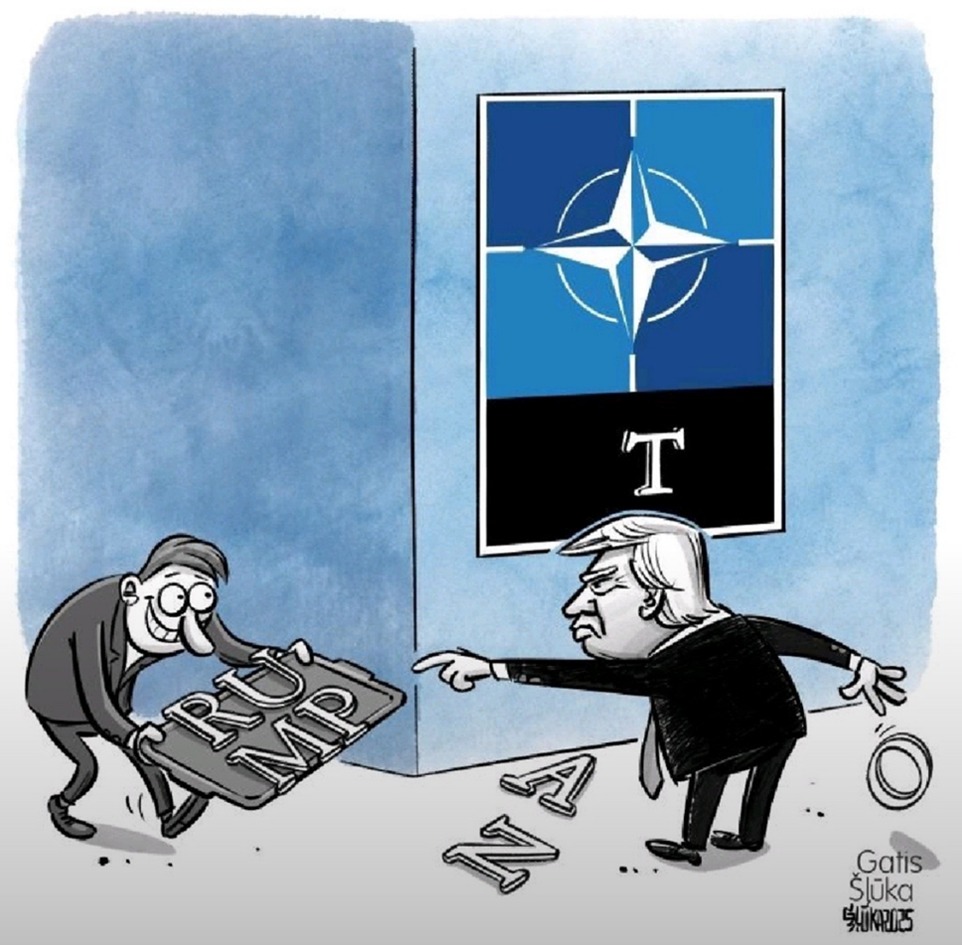
The aim is not to decouple entirely from the U.S., but to de-risk by developing a more balanced partnership where Europe can act more autonomously when necessary and contribute more decisively to collective security. It is expected that this strategy will enhance NATO’s credibility and address concerns over burden-sharing (Bélanger, 2025). Therefore, Europe faces the delicate balancing act of taking greater responsibility for its own security while maintaining a robust transatlantic link (Dorman, 2024).
Amid these developments, NATO Secretary-General Mark Rutte has warned against any idea of Europe or North America “going it alone,” emphasizing that global security challenges are too significant for any single entity to handle and reaffirm NATO as the cornerstone of collective defense (Erling & Bayer, 2025).
Strategic Autonomy: The correct direction, but not an easy one
Europe’s push for greater responsibility is also linked to a desire for autonomy and to assume more responsibility for its own destiny, ensuring its interests are protected even when they diverge from those of the U.S. (Balfour, 2025). In response, key European nations, including the UK, France, Germany, and the Nordics, are reportedly engaged in structured discussions to develop a plan for shifting the financial and military burden to European capitals (Foy & Hall, 2025).
The EU has begun taking action by presenting a White Paper on European Defense Readiness 2030– then the Defense Readiness Roadmap 2030, and a Preparedness Union Strategy. As European nations increase their defense spending, they are tangibly building the foundation to assume a more prominent and influential role in the alliance’s decision-making and operational planning (Taylor, 2024).
Strategic autonomy and Europeanization, while related, represent distinct concepts. Strategic autonomy refers to Europe’s ability to act independently when necessary—a capability objective. Europeanization of NATO describes the organizational transformation through which Europeans assume greater leadership within the alliance structure—an institutional process. The former represents the “what” (desired capability), the latter the “how” (mechanism for achieving it).
Pros and Cons
A primary benefit of this shift would be a more equitable distribution of the defense burden, with European allies assuming greater responsibility for their collective security—a long-standing expectation from the United States (O’Hanlon, 2024). This increased European ownership could enhance NATO’s overall deterrence posture, responsiveness, and cohesion by more deeply integrating European perspectives and capabilities into the alliance’s strategic planning (Kramer & Agachi, 2024). A more robust European defense pillar would also allow the alliance to address a broader range of threats more autonomously, especially in scenarios where U.S. and European interests might diverge (Bélanger, 2025).
However, there are considerable risks. A strong push for European autonomy could inadvertently weaken the vital transatlantic bond if it is perceived as an attempt to decouple from the U.S. or if it leads to a duplication of efforts between the EU and NATO (Bolton, 2024; Besch & Brown, 2025).
The EU Defense Initiatives
Several EU defense initiatives provide practical building blocks for this Europeanization. The Permanent Structured Cooperation (PESCO) and the European Defense Fund (EDF) are designed to deepen defense collaboration, jointly develop capabilities, and strengthen Europe’s defense technological and industrial base (EDTIB) (European Commission, 2021; European Parliament, 2025; Creutz et al., 2024; Mattelaer, 2023).
Last week (October 16, 2025), the European Commission and the High Representative for Foreign Affairs and Security Policy unveiled the Preserving Peace – Defense Readiness Roadmap 2030, a comprehensive strategy aimed at enhancing EU defense capabilities. The roadmap responds to a request by the European Council and outlines specific objectives and milestones to guarantee full defense readiness by the end of the decade (Defence Industry Europe, 2025). It sets out clear goals and milestones to reach defense readiness by 2030, as detailed in the White Paper for European Defense. Its key proposals include four flagship projects: the Eastern Flank Watch, the European Drone Defense Initiative, the European Air Shield, and the European Space Shield. Under the leadership of the Member States, the European Defence Agency (EDA) will play a central role in supporting the coalition process, particularly through Capability Panels. Cooperation between member states and the EDA aims to connect the analysis of military capability gaps with priority areas for acquisition and development (Bonini, 2025).
Other key initiatives include the European Peace Facility (EPF), which funds military assistance to partners, and the EU Rapid Deployment Capacity (EU RDC), a modular force designed to enhance Europe’s ability to respond swiftly to crises (EEAS, 2025a).
While the EU has launched ambitious initiatives to strengthen defense cooperation, its implementation has been slow and uneven. PESCO, launched in 2017 with over 60 projects, has produced technical progress but has yet to field a fully operational capability that is seamlessly integrated into NATO forces (EEAS, 2025b). The European Defence Fund (EDF) earmarked €7.9 billion for 2021–2027 to foster collaborative development, yet procurement across Europe remains fragmented. Member states still operate well over a hundred different weapons systems, compared to around 30 in the United States, limiting interoperability and economies of scale (European Parliament, 2025). Analysts argue that while these initiatives represent real steps toward deeper cooperation, they often deliver more political signaling than tangible operational capability, reflecting the persistent tensions between national sovereignty, industrial interests, and the EU’s collective ambitions.
While these initiatives operate within the EU framework, they make European allies stronger NATO contributors by bolstering military capabilities within the alliance (Fiott & Simon, 2023; Martill & Sus, 2024). A stronger European defense industrial base, supported by joint procurement, could also lead to greater strategic autonomy and economies of scale (Mejino-Lopez & Wolff, 2024); however, concerns remain that “Buy European” policies might exclude valuable contributions from key non-EU allies like the United Kingdom, potentially limiting overall European defense effectiveness (Oliver, 2025; Ülgen, 2025; Wieslander, 2025).
Franco-German leadership and military integration
Franco-German leadership and military integration are widely seen as crucial drivers for this process, as two of the most influential members of both the EU and NATO, France and Germany, possess the potential to spearhead greater European defense cooperation and strategic autonomy (Särkkä & Ålander, 2023; Anglade, 2023). Their joint initiatives, such as the Future Combat Air System (FCAS), serve as powerful symbols of their commitment to developing advanced, shared European defense capabilities (Drent & Zandee, 2018).
Despite differences in their historical strategic cultures, these efforts represent a shared goal of strengthening Europe’s role within the alliance by enhancing the interoperability and effectiveness of European forces (De Cordoue, 2025; Martill & Sus, 2024). Furthermore, broader initiatives they champion, such as a potential “Military Schengen” concept aimed at streamlining military mobility across the continent, could significantly facilitate the rapid deployment of European forces to bolster NATO’s eastern flank (EUROMIL, 2024).
However, this assumption of Franco-German leadership is increasingly contested. Since Russia invaded Ukraine, Berlin has prioritized NATO-oriented territorial defense while Paris continues to stress expeditionary capabilities and strategic autonomy, creating divergence rather than alignment. Delays and disputes have slowed their joint FCAS program, and the “Military Schengen” concept faces significant regulatory and infrastructure hurdles, with troop movements still often delayed for weeks (European Defense Agency, 2020). These challenges suggest that Franco-German leadership, while symbolically important, might deliver less operational cohesion than often assumed.
e-SACEUR: The European Supreme Allied Commander Europe
The idea of a European SACEUR (e-SACEUR) constitutes one of the main pillars of the Europeanization of the NATO project. The most tangible symbol of this transformation is the potential appointment of a European to the position of Supreme Allied Commander Europe (SACEUR), a post traditionally held by a U.S. general since its inception in 1951 (McAlister, 2025; Tertrais, 2025).
It is argued that such a change would fundamentally recalibrate the power dynamics within the alliance, fostering a more balanced and equitable partnership by reflecting the increasing defense capabilities of European allies (Rizzo & Benhamou, 2024). Appointing a European SACEUR is also seen as a significant step to demonstrate Europe’s readiness to lead and to respond to long-standing U.S. criticisms about burden-sharing (Taylor, 2024).
Although there are no legal impediments to appointing a European SACEUR—as the North Atlantic Treaty does not specify the commander’s nationality (Kube & Lubold, 2025)—the feasibility is complicated by deep-seated political traditions and structural realities rooted in the United States’ military predominance (Bélanger, 2025; Kube & Lubold, 2025). The SACEUR’s dual-hatted role as the head of U.S. European Command (USEUCOM) intrinsically links NATO and U.S. leadership (Logan & Shifrinson, 2024).
Consequently, such a transition would require extensive command restructuring, possibly including the creation of a new nuclear deputy position to be held by an American, thereby safeguarding the U.S. role in nuclear deterrence (Rizzo & Benhamou, 2024). Furthermore, internal challenges among European allies, such as divergent strategic cultures and a lack of consensus on a candidate nation, risk weakening operational efficiency without overarching U.S. leadership (Weber, 2023). The success of such a move, therefore, depends on Europe’s ability to overcome these internal divisions and capability gaps while maintaining a strong transatlantic bond (Witney, 2024).
A fundamental, unspoken logic governs this structure: it would be militarily and politically illogical for the U.S. to command allied forces if it stops contributing its own, just as it would also be illogical for the U.S. to relinquish command if it is still the main contributor. Before resolving the technical question of the SACEUR’s nationality, the U.S. and Europe must first agree on terms like “taking more responsibility” and “more investment,” which are currently interpreted differently across the Atlantic.
Institutional, Political, and Military Challenges
The near-peer challenge: External drivers rather than self-initiated ones
The challenge to achieving a more Europeanized security and defense posture stems primarily from external pressures rather than internal European initiative. While calls for European leadership in NATO and defense autonomy grow louder, Europe’s progress remains reactive mainly. The U.S. strategic shift toward the Indo-Pacific, concerns over American commitment to European security, Russian aggression, and China’s rise. These external catalysts drive the debate rather than any organic European consensus on security independence.
This reactive posture creates a fundamental weakness: initiatives driven by external threats rather than internal conviction typically lack the sustained political will necessary for transformational change. European defense integration efforts during peaceful periods—the 1990s Western European Union, the 2000s European Security and Defense Policy—consistently faltered once immediate threats receded. The current push for NATO Europeanization may follow the same pattern: intense rhetoric during a crisis, gradual erosion once external pressure diminishes. Without genuine internal motivation transcending electoral cycles and threat fluctuations, Europe’s autonomy aspirations risk remaining perpetually aspirational.
NATO’s institutional cohesion and operational efficiency
Achieving greater Europeanization is challenged by the need to maintain NATO’s cohesion and efficiency (Iso-Markku, 2024; Jozwiak, 2025; Kamp, 2024). Although 23 EU members are in NATO, cooperation faces hurdles such as political disputes like the Cyprus-Türkiye issue, complicating classified information sharing and integrated operational planning (Taylor, 2024).
Diverse national interests and strategic views within the alliance can hinder the development of a unified approach and slow decision-making (Calkayis, 2024). Concerns also exist over potential duplication of command structures between the EU and NATO, requiring a clearer, more effective working relationship to prevent inefficiency (Maślanka, 2023). NATO’s consensus-based decision-making, while fundamental, can be slow and hindered by member blockages, reducing responsiveness and effectiveness (Kamp, 2024).
Additionally, improving military interoperability depends on overcoming national procurement biases and agreeing on shared equipment standards, often hindered by reluctance to cede authority or expose their national defense industries to competition (Besch & Brown, 2025).
Internal divisions within Europe: From as long as it takes to as long as we can.
Another important obstacle to achieving a more Europeanized security and defense posture is the significant internal divisions among European nations (Biscop, 2025; González Laya et al., 2024). These divisions manifest in several ways, including divergent threat perceptions; Eastern and Central European countries, feeling a more acute and immediate threat from Russia, often prioritize a strong transatlantic link and are wary of any initiative that might dilute the U.S. commitment. In contrast, some Western and Southern European nations may have different priorities or advocate more forcefully for strategic autonomy (Koenig, 2021). This lack of a unified strategic culture hinders coherent European action and contributes to disagreements on whether to prioritize policy through NATO or the EU (Christou, 2024).
These divisions are not mere policy disagreements but reflect incompatible threat perceptions rooted in geography and history. For Poland and the Baltics, Russia represents an existential threat requiring immediate, overwhelming conventional deterrence—making U.S. involvement non-negotiable. For France and southern European nations, the threat appears more diffuse (migration, terrorism, economic coercion), making expensive conventional rearmament seem disproportionate. These different threat perceptions generate different capability priorities; agreeing on shared procurement or integrated force structures is structurally complex rather than merely politically inconvenient. Furthermore, varying levels of defense spending and economic pressures create political fractures, with some southern countries concerned about the fiscal strain of rearmament and proposing joint EU borrowing, a measure opposed by more fiscally conservative northern states (Evans-Pritchard, 2025).
Political ideologies, such as the rise of radical-right parties, could further undermine EU foreign policy unity, while historical priorities, like France’s focus on its Indo-Pacific role, have at times created distrust among partners (Kuper, 2025).
Institutional hurdles compound these challenges, as the EU’s Common Security and Defense Policy (CSDP) essentially requires unanimity, making decisive, collective action difficult to achieve, as demonstrated by delays in providing aid to Ukraine (Cole, 2025).
Military capability gaps: America First versus Buy European
It is also worth considering that, the question of whether the capabilities offered by the United Kingdom, which is not a member of the European Union, and more importantly Türkiye, whose status as a “reliable ally” is questionable due to issues related to its alarming decline in the human rights, democracy, and the rule of law records over the last ten years, will be included under the “Buy European” framework, is yet to be resolved.
The problem is exacerbated by the fragmentation of the European defense market, characterized by national preferences and a lack of joint procurement, which results in limited economies of scale and increased costs (Mejino-Lopez & Wolff, 2024).
A notable discrepancy in understanding and actions concerning ‘increased defense spending’ and ‘taking more initiative in Europe’s defense’ has become evident between Europe and the US. This divergence is a matter that demands scrutiny.
There is significant potential for tension between Europe’s push for a more robust, self-sufficient, and autonomous defense industry within NATO from a ‘Buy European’ standpoint, and the US’s ‘America First’ foreign policy, which is designed to help “Make America Great Again (MAGA) strategy and favors American industries and increased allied spending on US defense products.
This “Europeanization” of NATO aims for European nations to shoulder more responsibility for their own security and bolster their defense industries. However, the MAGA strategy typically prioritizes American industry and employment and demands increased defense spending from allies. This creates a direct conflict of interest between Europe’s “Buy European” principle, which seeks to strengthen its own defense supply chains, and the US’s desire to sell its own defense products and technologies.
As seen under the US administration, even if the primary goal for the US is to increase allied defense spending, the expectation is often that these expenditures will flow towards American defense companies. This directly clashes with Europe’s goals of strategic autonomy. European efforts to develop and consolidate their own defense capabilities could diminish the American military industry’s current market share and influence, leading to direct friction with the commercial and economic dimensions of the MAGA strategy.
Military capability gaps: Time as the scarcest resource
Decades of collective underinvestment have weakened forces and left an underdeveloped military industrial base, making Europe unable to produce specific advanced weapon systems at the required scale (Grand, 2024; Janda, 2025).
Europe may not need top-notch capacities and capabilities to defeat Russia, but beyond political divisions, without the commitment of the US, Europe, which faces significant and deep-rooted critical enablers shortfalls (Biscop, 2025; European Defence Agency, 2020; Grand, 2024; Palomeros, 2024), can only achieve a Pyrrhic victory against Russia. China’s direct and indirect involvement in this war on the European continent could potentially lead to Europe’s defeat.
European countries currently rely on the U.S. within the NATO alliance for a range of supporting capabilities and assets that allow combat forces to operate effectively such as battlefield command and control (C2), long-range strike, suppression of enemy air defenses (SEAD), aerial reconnaissance / aerial ISR, Military Satellite Communications, airborne surveillance, aerial refueling, transport aircraft / strategic airlift.
Currently, it is not easy to say that the Continent has a defense industry capacity that is capable of competing with US defense technology, weapon systems, and production scale to implement its ‘Europe First’ strategy in the defense domain.
At this point, Rudy Ruitenberg wrote about a Defence News survey, asked 17 experts from mostly Europe-based think tanks and institutions how much time a European alliance will need to reach adequate capacity in nine defense enablers, in order to deter or successfully fight Russia without the U.S. According to the Defence News survey Europe can build up most of the critical defense enablers within five years in avarage or a sustained period of peace—at least five to ten years. However, this timeline rests on assumptions that are unlikely to hold:
- Sustained peace – Europe rarely enjoys uninterrupted decades without crisis. The invasion of Ukraine in 2022 came just 23 years after NATO’s Kosovo campaign, suggesting the next major conflict could arrive before these capabilities are in place.
- Consistent political will – The projection assumes that European governments can maintain defense spending of 4–5% of GDP across multiple electoral cycles. Given competing demands from social programs and the likelihood of recessions, sustaining such investment for a decade is politically implausible.
- No technological disruption – The estimate presumes today’s systems will remain relevant. However, rapid advances in AI, drone swarms, and hypersonic weapons could render many capabilities obsolete before they are even fielded, restarting the cycle of delays.
Taken together, these factors make the 5–10-year horizon look less like a baseline and more like a best-case scenario.
“At a European level, we are actually not fully operational …,” said Sven Biscop, director of the Europe in the World program at the Egmont Royal Institute for International Relations in Brussels. “That does not mean you cannot do anything, but it would be much more improvised, much bloodier, with more losses of people, of terrain also – so we have to solve that urgently.” (Ruitenberg, 2025)
Beyond strategies, all other resources, and lessons learned, the key question still remains: Does Europe have enough time to build the defense industrial capacity needed to develop military strength to counter threats (Kurt, 2024) from the global security landscape characterized by continued uncertainty and potential instability (Raik & Sild, 2023)?
The China-Russia Axis
The China-Russia axis is likely to view the “Europeanization of NATO” with a mixture of apprehension and potential opportunity. On one hand, a more unified and militarily capable Europe, particularly one that strengthens NATO’s eastern flank, could be seen as a direct challenge to their geopolitical ambitions and a deterrent to further aggression (Maślanka, 2023; EUROMIL, 2024).
They might attempt to exploit any perceived cracks in transatlantic unity, using disinformation campaigns to sow discord between European nations and the U.S., or to highlight internal European disagreements over defense policy (Taylor, 2024).
On the other hand, the axis might also see an opportunity in a potentially less U.S.-centric NATO. If “Europeanization” were to lead to any perceived weakening of the transatlantic bond or a diversion of U.S. attention, China and Russia might attempt to further their own influence in regions where they perceive a vacuum.
In this manner, for example, the sense of urgency is heightened by warnings from former Russian security officials that Russia, China, and the U.S. may establish a new geopolitical order that could sideline a complacent Europe, suggesting that ongoing Ukraine-Russia negotiations could lead to agreements that exclude the continent entirely (Jaffer, 2025).
Their reactions will likely be opportunistic, seeking to test European resolve and exploit any internal divisions, while simultaneously continuing their military modernization and strategic partnerships to counter a more robust European defense posture (Bélanger, 2025; Momtaz, 2025b).
Strategic Recommendations
Europe faces an urgent and non-negotiable imperative to significantly enhance its defense capabilities and assume greater responsibility for its security. This requires a dramatic and sustained increase in European defense investment, targeting 5% of GDP, coupled with a far more coordinated approach to defense planning and procurement (Grand, 2024). Critical capability shortfalls, particularly in strategic enablers such as nuclear defense, air and missile defense, long-range strike, and ISR, must be addressed.
To achieve this, greater integration of European defense industries is essential. This will foster innovation, create economies of scale, and strengthen the European Defense Technological and Industrial Base (EDTIB) while ensuring interoperability with NATO systems (De Cordoue, 2025; European Commission, 2025; Scazzieri, 2024; Taylor, 2025).
Parallel to industrial efforts, Europe must reinforce its pillar within NATO. This includes strengthening its capacity for autonomous crisis management and exploring a more strategic EU-NATO relationship, potentially with a European holding the SACEUR position in the future (Gotkowska et al., 2023; Palomeros, 2024; Verstraete, 2024).
Cooperation should extend beyond the EU, fostering security partnerships with key non-EU allies like the UK and Türkiye. Adopting a strategy of “strategic interdependence” by building coalitions with like-minded middle powers globally is also crucial (Aydıntaşbaş et al., 2023; Pierini, 2025).
Finally, sustained and strategic support for Ukraine, including investment in its defense industry, is consistently highlighted as critical for Europe’s long-term security and defense, as well as industrial benefits (Ruitenberg, 2025)
Future Outlook
The fine line between being prepared for war and being eager to go to war
The potential for a global conflict involving China, Russia, and the “rules-based world order” presents a paradoxical and no-win scenario. It is a war that is both too soon for the rising Sino-Russian axis and too late for the established powers. The reality is, a global conflict under these conditions would have no winners, only mutual destruction. The Thucydides Trap and the Peaking Power Syndrome, while useful for analysis, fail to capture the ultimate truth: the devastating consequences of a war in the modern era would render any notion of “victory” obsolete for all parties involved. The situation is even more dire if powerful members of the “rules-based world order” also make the exact same miscalculations as the Sino-Russian axis.
“If you want peace, prepare for war” has been widely accepted since the invention of war. However, there is a very fine line between being prepared for war and being eager to go to war. This is because the worst peace is better than the best war, as the saying goes. No war is inevitable, which is the primary responsibility of the rule-based international order to prevent this from happening. Consequently, both nations and global institutions, such as the UN, NATO, and the EU, must dedicate all available resources in their capacities to prevent conflict from the outset.
The Indispensable Transatlantic Link
However, in a context where global power conflicts are frequently discussed, particularly regarding 2027, the U.S. and its European allies cannot afford the luxury of decoupling on such short notice. Both must continue to act together within the current NATO framework, as they have for the past 80 years.
Today, for whatever reason, decoupling is not an option for either Europe or the US, in either the short term or the medium term.
Europe’s ability to navigate this era hinges on the political will of its member states to translate strategic ambitions into concrete action, overcoming nationalist approaches to defense and making significant, sustained financial commitments (Dempsey, 2024). While a stronger, more unified Europe is an optimistic path, a gradual erosion of security or a divided continent are plausible scenarios (Saari & Karjalainen, 2025). The success of Europe’s rearmament and its ability to achieve greater strategic autonomy will ultimately determine its global standing and capacity to ensure peace and stability in a rapidly changing, multipolar world (Momtaz, 2025a).
Critical enablers, including strategic intelligence, weapons systems, sustainable ammunition production, logistics, technology, and sustainability, are paramount in modern warfare. Furthermore, the willingness of citizens to defend their country, a crucial factor in any conflict, is a challenge Europe also faces. Therefore, a balanced approach with the U.S. is essential; any other path would be a risky gamble.
Europeans must take more initiative in European security, but within the framework of NATO. The likelihood of success for such efforts, driven solely by external motivations like U.S. foreign policy shifts, the Russian threat, or the rise of China, is slim. Even if these external pressures disappeared, it would still be a must for Europeans to develop all defense holistically, starting with the defense industry. The success of this “Europeanization of NATO” will depend on internal European initiatives and motivations.
Concurrently, Europe must rapidly secure larger defense budgets, establish a stronger, non-duplicative, coordinated defense industry, and initiate production on a scale without relinquishing U.S. support. The adoption of a 5% GDP defense spending target and the recent U.S. SACEUR appointment are positive developments consistent with rational necessity.
The U.S. should view the “Europeanization of NATO”, including a more capable and self-reliant European defence industry, as an opportunity and support for strategic recalibration, rather than a threat to its influence. Washington should recognize that European efforts to assume greater responsibility for their security ultimately strengthen the transatlantic alliance and enable the U.S. to allocate resources more effectively to other global challenges, particularly in the Indo-Pacific (Rizzo & Benhamou, 2024; Witney, 2024).
While maintaining a robust transatlantic link is crucial, the U.S. should avoid actions that undermine European autonomy or perpetuate over-reliance on American military might. Instead, it should foster a more balanced partnership, emphasize burden-sharing, and allow Europe to lead in addressing regional security concerns where appropriate (Bélanger, 2025). This approach will enhance NATO’s overall credibility and resilience.
Conclusion
Can Europe develop sufficient strategic autonomy while maintaining the transatlantic alliance? The evidence suggests a conditional answer: yes, but only partially, unevenly, and more slowly than current rhetoric implies.
Three conditions must hold for a successful Europeanization of NATO: (1) five to ten years of relative peace to allow capability buildup, (2) unprecedented European political consensus across fiscal and geographic divides, and (3) U.S. acceptance of European autonomy without perceiving it as rejection. The probability of all three aligning simultaneously is low. More realistically, Europe will achieve partial autonomy in some domains—conventional territorial defense, regional maritime security, and cyber operations—while remaining structurally dependent on the U.S. for nuclear deterrence, strategic enablers such as reconnaissance and long-range strike, and large-scale logistics.
This hybrid outcome represents neither failure nor complete success, but rather the natural equilibrium between Europe’s aspirations and its structural constraints. Europeanization should therefore be understood not as a binary choice but as an asymptotic process: Europe steadily increasing responsibility without ever achieving complete independence from American capabilities. Policymakers should abandon revolutionary rhetoric and instead pursue graduated responsibility-sharing with realistic timelines (15–20 years, not 5–10), measurable capability targets, and a formal division of labor acknowledging what Europe can achieve versus where U.S. support remains indispensable.
If Europe fails even this modest approach—because political will falters, fiscal pressures bite, or crises arrive before capabilities mature—two darker scenarios loom: continued dependency with eroding U.S. guarantees, or premature claims of autonomy prompting U.S. disengagement before Europe is ready. Both would be worse than embracing a hybrid model and planning accordingly.
The transatlantic alliance has endured eight decades not through perfect symmetry but through pragmatic recognition of mutual necessity. That same realism—not overpromising autonomy—will shape NATO’s next evolution. Europe urgently needs greater strategic autonomy, but needing something differs from achieving it quickly. The United States is not asking Europe to take over the house—only to clean its own rooms.
References
Anglade, P.-A. (2023, November 9). GRAND ENTRETIEN – Comment continuer à renforcer notre agenda européen de souveraineté et d’indépendance ? Confrontations Europe, Accessed 16.10. 2025 https://confrontations.org/grand-entretien-comment-continuer-a-renforcer-notre-agenda-europeen-de-souverainete-et-dindependance/
Aydıntaşbaş, A., Barnes-Dacey, J., Dennison, S., Dumoulin, M., Grare, F., Leonard, M., Murphy, T., & Torreblanca, J. I. (2023, October). Strategic interdependence: Europe’s new approach in a world of middle powers (Policy Brief). European Council on Foreign Relations. Accessed 12.03.2025
Balfour, R. (2025, March 25). The case for Europe Carnegie Endowment for International Peace Accessed 12.05.2025 https://carnegieendowment.org/europe/strategic-europe/2025/03/the-case-for-europe?lang=en¢er=europe
Bélanger, J.-F. (2025, March 13). A blueprint for a European defense force. Carnegie Endowment for International Peace. Accessed 12.05.2025
Besch, S., & Brown, E. (2025, March 21). Who’s going to unite Europe on defense? Carnegie Endowment for International Peace. Accessed 12.05.2025
https://carnegieendowment.org/emissary/2025/03/europe-defense-plan-ukraine-white-paper-rearm?lang=en
Biscop, S. (2025, March 14). How the EU can support Europe’s NATO. Egmont Institute. Accessed 12.05.2025
https://www.egmontinstitute.be/how-the-eu-can-support-europes-nato/
Bolton, J. (2024). Trump doesn’t understand what NATO is, says former Trump advisor John Bolton [Video]. DW News. YouTube. Accessed 12.03.2025
https://www.youtube.com/watch?v=0WqDiTqVnE8
Bonini E. (2025, October 16). EU unveils its Defence Roadmap: work to start in early 2026, aiming for 2030 readiness. EUNews. Accessed 17.10.2025
Calkayis, M. (2024, May 22). A perspective on NATO’s birth and future. NAVI Research Institute Accessed 19.10.2025
https://nato-veterans.org/a-perspective-on-natos-birth-and-featured/
Cole, B. (2025, March 26). Europe split on defense plan amid Russia threat. Newsweek. Accesed 07.07.2025
https://www.newsweek.com/russia-nato-baltic-spain-defense-eu-2050853
Creutz, K., Javadi, M., Onderco, M., & Sinkkonen, V. (2024, February). The EU and military AI governance: Forging value-based coalitions in an age of strategic competition (FIIA Working Paper 137). The Finnish Institute of International Affairs. Accessed 18.10.2025
https://www.fiia.fi/wp-content/uploads/2024/02/wp137_the-eu-and-military-ai-governance.pdf
Christou, A. (2024, February 15). In J. Dempsey (Ed.), Judy asks: Is defense a priority across Europe? Carnegie Endowment for International Peace. Accessed 18.10.2025
De Cordoue, B. (2025, February 13). A White Paper on the future of European defence: What for? Institut Jacques Delors. Accessed 17.03.2025
https://institutdelors.eu/en/publications/a-white-paper-on-the-future-of-european-defence-what-for/
Defence Industry Europe, (2025, October 16). EU unveils Defence Readiness Roadmap 2030 to strengthen joint capabilities and protect Europe. Defence Industry Europe Accessed 17.10.2025
Dempsey, J. (2024, January 23). Germany’s paralysis holds back Europe. Carnegie Endowment for International Peace. Accessed 18.10.2025
Dorman, A. (2024, February 13). As Trump threatens NATO, is it time for Europe to get its act together? Chatham House. Accessed 27.08.2025
https://www.chathamhouse.org/2024/02/trump-threatens-nato-it-time-europe-get-its-act-together
Drent, M., & Zandee, D. (2018). More European defence cooperation: The road to a European defence industry? Clingendael. Accessed 26.05.2025
Erling, B., & Bayer, L. (2025, March 27). ‘This is not the time to go it alone,’ NATO’s Rutte tells US and Europe. Reuters. Accessed 27.03.2025
EUROMIL (2024, May 6). Military mobility: Is it high time for a military Schengen? Accessed 18.10.2025
European Commission (2020, March 10). A new industrial strategy for Europe (COM(2020) 102 final). Accessed 20.03.2025
https://eur-lex.europa.eu/legal-content/EN/TXT/PDF/?uri=CELEX:52020DC0102
European Commission. (2025, March 19). Commission unveils the white paper for European defence and the ReArm Europe Plan/Readiness 2030 [Press release]. Accessed 26.04.2025
https://ec.europa.eu/commission/presscorner/detail/en/ip_25_793
European Defence Agency. (2020, November). 2020 CARD report executive summary. Accessed 19.10.2025
https://eda.europa.eu/docs/default-source/reports/card-2020-executive-summary-report.pdf
European External Action Service (2025a, March 21). White paper for European Defence – Readiness 2030. Accessed 02.08.2025
https://www.eeas.europa.eu/eeas/white-paper-for-european-defence-readiness-2030_en
European External Service (2025b, March 25). Preparedness Union strategy: Reinforcing Europe’s resilience in a changing world. Accessed 02.08.2025
https://www.eeas.europa.eu/eeas/preparedness-union-strategy_en
European Parliament. (2025, March). Future of European defence (EPRS | At a Glance). Accessed 02.08.2025
https://www.europarl.europa.eu/RegData/etudes/ATAG/2025/769524/EPRS_ATA(2025)769524_EN.pdf
Evans-Pritchard, A. (2025, March 25). Europe’s half-baked rearmament boom is already turning into a fiasco. The Telegraph. Accessed 17.06.2025
https://uk.news.yahoo.com/europe-half-baked-rearmament-boom-132226762.html
Fiott, D., & Simon, L. (2023). EU defence after Versailles: An agenda for the future. European Parliament. Accessed 17.01.2025
https://www.europarl.europa.eu/RegData/etudes/IDAN/2023/702604/EXPO_IDA(2023)702604_EN.pdf
Foy, H., & Hall, B. (2025, March 20). European military powers work on 5-10 year plan to replace US in NATO. Financial Times. Accessed 28.06.2025
https://www.ft.com/content/939b695c-7df8-412d-a430-df988c98f2ca
González Laya, A., Grand, C., Pisarska, K., Tocci, N., & Wolff, G. (2024, February 2). Trump-proofing Europe: How the continent can prepare for American abandonment. Foreign Affairs Accessed 25.09.2025
https://www.foreignaffairs.com/united-states/trump-proofing-europe
Gotkowska, J. (2024, February 15). In J. Dempsey (Ed.), Judy asks: Is defense a priority across Europe? Carnegie Endowment for International Peace. Accessed 18.10.2025
Grand, C. (2024, July). Defending Europe with less America (Policy Brief). European Council on Foreign Relations. Accessed 28.06.2025
https://ecfr.eu/publication/defending-europe-with-less-america/
Horton, A., & Natanson, H. (2025, March 29). Secret Pentagon memo on China, homeland has Heritage fingerprints. The Washington Post. Accessed 18.10.2025
Iso-Markku, T. (2024, January). EU-NATO relations in a new threat environment: Significant complementarity but a lack of strategic cooperation (FIIA Briefing Paper No. 380). Finnish Institute of International Affairs. Accessed 28.10.2024
https://fiia.fi/wp-content/uploads/2024/01/bp380_eu-nato-relations-in-a-new-threat-environment.pdf
Jaffer, K. (2025, March 25). ‘Moscow and the US are united by a common enemy – Europe’: Former KGB chief who fled Russia warns the continent is sleepwalking towards its doom as he explains how new world order will unfold. Daily Mail Online. Accessed 18.10.2025
Jozwiak, R. (2025, March 3). Will the US leave NATO? Officials push back against rising doubts. RadioFreeEurope/RadioLiberty.Accessed 04.03.2025
https://www.rferl.org/a/nato-future-us-commitment-brussels-ukraine-pushback/33334657.html
Kamp, K.-H. (2024). Die NATO wird 75 und muss liefern (Nr. 1). Deutsche Gesellschaft für Auswärtige Politik e.V. Accessed 03.04.2025
https://dgap.org/system/files/article_pdfs/DGAP_Analyse_Nr-1_Februar%202024_16%20S_.pdf
Koenig, N. (2021). The EU as an autonomous defence actor: From concept to action. In N. Helwig (Ed.), Strategic autonomy and the transformation of the EU: New agendas for security, diplomacy, trade and technology (FIIA Report No. 67, pp. 55–70). Finnish Institute of International Affairs. Accessed 24.12.2024
Kramer, F. D., & Agachi, A. (2024, February 8). Four NATO defense priorities for the upcoming Washington summit. Atlantic Council. Accessed 16.02.2025
Kube, C., & Lubold, G. (2025, March 18). Trump admin considers giving up NATO command that has been exclusively American since Eisenhower. NBC News. Accessed 18.03.2025
Kuper, S. (2025). Can France really lead ‘the little west’? FT Magazine. https://www.ft.com/content/f262979c-d96c-4418-b6ee-eebda82b1d86
Kurt, Ü. (2024, June 20). Strengthening NATO and EU Industrial Capacity in Response to Threats Emanating from China and Russia. NAVI Research Institute. Accessed 28.08.2025
Logan, J., & Shifrinson, J. (2024, August 9). A post-American Europe. Foreign Affairs. Accessed 09.08.2025
https://www.foreignaffairs.com/europe/post-american-europe-justin-logan-joshua-shifrinson
Martill, B., & Sus, M. (2024, January 25). UK-EU security cooperation after Ukraine. Carnegie Endowment for International Peace. Accessed 31.03.2025
Maślanka, Ł. (2023, January 24). The EU Rapid Deployment Capacity: political priorities and real needs (OSW Commentary No. 567). Centre for Eastern Studies. Accessed 29.09.2025
Mattelaer, A. (2023, December 18). What future European Defence and Technological Industrial Basis (EDTIB) do we want/need? The Belgian case. İRİS. Accessed 19.10.2025
McAlister, V. (2025, March 10). Is it time for a European SACEUR in NATO? Geopolitical Monitor.
https://www.geopoliticalmonitor.com/is-it-time-for-a-european-saceur-in-nato/
Mejino-Lopez, J., & Wolff, G. (2024, November 20). A European defence industrial strategy in a hostile world (Policy Brief 29/2024). Bruegel. Accessed 23.04.2025
https://www.bruegel.org/policy-brief/european-defence-industrial-strategy-hostile-world
Michel, C. (2020, September 25). A stronger and more autonomous European Union powering a fairer world – Speech by President Charles Michel at the UN General Assembly (SPEECH 596/20). Council of the European Union. Accessed 26.03.2025
Momtaz, R. (2025a, March 20). Taking the pulse: Should “buy European” in defense spending include the UK and Turkey? Carnegie Endowment for International Peace. Accessed 22.03.2025
Janda, J. (2025, March 20). In R. Momtaz (Ed.), Taking the pulse: Should “buy European” in defense spending include the UK and Turkey? Carnegie Endowment for International Peace. Accessed 22.03.2025
Wieslander, A. (2025, March 20). In R. Momtaz (Ed.), Taking the pulse: Should “buy European” in defense spending include the UK and Turkey? Carnegie Endowment for International Peace. Accessed 22.03.2025
Ülgen, S. (2025, March 20). In R. Momtaz (Ed.), Taking the pulse: Should “buy European” in defense spending include the UK and Turkey? Carnegie Endowment for International Peace. Accessed 22.03.2025
Pierini, M. (2025, March 20). In R. Momtaz (Ed.), Taking the pulse: Should “buy European” in defense spending include the UK and Turkey? Carnegie Endowment for International Peace. Accessed 22.03.2025
Momtaz, R. (2025b, March 18). In Trump’s world, Europeans need their own sphere of influence. Carnegie Endowment for International Peace. Accessed 22.03.2025
O’Hanlon, M. E. (2024, February 15). Trump courts real danger with his invitation to attack NATO. Brookings. Accessed 31.07.2025
https://www.brookings.edu/commentary/trump-courts-real-danger-with-his-invitation-to-attack-nato/
Oliver, M. (2025, March 21). Europe is gripped by a defence crisis. Moreover, Brussels wants to talk about fish. The Telegraph. Accessed 22.03.2025
Palomeros, J.-P. (2024, February 19). La Défense de l’Europe par les Européens : un mythe, une nécessité, une ambition, un espoir? (Schuman Paper n°737). Fondation Robert Schuman. Accessed 20.11.2024
Raik, K., & Sild, E. K. (2023, October 19). Europe’s broken order and the prospect of a new Cold War (ICDS Report). International Centre for Defence and Security. Accessed 21.12.2024
Rizzo, R., & Benhamou, M. (2024, June 11). Europeanize NATO to save it. Defence One. Accessed 15.06.2024
https://www.defenseone.com/ideas/2024/06/europeanize-nato-save-it/397299/
Ruitenberg, R. (2025, February 25). Mind the gaps: Europe’s to-do list for defense without the US. Defense News. Accessed 23.03.2025
Saari, S., & Karjalainen, T. (2025, March). The boom and crash of cooperative security in Europe. The Finnish Institute of International Affairs. Accessed 25.06.2025
Särkkä, I., & Ålander, M. (2023). Franco-German leadership in European security: Engine in reverse gear? (Briefing Paper #377). The Finnish Institute of International Affairs. Accessed 12.09.2025
https://fiia.fi/wp-content/uploads/2023/11/bp377_franco-german-leadership-in-european-security.pdf
Scazzieri, L. (2024). Can European defence take off? Centre for European Reform. Accessed 02.12.2024
https://www.cer.eu/sites/default/files/pb_defence_union_19jan24.pdf
Taylor, C. (2025, March 26). Europe wants to pour billions of dollars into its own defense companies — but market watchers say it may not be able to shut American firms out. NBC New York. Accessed 23.04.2025
Taylor, P. (2024, November 4). Time for a new deal between the EU and NATO. European Policy Centre. Accessed 12.10.2025
https://www.epc.eu/publication/new-deal-EU-NATO/
Tertrais, B. (2025, January). NATO’s future: A history (Hindsight Series No. 2). NATO Defense College. Accessed 17.10.2025
https://www.ndc.nato.int/download/natos-future-a-history/
Verstraete, W. (2024, February 13). Strengthening the political credibility of NATO’s extended nuclear deterrence (Security Policy Brief). Egmont Institute. Accessed 12.05.2025
https://www.egmontinstitute.be/app/uploads/2024/02/Wannes-Verstraete_Policy_Brief_332.pdf?type=pdf
Weber, G. (2023, December 7). What’s at stake in the EU elections: Security and defense. German Marshall Fund of the United States. Accessed 10.10.25
https://gmfus.org/news/whats-stake-eu-elections-security-and-defense
Witney, N. (2024, February 19). Home alone: The sorry state of Europe’s plans for self-defence. European Council on Foreign Relations. Accessed 05.09.2025
https://ecfr.eu/article/home-alone-the-sorry-state-of-europes-plans-for-self-defence/

As a graduate of the U.S. Army War College and a former senior civil servant, Mr. Umit Kurt is dedicated to advancing the field of international relations as a Ph.D. researcher at UCLouvain in international relations in Belgium.
His research delves into the dynamics of International Institutions with their diverse members, the ethics of reconciliation, the complexities of migration, and the overarching governance of digital ecosystems.
With a career that spans over two decades, he has been at the forefront of leading and contributing to task forces in various capacities, including NATO Peace Operations and strategic NATO Headquarters.
Mr Kurt’s professional journey has been enriched by a Master of Business Administration. His expertise in Global Governance for Digital Ecosystems was honed through a consultancy role at PA Europe-Belgium, a prominent multinational public affairs firm.
- Ümit Kurt - Research Fellow

- Ümit Kurt - Research Fellow

- Ümit Kurt - Research Fellow

- Ümit Kurt - Research Fellow

- Ümit Kurt - Research Fellow
- Ümit Kurt - Research Fellow

- Ümit Kurt - Research Fellow