Abstract
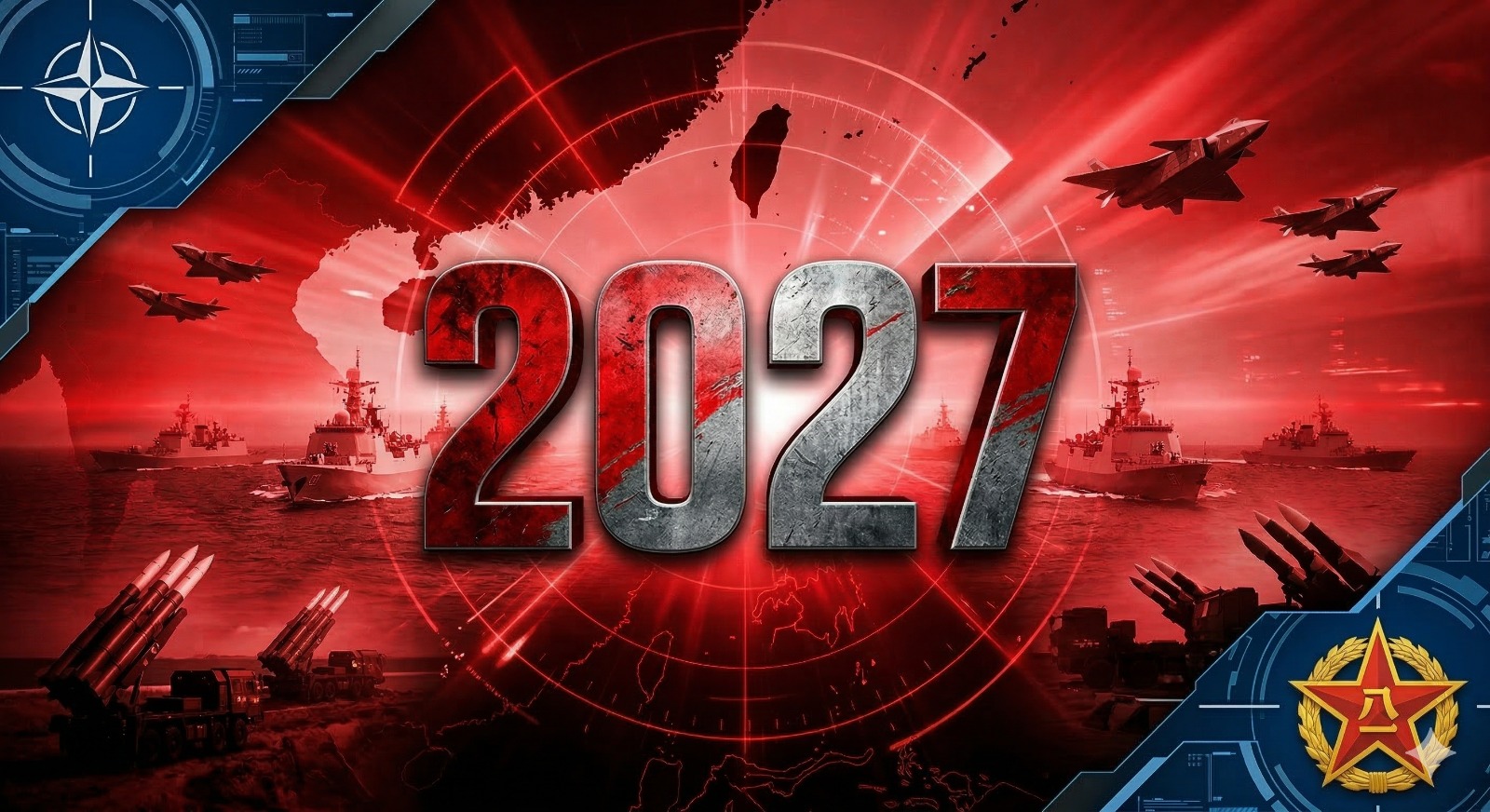
The year 2027 looms large in the strategic imagination of the international system. Under the leadership of Xi Jinping, the Chinese Communist Party (CCP) has set ambitious benchmarks for 2027. From a breakthrough in technology and infrastructure to the modernization of the military, China hopes to connect these domestic and international objectives to achieve personal milestones. Yet, for many Western observers and analysts, the CCPs goals teeter the line of potential threat, particularly regarding Taiwan. For NATO, being able to distinguish threat vs. intent will remain their greatest challenge of 2027.
Keywords: 2027, China, NATO, Taiwan, Defense, Peaking Power Syndrome, Thucydides Trap
Conversations of “2027”
To understand NATO’s strategic role in 2027, it is first necessary to examine why this year will become the focal point of U.S.-China competition discussions. Much of this debate can be traced back to remarks made by former Indo-Pacific command Admiral Phil Davidson. In a 2021 testimony, Davidson warned that China could possess the military capability to invade Taiwan by 2027. This was after President Xi Jinping introduced the ‘dual circulation strategy,’ also known as the 14th Five-Year Plan, at the 2020 Politburo Standing Committee meeting. This assessment later became widely known as the “Davidson Window,” which never explicitly predicted that China would be able to launch an invasion by 2027. Rather, it suggested that the People’s Liberation Army (PLA) could develop the capabilities needed to do so within that time frame.
Since then, the concept of the “2027 deadline” and the “Davidson Window” is a popular topic within policy and media conversations especially in the West. Some Western officials have even interpreted China’s military modernization efforts as preparation for potential conflict over Taiwan, thus creating an incentive for defense planners within the U.S. and allied nations to examine their readiness if such a scenario does occur. Most notably at the 2025 Shangri-La Dialogue, U.S. Defense Secretary Pete Hegseth warned that China’s military activities, including preparations linked to its 2027 goal, “could be imminent” and pose a serious challenge to U.S. allies, emphasizing the need for collective deterrence.
However, this interpretation is not universally accepted. There are several analyst who argue that framing 2027 as an invasion deadline has many risks, most importantly that of misunderstanding China’s strategic planning. According to former head of U.S. Pacific Command Dennis Blair during a June 2025 visit to Taiwan, he argued that China’s military modernization efforts are “much more widespread… not simply directed at invading Taiwan.” Instead, these efforts reflect a long-term effort by China to expand their military capabilities and global influence.
Another reason why 2027 receives significant attention is that it also marks the 100th anniversary of the PLA. Chinese leadership has repeatedly referenced this milestone as a target date for achieving significant progress in their military modernization. Statements from U.S. officials, including from former CIA Director Bill Burns emphasize that Beijing could in fact conduct a successful invasion of Taiwan by 2027. At the same time, Burns and other officials have also clarified that Chinese development does not necessarily indicate a declaration of war.
Thus, the year 2027 is important in strategic conversations, therefore reflecting a broader challenge for policymakers: interpreting signals from China’s military development without assuming predetermined intentions. While it’s true that China’s modernization increases the PLA’s ability to conduct complex operations, capability does not necessarily indicate the intent to use force.
Strategic Interpretations
The debate around 2027 also reflects broader theoretical concerns within international relations. Specifically, interpreting the tension between China and the U.S. through the lens of the Thucydides Trap has become increasingly prevalent. This theory suggests that conflict will become more likely when a rising power challenges the position of an established one. In this framework, China’s accelerated military modernization, rapid economic growth, and their growing international influence increases structural pressures within the international system, particularly in areas where U.S. security commitments are already firmly established.
However, the Thucydides Trap does not imply that conflict is inevitable. Rather, this theory highlights the dangers of misperception, escalation, and security dilemmas, all of which can occur when both a rising power and established one interprets one another. In the context of 2027, this framework helps explain why the developments by China can be interpreted by Western policymakers and observers as potential signs of confrontation.
Closely related to this dynamic is the concept of Peaking Power Syndrome. This suggests that states who have enjoyed a long period of high growth may behave more assertively when they believe that their growing power is slowing down, thus prompting fear among leaders that their window for opportunity is closing. Most notably, these states tend to act more aggressively to secure their resources and lock in their gains before their power permanently declines. Some analyst will argue that Chinese leaders could fear this syndrome approaching. And if this perception does exist within Beijing, it could shape how China approaches regional disputes, specifically those related to Taiwan.
Together these theoretical perspectives help to contextualize why 2027 has gained such attraction in defense conversations. Understanding the dynamics within the international system is essential for policymakers and observers who seek to interpret China’s modernization efforts without overestimating, or even underestimating, the likelihood of confrontation.
Understanding Chinese 2027 Strategic Planning
From Beijing’s perspective, 2027 is more than simply an arbitrary date. It marks an important milestone tied to the 100th anniversary of the PLA which has been repeatedly linked to the reasoning behind China’s progress in military modernization. Under President Xi, the CCP has constantly emphasized the importance of transforming the PLA into a modern, technologically advanced force.
Within this context, the PLA’s modernization efforts should be understood as part of a long-term strategy to enhance China’s military effectiveness. Rather than focusing on a single operational function, Beijing seeks to improve the PLA’s ability to conduct joint operations, use advanced technology, and dominate land, sea, air, cyber, and space domains. As a result, China’s military modernization goals reflect a broader shift towards multi-domain warfare operations that mirror developments seen in other major military powers, such as the U.S.
The theoretical frameworks discussed earlier also come into play here. From the perspective of the Thucydides Trap, China’s expanding capabilities may heighten strategic competition with the U.S. and its allies, particularly as Beijing’s influence continues to grow in regions that were traditionally shaped by U.S. security partnerships. Simultaneously, concerns related to the Peaking Power Syndrome suggests that Chinese leaders are instead seeking to maximize their strategic advantages gained through their modernization.
With this being said, by 2027 China aims for complete development. These developments will shape how regional actors interpret Beijing’s intentions. Among the most significant developments are:
Expanded Amphibious Assault Ships (Type 076 / Type 075)
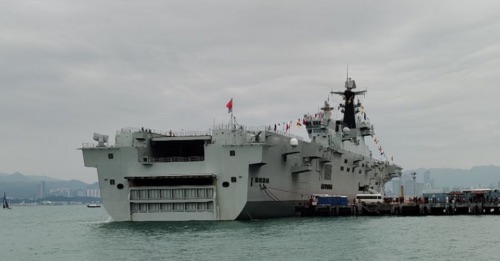
Beijing is producing new classes of amphibious assault ships, including the larger Type 076 vessels equipped to carry drones, helicopters, assault forces, and landing craft, enhancing sea‑to‑shore mobility beyond older platforms. Such ships are seen as modernizing China’s ability to project force across the Taiwan Strait or conduct large‑scale island operations.
Precision Strike and Missile Systems
China continues to develop long‑range and precision missile capabilities, including advanced surface‑to‑air systems (e.g. Hong Qi‑19) and multiple launch rocket systems that integrate new cruise missiles. These systems improve defensive and offensive strike options, enhancing reach and lethality.
Naval Expansion
The PLAN continues to expand its fleet with advanced destroyers, amphibious docks, and other major warships, giving China greater capacity for sustained operations far from its coast. This includes Type 055 guided‑missile destroyers and other surface combatants that contribute to power projection and sea control.
Space and Cyber Capabilities
China operates hundreds of ISR, communications, and navigation satellites and is developing low‑Earth orbit constellations that could improve battlefield awareness and support military operations. These systems expand PLA real‑time tracking and coordination capabilities across domains.
Taken together, these developments illustrate just how China’s 2027 milestone functions less as a deadline for a specific operation and more like a benchmark for achieving greater strategic flexibility. For NATO policymakers, these developments present a critical analytical challenge: NATO has to interpret China’s modernization in a way that accurately assesses potential risks without escalation. NATO must learn to balance preparedness with restraint to ensure that responses to China strengthen deterrence and avoids misinterpretation.
The Significance of Taiwan
Taiwan represents the most visible application of Beijing’s capabilities. However, Taiwan should not be viewed solely as the end goal for China’s 2027 agenda. Rather, Taiwan functions more as the focal point through which Beijing can test and demonstrate their capabilities.
For Chinese leadership, Taiwan remains one of the most politically sensitive issues and central component of the CCPs narrative of national rejuvenation. At the same time, China’s strategy towards Taiwan appears to rely less on preparing for a full-scale invasion and more on gradually expanding coercive pressure. China can leverage its growing coercive capabilities to pressure the U.S. and allies without even initiating a clear conflict, thus strengthening President Xi’s domestic legitimacy. China accomplishes this in several ways: patrols near Taiwan’s Air Defense Identification Zone (ADIZ), naval deployments, and increasingly complex joint exercises. All of which serves strategic purposes. As a result, China can openly observe how Taiwan and its partners respond to rising pressure.
This approach reflects a broader reliance on gray-zone tactics. By maintaining persistent military pressure, Beijing now has the capability to test the resilience of Taiwan’s defenses while simultaneously shaping regional perceptions of power and resolve. These tactics make deterrence more complex since responses must be strong enough to signal resistance, but calibrated carefully enough to avoid escalation.
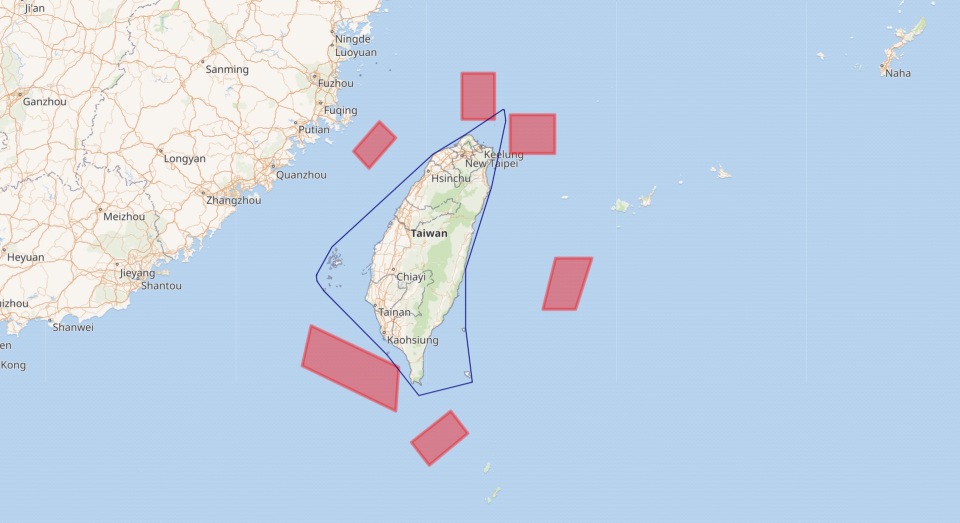
By 2027, the PLA’s growing structure will give Beijing a wider set of coercive tools to influence Taiwan and shape regional calculations. The U.S. Department of Defense’s annual China Military Power Report states that China’s military modernization is giving the PLA more options beyond a full-scale invasion, including blockades, precision strikes, and coordinated joint operations that could be used in a scenario involving Taiwan, even though a full invasion would still be difficult.
For NATO, Taiwan therefore represents less as a singular flashpoint and more of a case study on how China may employ coercive strategies during their era of military capability expansion. This steady increase in PLA activity around Taiwan illustrates how modernization can translate into political leverage without necessarily triggering direct conflict. This brings up a new and broader challenge for NATO: how to interpret China’s growing capabilities and coercive tactics without reinforcing escalation dynamics in an already intense and competitive strategic environment.
Implications for NATO
For NATO, debate surrounding China’s 2027 military modernization represents a complex strategic challenge: the alliance must interpret China’s growing capabilities and regional activities without escalation that could intensify great-power rivalry. Unlike regional actors in the Indo-Pacific, NATO’s involvement on issues such as Taiwan is indirect. Yet, one must also account for how U.S.-China competition will affect the security interest of NATO member states.
A central challenge for the alliance lies in interpreting China’s modernization efforts within the broader structural competition between the U.S. and China. As discussed earlier, the dynamics of the Thucydides Trap highlight the potential risks associated when a rising power challenges an established one. In these circumstances, misinterpretation of military developments or political signaling can increase the likelihood of strategic miscalculation. Therefore, NATO faces the task of responding to China’s growing capabilities in a manner that is not only safe, but non-confrontational, or in other words, through measured deterrence.
Challenges of Measured Deterrence and Alliance Cohesion
Rather than framing China’s military modernization as an imminent threat, measured deterrence focuses on maintaining readiness, strengthening resilience, and coordinating alliance responses to potential coercive behavior. This approach aims to preserve the stability in the region without reinforcing narratives that portray confrontation between China and Western alliances as inevitable, as Western defense conversations often states.
Furthermore, measured deterrence provides a strategic framework to navigate the ‘pincer’ pressure that is created by the simultaneous challenges of Russian revisionism and Chinese modernization. The alliance is currently caught between the immediate, kinetic threat felt on its Eastern flank—where members prioritize conventional defense against Russia—and the long-term, multi-domain challenge posed by Beijing’s 2027 milestones.
Correspondingly, another major challenge for NATO is maintaining unity among its member states as China continues to intensify. NATO members do not view China’s 2027 challenge identically, so these different threat perceptions can complicate collective responses. For many Eastern European member states, Russia remains the most immediate security concern following their invasion of Ukraine. These countries want to prioritize strengthening NATOs eastern defenses and maintain deterrence against Russian aggression. Simultaneously, Western European members maintain economic relationships with China and may be cautious about adopting policies that could disrupt trade or escalate tensions.
These differences mean that NATO must carefully balance its approach to China in order to preserve alliance cohesion. Overly confrontational policies could create internal divisions, while insufficient attention to China’s growth and power could leave NATO underprepared. Maintaining unity is key. It requires consistent communication and policies in place that address emerging challenges without undermining NATO’s primary mission.
To maintain alliance cohesion, measured deterrence must address the dual-theater pressure by emphasizing resilience as a common denominator. While Eastern European members focus on the physical security of the Euro-Atlantic, NATO’s indirect engagement in the Indo-Pacific—specifically through intelligence sharing and cyber defense—allows the alliance to counter Chinese gray-zone tactics without a massive redirection of military assets. This prevents ‘resource-sharing’ dilemmas that could possibly fragment the alliance.
By focusing on coordinated responses to coercion rather than just large-scale conflict, NATO can ensure that members with deep economic ties to Beijing and those facing Russian aggression remain aligned under a single, unified strategic umbrella. In this sense, measured deterrence acts as a stabilizer, preventing the ‘pincer’ from choosing between regional stability and global strategic relevance.
Should NATO Play a Central Role?
An important question within policy debates asks whether NATO should play a central role in deterring potential conflict over Taiwan. NATO remains fundamentally a Euro-Atlantic security alliance whose treaty obligations focus on collective defense within the North Atlantic region, unlike the U.S. who has bilateral alliances in Asia. This means that NATO does not maintain direct security commitments to Taiwan.
Through expanding NATO’s role in the Indo-Pacific, there is a risk of overstretching the alliance and diverting its attention away from its primary mission statement. Yet, developments in the Indo-Pacific are increasingly affecting global economic stability, technological competition, and maritime trades which are all essential to NATO members. Because of this interconnectedness, China’s rise and activity cannot solely be coined as a regional issue.
Instead, NATO’s role is to remain indirect rather than operational. This way, NATO will be able to contribute to regional stability through dialogue with Indo-Pacific partners, participate in intelligence sharing, and strengthening resilience against hybrid threats. This approach will allow NATO to support deterrence efforts without transforming itself into a primary military actor.
Preparing For Coercion Rather Than War
Rather than preparing solely for a large-scale military conflict, NATO policymakers have to accept that China’s coercive abilities may be more important to analyze. NATO has clear advantages in technology and defense ecosystems once all member states capabilities are combined. Therefore, they have to use them proactively through coordinated efforts which include joint information campaigns to shape public opinion, enhanced cyber defenses to protect defense networks, and strengthening resilience across all domains. These measures will enable NATO to anticipate and deter coercive actions while maintaining alliance cohesion and minimize the risk of miscalculation in a complex environment.
Maintaining Strategic Engagement
Building on NATO’s emphasis on measured deterrence and alliance cohesion, this alliance organization should continue to approach the Indo-Pacific through indirect engagement rather than entering any formal security agreements. This means that NATO should focus on dialogue, capacity building, and the promotion of shared norms with regional partners while maintaining deliberate ambiguity around Article 5 obligations. This approach will allow NATO to contribute to regional stability and deterrence without overextending the alliance or replicating any existing regional security arrangements such as AUKUS or the QUAD. By emphasizing flexible, durable engagement, NATO can support partners, strengthen resilience, and uphold strategic influence without creating friction within the alliance or escalating tensions with China.
Conclusion
China’s 2027 milestones are not to be interpreted as a fixed date for conflict nor a declaration of war, but rather as a framework for expanding its strategic and coercive options. The PLA’s modernization, combined with gray-zone tactics around Taiwan and the broader geopolitical area, increase the complexity of strategic competition without necessarily indicating imminent aggression.
For NATO, the challenge is twofold: to interpret Beijing’s developments accurately, distinguishing between capability and intent; and also to respond in a manner that strengthens deterrence while maintaining alliance cohesion. By engaging indirectly with Indo-Pacific partners, promoting shared norms, and maintaining a flexible strategic posture, NATO can uphold stability across multiple theaters without holding full responsibility in the region.
Ultimately, understanding China’s modernization strategies through the lens of structural competition, gray-zone pressures, and alliance dynamics enables NATO to respond strategically rather than reactively. In an era of rising Chinese power, careful interpretation, cohesion, and measured deterrence remain NATO’s most effective tools for preserving stability and credibility.
References
Ahmed, Zahra. (2026). China’s 11,000-Ton Destroyer Publicly Revealed For The First Time. Marine Insight, Zahra Ahmed https://www.marineinsight.com/know-more/chinas-11000-ton-destroyer-publicly-revealed-for-the-first-time/?utm_source=rss&utm_medium=rss&utm_campaign=chinas-11000-ton-destroyer-publicly-revealed-for-the-first-time#
Culver, John. (2025). China, Taiwan, and the PLA’s 2027 milestones. The Interpreter, https://www.lowyinstitute.org/the-interpreter/china-taiwan-pla-s-2027-milestones
Desai, Suyash. (2015). Forceful Taiwan Reunification: China’s Targeted Military and Civilian-Military Measures. Foreign Policy Research Institute, https://www.fpri.org/article/2025/03/forceful-taiwan-reunification-chinas-targeted-military-and-civilian-military-measures/#:~:text=China%20has%20been%20preparing%20for%20a%20potential,*%20**Civilian%20measures**%20*%20**Re%2Denlistment%20of%20veterans**
Grossman, Derek. (2025). The Chinese Communist Party’s Gray Zone Tactics Against Taiwan. RAND, https://www.rand.org/pubs/external_publications/EP70899.html
Trevithick, Joseph. (2025). China’s Type 076 Supersized Amphibious Assault Ship Heads To Sea On Its Maiden Voyage. TWZ, https://www.twz.com/sea/chinas-type-076-supersized-amphibious-assault-ship-heads-to-sea-on-its-maiden-voyage#:~:text=Overall%2C%20Sichuan%20represents%20a%20particularly,and%20nearly%20121%20feet%20wide.
Space Threat Fact Sheet. United States Space Force, (December 2025) https://www.spaceforce.mil/About-Us/Fact-Sheets/Fact-Sheet-Display/Article/4297159/space-threat-fact-sheet/#:~:text=Since%20the%20end%20of%202015,the%20third%20nearly%20nine%20months
Staff Writer with Reuters. (2025). China honing abilities for a possible future attack, Taiwan defense report warns. Taipei Times, https://www.taipeitimes.com/News/taiwan/archives/2025/10/09/2003845201
U.S. Department of Defense. (2023) China Military Power Report. https://media.defense.gov/2023/Oct/19/2003323427/-1/-1/1/2023-CMPR-FACT-SHEET.PDF
Weichert, Brandon J. (2025). China’s New HQ-19 Missile Defense System Might Be Better than America’s Best. The National Interest, https://nationalinterest.org/blog/buzz/chinas-new-hq-19-missile-defense-system-might-be-better-than-americas-best
Asia Maritime Transparency Initiative (2024). The Sky’s The Limit: Comparing China’s Adiz Intrusions. AMTI, https://amti.csis.org/the-skys-the-limit-comparing-chinas-adiz-intrusions/

Aspen Bilal holds a Master’s degree in International Studies from North Carolina State University, where her research focused on regional security dynamics in the Indo-Pacific. Her academic interests center on multilateral security cooperation and the strategic implications of great power competition in East Asia. Through her work, Aspen seeks to bridge academic analysis with policy relevance, offering insights into how institutions such as NATO can engage with Indo-Pacific partners to promote regional stability and uphold the rules-based international order.
- Aspen Bilal - Regional Security Studies Intern