
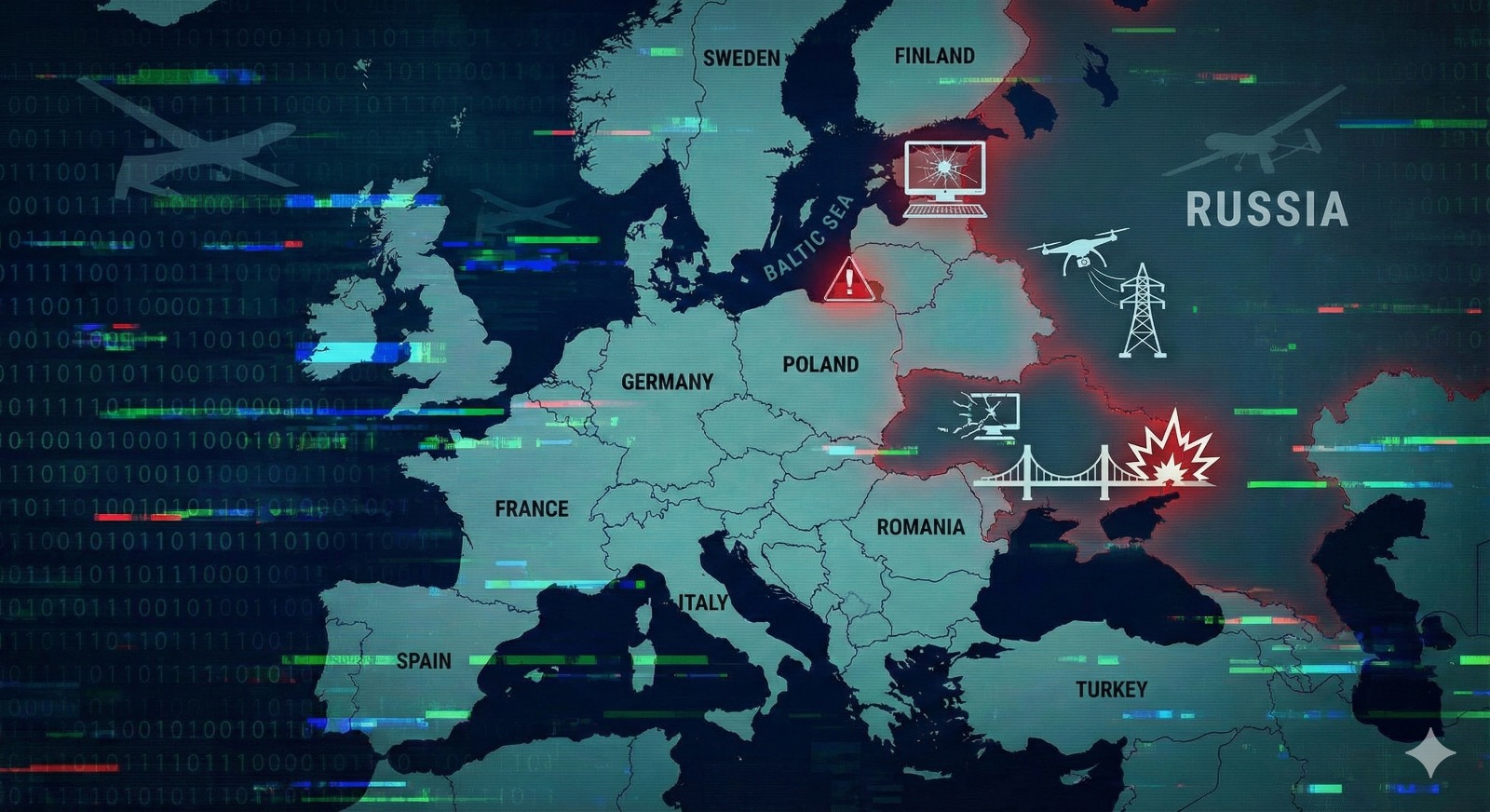
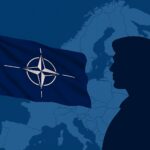
Since Russia’s full-scale invasion of Ukraine, Moscow’s hybrid warfare against Europe has ramped up. They’re mixing cyberattacks, physical sabotage, and drone incursions to hit critical infrastructure and chip away at NATO support while staying just below the threshold of open war. This lets the Kremlin land strategic punches through secretive tactics, sowing chaos without risking all-out conflict. The following image conceptually illustrates this complex, multi-layered threat.
Escalating Threats
Russia’s turning up the heat with synchronized drone swarms and sabotage along NATO’s eastern flank. Drones buzzing Polish airspace, the Baltic Sea, and even airports in Denmark and Germany aren’t random; they’re probing air defenses, spying on key sites, and rattling nerves. Think Munich Airport shuts down before Oktoberfest, or Copenhagen flights are grounded. These ops disrupt energy supplies, transport, and comms vital for aiding Ukraine, forcing flight cancellations, jet scrambles, and economic headaches.
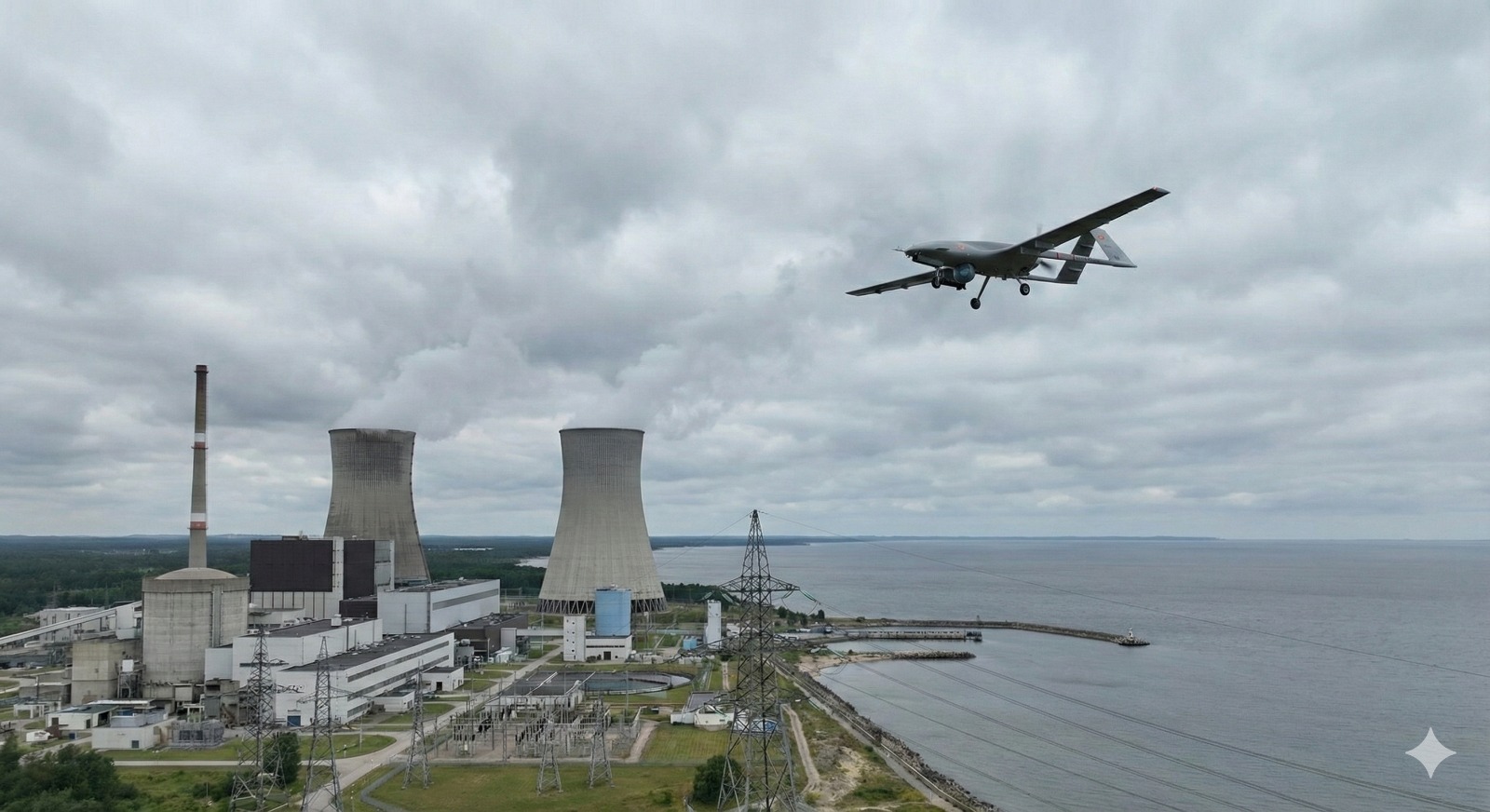
EU leaders like Ursula von der Leyen have called it out: frequent drone overflights, airspace breaches, and cyberattacks on undersea cables and transport networks. The Kremlin runs this through military pros like GRU/FSB plus criminal “gig economy” proxies, tourists turned saboteurs, shadow fleet tankers launching UAVs, keeping deniability intact while exploiting Europe’s gaps. The image below shows a military drone on a surveillance mission over critical infrastructure.
Vulnerable Regions and Sectors
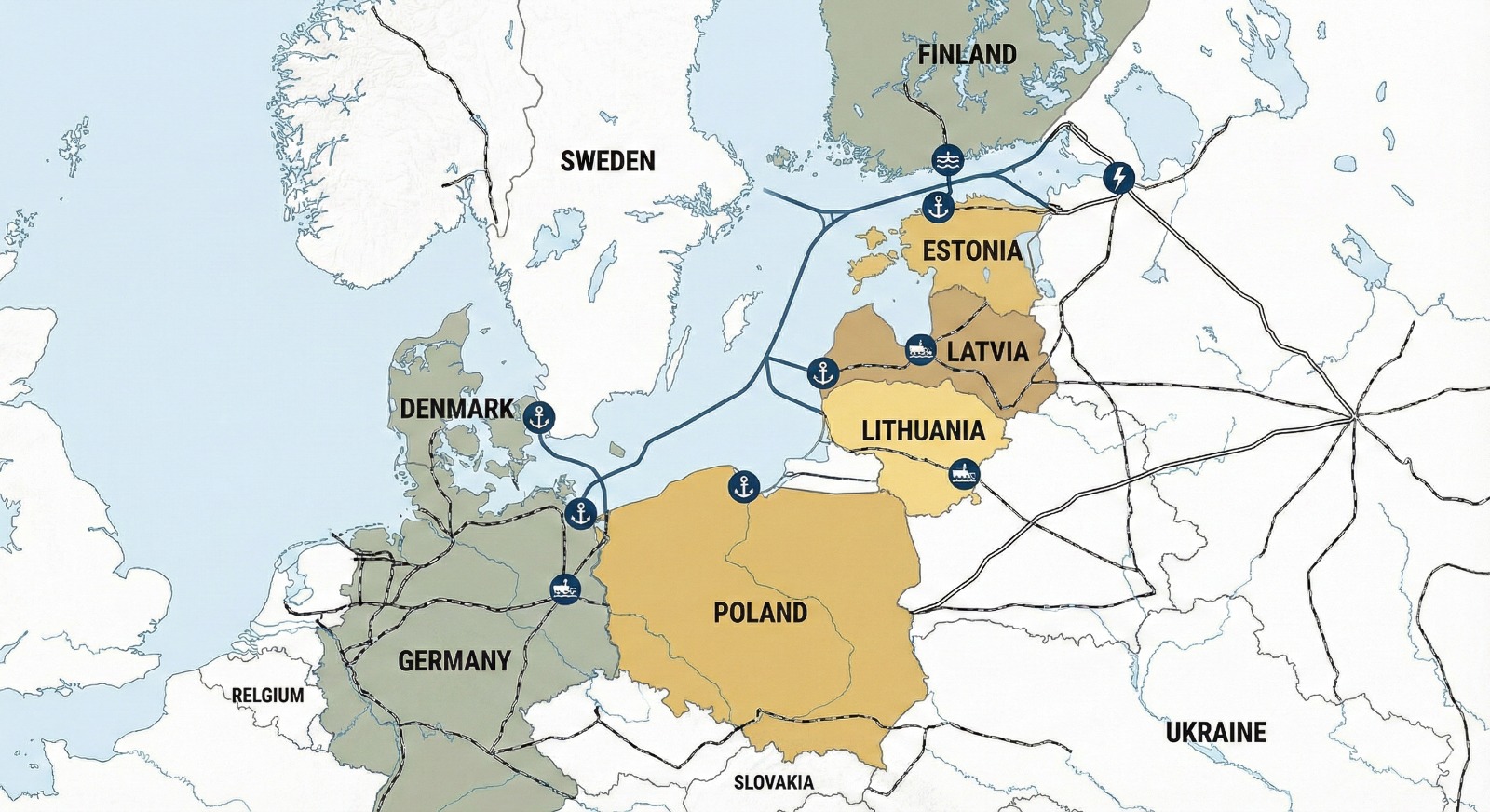
The bullseyes are on frontline spots: Poland, the Baltics, Nordics, and Germany. Proximity to Russia/Kaliningrad, plus exposed assets like energy grids, LNG terminals, railways, airports, undersea cables, and digital hubs, make them prime targets. Poland’s logistics feed Ukraine aid: Nordics guard Baltic/North Sea lifelines. Fragmented defenses and private-sector reliance leave holes, while Russia’s proxies handle the dirty work, arson, GPS jamming, cyber intrusions, and muddying blame. The map below highlights these vulnerable regions and key infrastructure.
Response and Resilience
Europe and NATO are fighting back with “Drone Walls” sensor networks, radars, jammers, and AI interceptors along eastern borders. Poland is rolling out anti-drone systems, shoot-down rules, and East Shield barriers; Denmark, Romania, and others deploy Merops tech. NATO’s Operation Eastern Sentry ramps up intel-sharing for faster reactions.
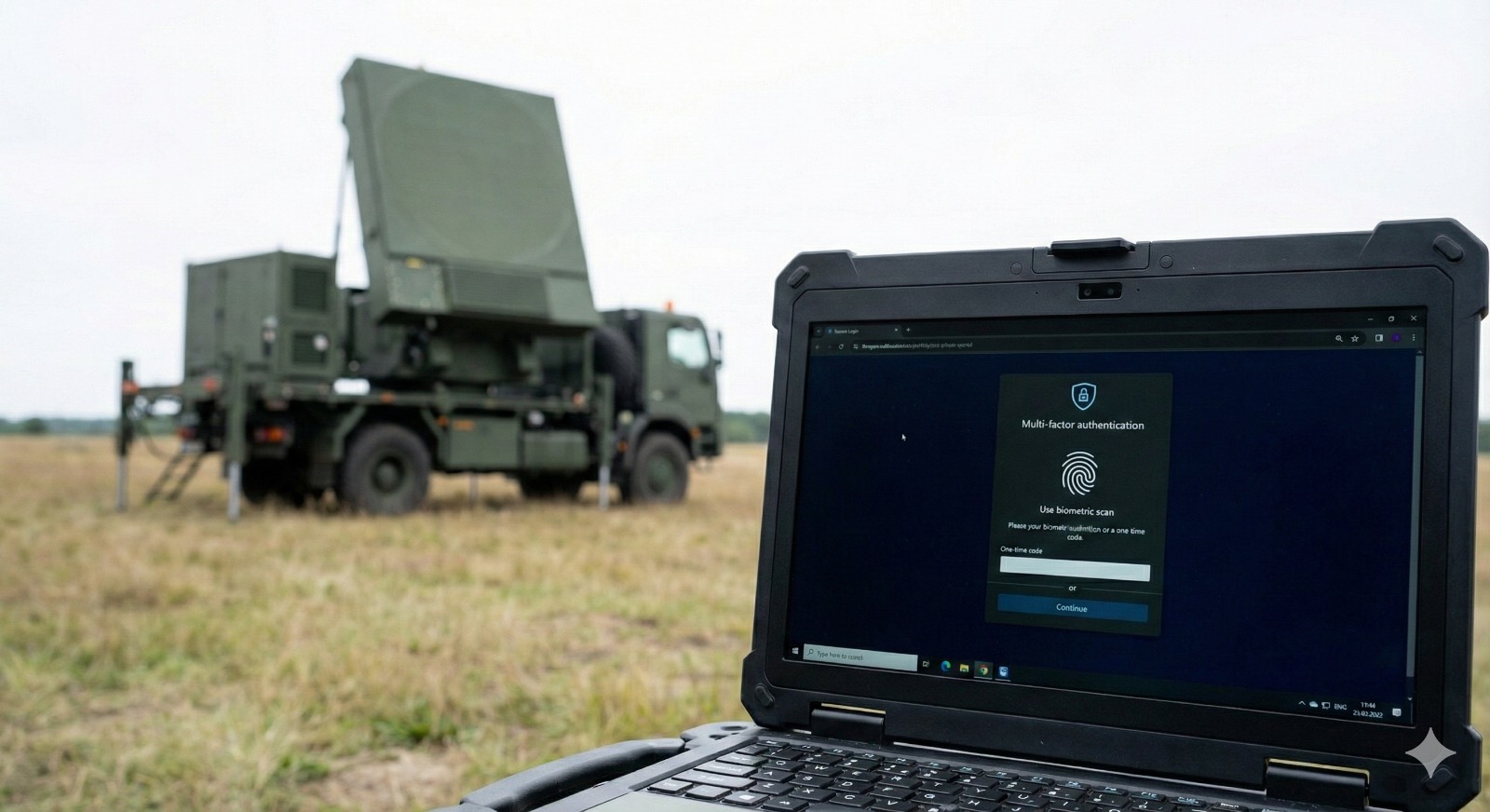
But the big headache? Cost asymmetry, our pricey defenses vs. their cheap, off-the-shelf drones. Real resilience means blending cyber-physical intel: MFA (password + app/biometrics), constant threat monitoring, network segmentation, and supply chain hardening to blunt multi-domain hits. The image below illustrates this multi-layered defense, combining a physical radar system with a digital multi-factor authentication process.
Action Steps for Businesses and Pros
- Integrate cyber-physical security, don’t treat them separately.
- Roll out MFA and segment networks to block breaches.
- Toughen supply chains and drill crisis plans.
- Tap NATO/EU intel for real-time alerts.
This isn’t letting up; stay sharp to protect our shared security.
Note: The images accompanying this article are illustrations generated by artificial intelligence.
Contact NAVI Research Institute for briefings or consultations.
Key References
- Northwave: Russia’s Hybrid Threats (2025)
- CNBC: Hybrid Warfare Explained (2025)
- Guardian: Drone Dilemma (2025)
- Atlantic Council: Escalation (2025)
- NATO: Cyber Defence

Cihan Aydiner is an Associate Professor and Program Chair for the BS in Homeland Security and the MS in Security and Intelligence Studies at Embry-Riddle Aeronautical University–Worldwide, where he also serves as Associate Chair of the Department of Emergency, Disaster and Global Security Studies. He led the effort that produced the first nationally accredited homeland security degree program in the United States.
He is Founding Executive Editor of The North Atlantic Review and directs the NAVI Research Institute. His research covers NATO burden-sharing and alliance cohesion, the evaluation of AI systems for high-accountability environments, security studies, and forced migration governance.
- Cihan Aydıner - Associate Professor

- Cihan Aydıner - Associate Professor

- Cihan Aydıner - Associate Professor

- Cihan Aydıner - Associate Professor
- Cihan Aydıner - Associate Professor

- Cihan Aydıner - Associate Professor