
The January 3, 2026, U.S. operation, which resulted in the capture of Venezuelan leader Nicolás Maduro, is a significant event with far-reaching implications for international law, regional stability, and the future of the global order. While framed domestically as a success in counternarcotics and counterterrorism, this action presents a complex set of challenges that demand careful analysis from the international security community (Al Jazeera, 2026).
The Domestic vs. International Lens
U.S. officials have publicly justified the operation based on counternarcotics, counterterrorism, and accountability for human rights abuses attributed to the Maduro regime (Al Jazeera, 2026). These are critical national security interests. However, it is essential to recognize the significant divergence in how this event is viewed internationally (Reuters, 2026). Many regional governments and analysts interpret the operation as de facto regime change carried out without explicit UN Security Council authorization (Reuters, 2026).
This gap between domestic justification and international perception highlights a structural tension within the global system. The increasing reliance on expansive domestic legal categories like “narco-terrorism” to justify cross-border military actions can create a dangerous precedent (International Crisis Group [ICG], 2025a). If major powers normalize this behavior, these same flexible justifications could be invoked by other actors in different geopolitical contexts to the detriment of global stability and shared interests (ICG, 2025a).
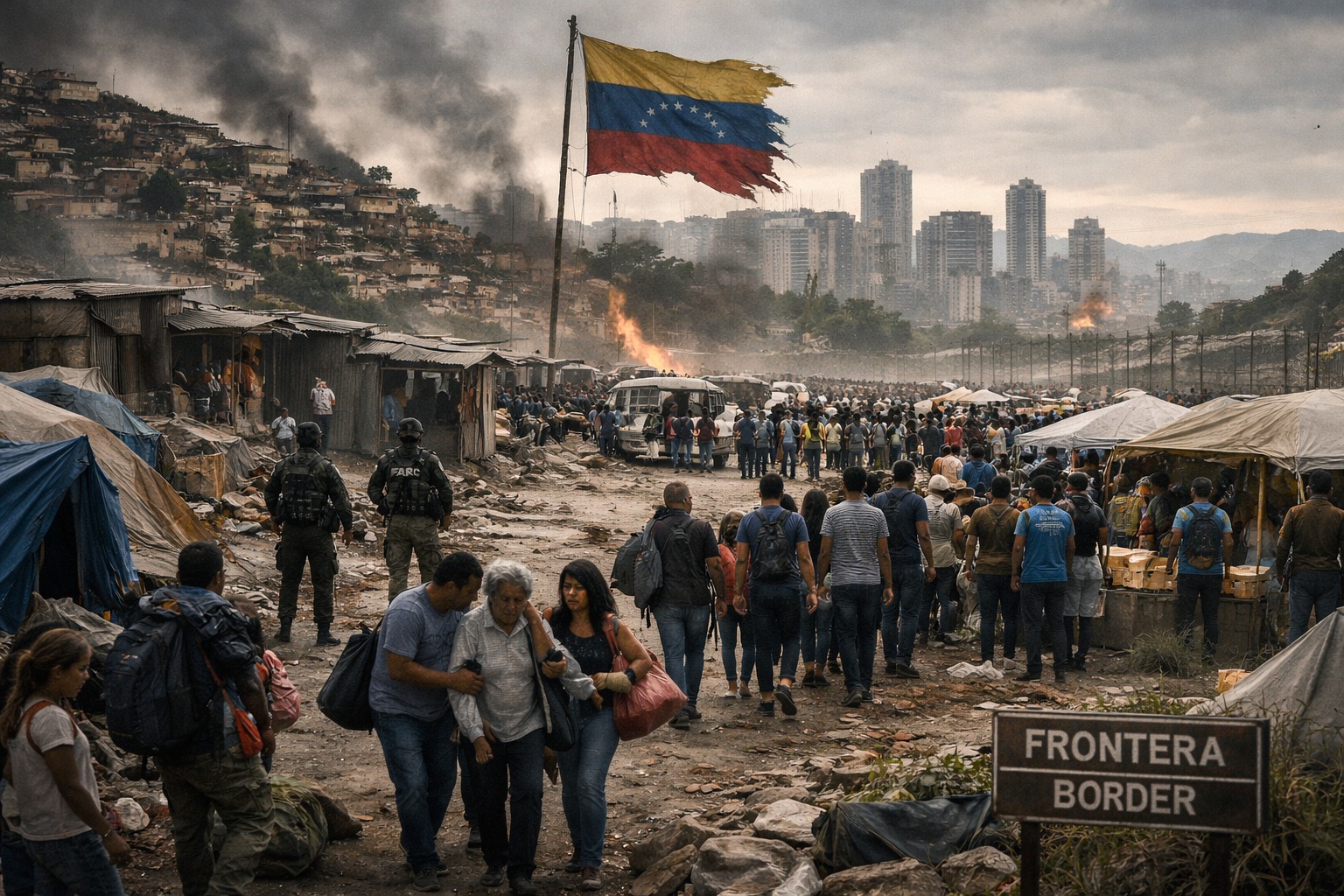
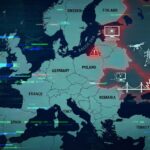
Conceptual visualization of post-conflict instability and migration pressures in a failed-state scenario.
The “Day After” Challenge in a Failed State
From a security studies perspective, the most significant challenges often emerge after the initial kinetic operation. Venezuela was already facing profound structural collapse, with a devastated economy, politicized institutions, and a massive displacement crisis (Council on Foreign Relations [CFR], 2019). Experts have consistently warned that abrupt leadership transitions in such a fragile environment can create power vacuums (ICG, 2025a).
Without a coordinated transition framework, there is a risk of Venezuela sliding into prolonged low-intensity conflict as armed non-state actors like criminal organizations and guerrilla groups exploit the chaos (ICG, 2025a; ICG, 2025b). Such a scenario would have direct consequences for regional stability and would likely lead to intensified migration pressures and increased cross-border organized crime challenges (CFR, 2019).
The Role of NATO and International Allies
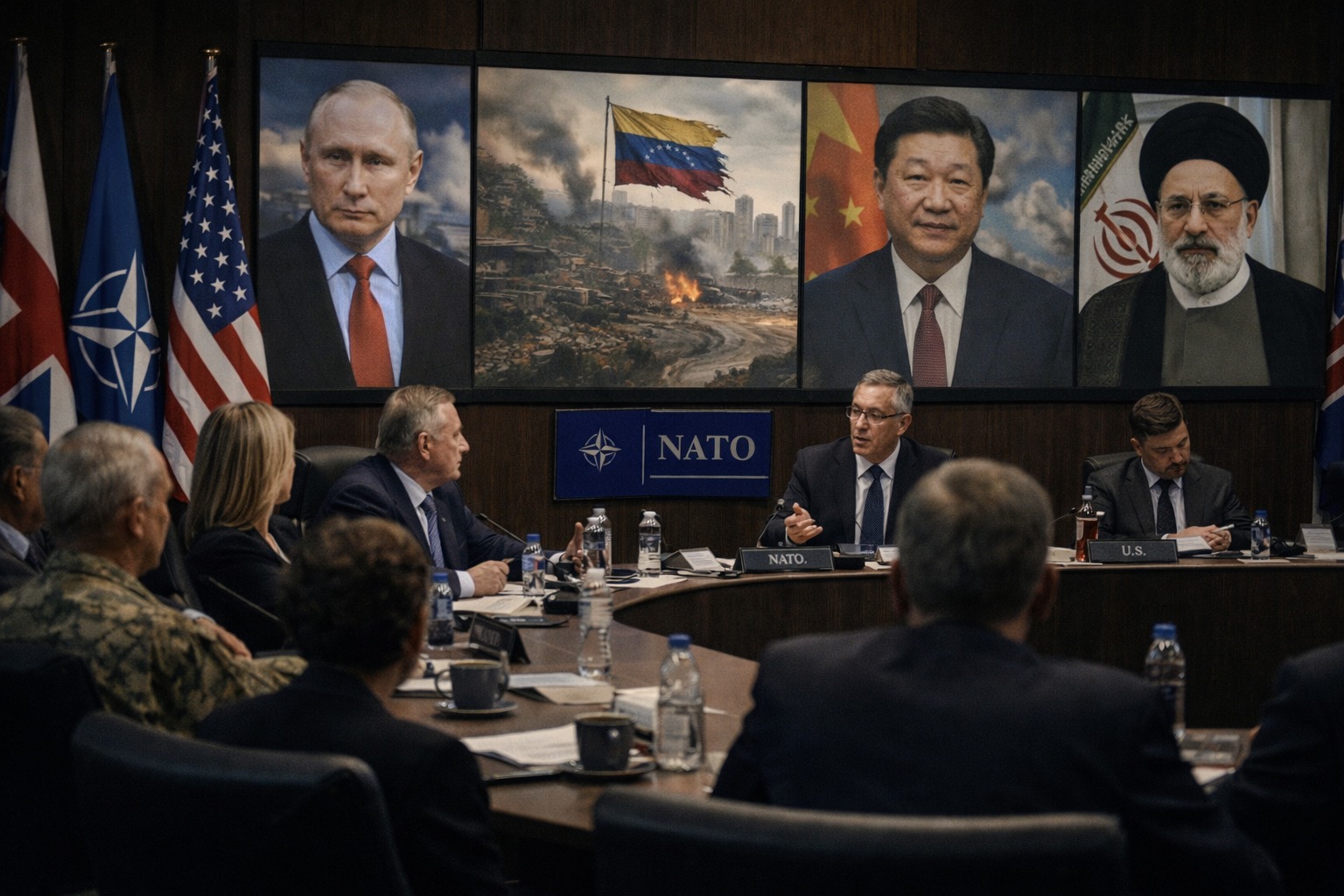
The international reaction to the operation has been sharply divided. While some have welcomed the removal of an authoritarian leader, others, including key global actors like China, Russia, and Iran, have condemned it as a violation of sovereignty (Al Jazeera, 2026; Reuters, 2026). Even some U.S. allies have expressed unease about the implications for the UN Charter and the norm against unilateral regime change (Reuters, 2026).
For NATO and our international alliance network, this event poses long-term risks. Our alliances depend on shared understandings of legality to deter aggression and protect smaller states. Repeated reliance on flexible legal justifications can weaken these shared norms and shift expectations about permissible behavior (CFR, 2025). While direct military confrontation over Venezuela is unlikely, extra-regional actors like Russia, China, and Iran retain a broad toolkit to raise costs and reframe the narrative, including through cyber activity, information operations, and military signaling (CFR, 2026; ICG, 2025b).
A Cautious, Multilateral Approach Forward
Moving forward, the most constructive response is not unqualified endorsement or categorical condemnation, but a clearer articulation of guardrails to protect regional stability and global norms. A multilateral resilience approach is essential. This involves:
- Anchoring post-crisis efforts in regional institutions such as the Organization of American States (CFR, 2019).
- Supporting neighboring countries that are bearing the brunt of the displacement crisis (CFR, 2019).
- Treating civilian protection and institutional rebuilding as central benchmarks of success (CFR, 2019).
- Directly confronting the underlying legal and normative questions about when, if ever, domestic criminal frameworks can legitimately justify cross-border military action (ICG, 2025a).
The analysis of this case will shape how future crises are justified, debated, and constrained. It is our collective responsibility to critically examine these events through a strategic lens, understanding not just the tactical outcomes but the long-term implications for international order and our shared security.
Images Note: The illustrations accompanying this piece were generated using artificial intelligence to conceptually represent the themes.
References
Al Jazeera. (2026, January 3). World reacts to US bombing of Venezuela, “capture” of Maduro. https://www.aljazeera.com/news/2026/1/3/world-reacts-to-reported-us-bombing-of-venezuela
Council on Foreign Relations. (2019, June 9). Stabilizing Venezuela: Scenarios and options. https://www.cfr.org/reports/stabilizing-venezuela
Council on Foreign Relations. (2025, January 6). Conflicts to watch in 2026. https://www.cfr.org/reports/conflicts-watch-2026
Council on Foreign Relations. (2026, January 8). U.S. confrontation with Venezuela (Global Conflict Tracker). https://www.cfr.org/global-conflict-tracker/conflict/instability-venezuela
International Crisis Group. (2025a, October 23). Beware the slide toward regime change in Venezuela. https://www.crisisgroup.org/stm/latin-america-caribbean/venezuela/beware-slide-toward-regime-change-venezuela
International Crisis Group. (2025b). Venezuela (Andes program overview). https://www.crisisgroup.org/latin-america-caribbean/andes/venezuela
Reuters. (2026, January 3). World reacts to US strikes on Venezuela. https://www.reuters.com/world/americas/world-reacts-us-strikes-venezuela-2026-01-03/

Dr. Cihan Aydiner is an Assistant Professor and program director of Homeland Security at Embry-Riddle Aeronautical University Worldwide (ERAU-W). He has had prior academic and professional roles at Louisiana State University, Hybridcore (an AI-Powered Decision-Making Company), and Army. He has doctoral and master’s degrees in Sociology from Louisiana State University and a master’s degree in National and International Security Management from Army War College. He has many funded grant projects, publications, documentary films, and technical reports. Dr. Aydiner’s current research focuses on the complex interdependencies among policy, homeland security, and international migration.
- Cihan Aydıner - Research Fellow
- Cihan Aydıner - Research Fellow
- Cihan Aydıner - Research Fellow
- Cihan Aydıner - Research Fellow

- Cihan Aydıner - Research Fellow